



Politics
Why Karachi is Seeing Separatist Protests For Sindhudesh: Pakistan's Internal Fault Lines Exposed
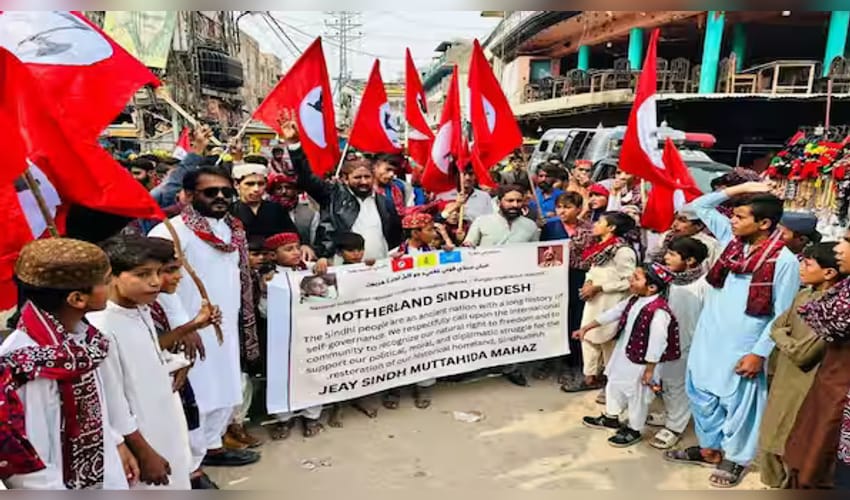

Separatist protests calling for “Sindhudesh” have resurfaced in Karachi, exposing the depth of political alienation, economic inequality, and cultural marginalization that Pakistan has failed to address for decades. What Islamabad tries to dismiss as “fringe agitation” is in reality a symptom of a fractured state where entire provinces feel ignored, exploited, and silenced.
The renewed unrest is rooted in long-standing grievances. Many Sindhis accuse Pakistan’s federal structure of treating Sindh as a resource base rather than a stakeholder extracting revenue from its ports, energy, and industries while offering little political autonomy or development in return. Karachi, once Pakistan’s economic engine, has been left crippled by mismanagement, ethnic tensions, crumbling infrastructure, and competing power centers backed by different arms of the state.
The call for Sindhudesh, though not embraced by the mainstream political class, reflects the anger of communities who feel stripped of their identity and political agency. Successive governments in Islamabad have done little to address these grievances. Instead, they have relied on heavy-handed tactics, arrests, and censorship to suppress dissent. This approach has only deepened the perception that the state does not understand or care about the aspirations of Sindh’s people.
The frustration is not just economic but cultural. Many Sindhis believe that their language, history, and heritage have been systematically sidelined through centralized decision-making dominated by Punjab. The demographic shift in Karachi, driven by decades of migration and manipulated political engineering, has further fueled feelings of dispossession among locals who see their provincial capital slipping out of their control.
Karachi’s unrest also reflects Pakistan’s broader governance collapse. The city suffers from chronic lawlessness, failing utilities, water shortages, and competing militias conditions that have pushed residents to question what the federal government actually delivers. When the state cannot provide basic services but demands loyalty and obedience, separatist sentiment inevitably grows.
The protests are also a warning to Pakistan’s establishment. For decades, it has tried to manage ethnic diversity through coercion rather than inclusion. But rising unrest in Sindh, alongside separatist movements in Balochistan, resistance in Khyber Pakhtunkhwa, and political turmoil in Punjab, signals a country losing coherence.
Karachi’s Sindhudesh protests are not merely an isolated outburst. They are a reflection of Pakistan’s decaying social contract. A population that feels unheard, exploited, and disrespected is now openly questioning the legitimacy of the state itself. Unless Pakistan begins treating its provinces as partners rather than subjects, the demand for autonomy and even separation will only grow louder.
This image is taken from FirstPost.



