



Economy
Why Food Irradiation in India Struggles to Prove Commercial Success Despite Strong Export Potential
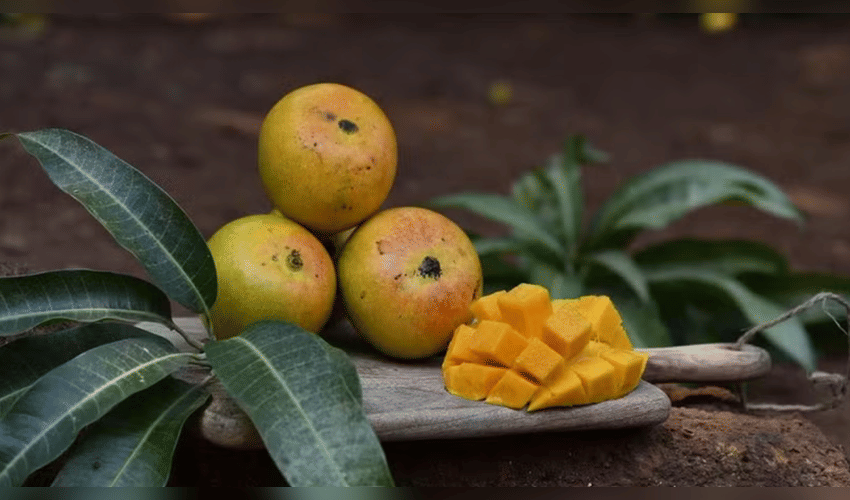

India remains the world’s largest producer of mangoes, generating nearly 22.8 million metric tonnes in FY2024-25. Despite this enormous production, the country exports only a small fraction of its harvest, around 30,000 metric tonnes annually. The contrast becomes even sharper considering India is also the largest producer of spices and the second-largest producer of fruits and vegetables globally. Yet an estimated 30 to 40 per cent of agricultural produce is lost between harvest and consumption because of poor storage, transportation gaps, and limited preservation infrastructure.
Food irradiation was introduced as one of the technologies expected to reduce these post-harvest losses and improve India’s agricultural export potential. However, even after more than two decades, the technology has failed to expand beyond a limited segment of export-focused crops. Food irradiation works by exposing food products to controlled ionising radiation to eliminate pests, insects, bacteria, and harmful microorganisms. The process also helps delay ripening and sprouting, increasing the shelf life of perishable goods. It is commonly used for products such as mangoes, onions, potatoes, spices, cereals, and pulses. Despite widespread misconceptions, irradiated food does not become radioactive. Instead, the technology is considered a cold-treatment process and is widely accepted internationally as a phytosanitary measure for exports.
India’s first food irradiation facility began operations in Navi Mumbai in 2000. More than two decades later, the country has only 19 operational irradiation plants, according to the Bhabha Atomic Research Centre (BARC). Even more striking is the fact that only four of these facilities are certified for exports, mainly catering to mango shipments destined for the United States and certain European markets. The slow adoption reflects both economic and logistical challenges. India’s agricultural output is enormous, with foodgrain production reaching 357.73 million metric tonnes and horticulture production crossing 362 million metric tonnes in FY2024-25. Yet only a small share of this produce undergoes irradiation treatment. Experts say the process is primarily limited to onions and export-quality mangoes.
One major issue is the high cost of setting up and operating irradiation facilities. Industry estimates suggest that establishing a plant requires an investment of ₹10 crore to ₹15 crore, excluding land costs. Even after such investment, the processing capacity remains relatively limited. Critics argue that integrated packhouses and cold-chain systems offer better efficiency and can handle much larger quantities of produce with lower operational complexity.
Another challenge lies in farmer adoption. Since most Indian agricultural produce is consumed domestically, the demand for irradiation treatment remains largely tied to export markets. Farmers often see little financial incentive in adopting the process because better quality does not necessarily translate into higher prices at the farm level. Without direct economic benefits, the technology struggles to gain widespread acceptance.
At the same time, global demand for Indian produce continues to grow. Indian mangoes, especially premium varieties, enjoy strong popularity overseas. In the United States, imported Indian mangoes often sell at premium prices and sometimes disappear from shelves within hours. The US had lifted its long-standing ban on Indian mangoes in 2007, but only under strict conditions requiring irradiation treatment at USDA-approved facilities before export.
India has only four such approved facilities located in Maharashtra, Gujarat, and Karnataka. This limited infrastructure creates severe bottlenecks during the peak mango export season between April and June. The Vashi facility in Navi Mumbai, one of the busiest in the country, can process only around five tonnes of Alphonso mangoes per day during the export season. Operational challenges have also affected exports. Last year, around 25 metric tonnes of Indian mango shipments were reportedly rejected by US authorities because of documentation errors during inspection procedures. The rejection caused losses estimated at over ₹4 crore, highlighting how fragile the export chain remains.
The situation is even more difficult for states like Uttar Pradesh, which produces more than a quarter of India’s mangoes and is known for varieties such as Dasheri, Langra, and Chausa. Despite its large production base, the state lacks a USDA-approved irradiation facility. As a result, exporters often have to transport mangoes across states for treatment, increasing costs and reducing profitability. Many farmers eventually prefer domestic sales rather than dealing with expensive logistics and strict export requirements.
Recognising these gaps, the central government recently announced a ₹1,000 crore investment under the Pradhan Mantri Kisan Sampada Yojana to establish 50 multi-product food irradiation units across the country. The plan is aimed at improving food safety, extending shelf life, reducing wastage, and strengthening India’s export competitiveness. Industry experts remain divided on whether increasing the number of plants alone will solve the problem. Many believe India’s bigger challenge lies in the lack of packhouses, aggregation centres, and integrated cold-chain systems near farming regions. Without proper supply-chain connectivity and farmer incentives, irradiation facilities may continue to operate only seasonally and remain dependent on a few export-oriented crops.
The future of food irradiation in India will likely depend on a broader ecosystem rather than infrastructure alone. Greater awareness among farmers, better integration with cold storage and logistics networks, and stronger financial incentives could determine whether the technology eventually becomes commercially viable on a larger scale. Until then, food irradiation may continue to remain a niche solution rather than a nationwide answer to India’s massive post-harvest losses.



