



World
Trump Says Strait of Hormuz Will Reopen Soon, Warns Iran of Severe Consequences if Talks Collapse
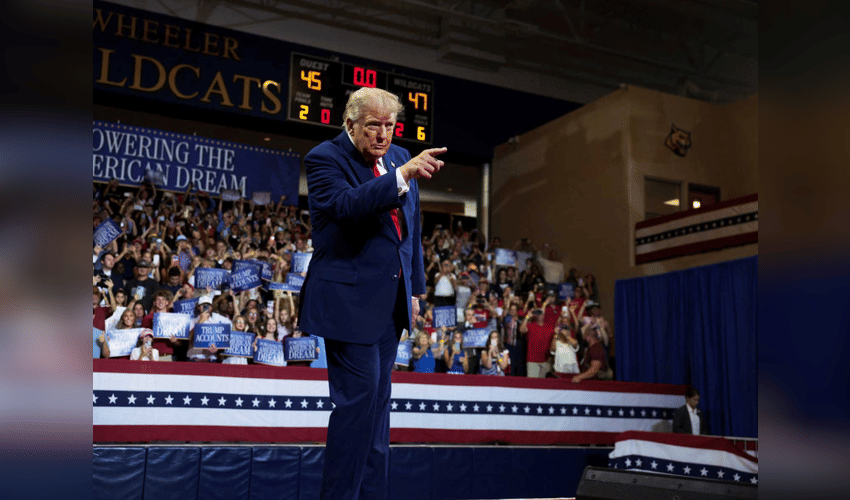

US President Donald Trump on Tuesday (local time) said the Strait of Hormuz could reopen "very soon" as part of an emerging understanding involving Iran and Oman, while cautioning that Tehran would face severe military consequences if ongoing negotiations fail. Speaking in an interview with Fox News, Trump reiterated that the United States would not permit Iran to develop a nuclear weapon and suggested that progress on reopening the strategically important shipping route was closely tied to the diplomatic process. "Iran will never have a nuclear weapon. They already can't, but it will be made official. The strait's going to be open very soon, or they're going to get hit very hard, and then the strait's going to be open," Trump said.
His remarks came as reports indicated that the United States, Iran and Oman are nearing an interim agreement aimed at reducing tensions and restoring maritime traffic through the Strait of Hormuz. According to Axios, which cited regional sources and a US official, the proposed arrangement is intended to revive negotiations between Washington and Tehran following the breakdown of a 14-point Memorandum of Understanding (MoU) last month.
The reported deal would also pave the way for renewed discussions on Iran's nuclear programme while helping restore a ceasefire between the two sides. Trump claimed that the US had been preparing for a major military operation against Iran but shifted toward diplomacy after Tehran reportedly sought negotiations.
"We were preparing for a tremendous attack, the biggest since World War II, and they contacted me asking if we could talk. I agreed because it's time to get this resolved," Trump said during the interview. The US President had earlier decided against launching large-scale military strikes after consulting key Gulf allies, opting instead to provide additional time for diplomatic efforts. However, he warned that military action remains an option if negotiations collapse.
"If they back out again, they're going to get hit really hard. They know that. They understand that. I have no choice because they cannot have a nuclear weapon," Trump said. According to Axios, the draft agreement under discussion proposes a 60-day temporary arrangement between Iran and Oman to regulate shipping through the Strait of Hormuz, with an option to extend the arrangement if necessary.
Under the proposed framework, vessels entering the Persian Gulf would travel through a northern route inside Iranian waters, while ships leaving the Gulf would use a southern corridor passing through Omani waters. The report added that no transit charges or tolls would be imposed during the temporary period. The agreement also reportedly includes plans to remove naval mines from the Strait's central shipping lane within 30 days. Once cleared, the lane would serve both inbound and outbound maritime traffic under a longer-term arrangement to be negotiated by Iran and Oman.
Trump said previous US military operations had demonstrated Washington's capabilities but expressed hope that diplomacy would ultimately prevail. "They wouldn't be negotiating if we hadn't taken strong action. We struck them very hard, but there's still a harder response available if necessary. Hopefully, we won't have to use it because discussions are progressing well," he said.
Axios also reported that the White House remains actively engaged in the negotiations. US Special Envoy Steve Witkoff has reportedly been in contact with Iranian Foreign Minister Abbas Araghchi and Omani Foreign Minister Badr al-Busaidi, while mediators from Qatar, Pakistan and Saudi Arabia have also participated in efforts to facilitate an agreement. Trump stressed that the outcome would ultimately depend on Iran's actions.
"The only thing that matters is action. They want to make a deal. We'll see what happens. If they don't, it will be unfortunate," he said. According to Axios, Araghchi has agreed in principle to the proposed framework, although final approval was required from Iran's Supreme Leader, Mojtaba Khamenei, and the Supreme National Security Council. US and regional officials told the publication that the approval process was completed on Tuesday, bringing the parties closer to formally announcing the interim agreement.



