



News
The Playbook of Suppression: How Pakistan Silences Dissent from PoJK to Balochistan
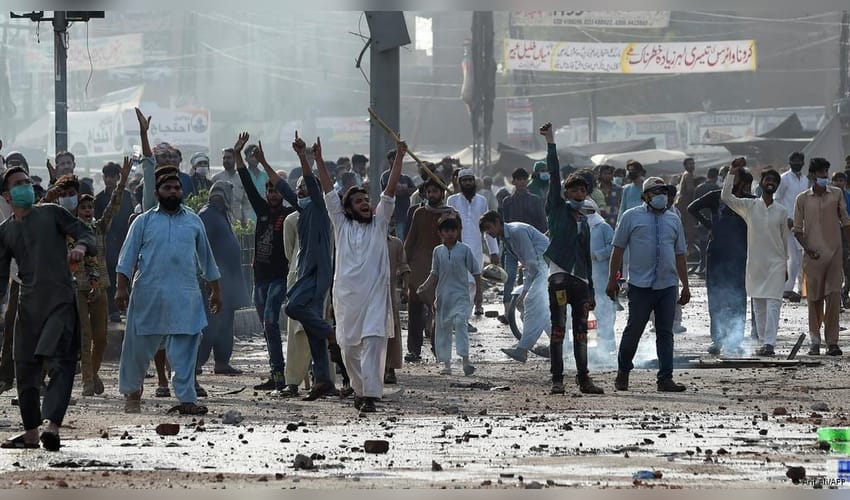

The violent crackdown on the Joint Awami Action Committee (JAAC) in Azad Jammu and Kashmir (PoJK) on 09 June 2026 represents far more than a localized security operation; it is the latest and perhaps most volatile application of a standardized, systemic strategy employed by the Pakistani state to quell ethnic and political dissent across its marginalized peripheries.
From the rugged, resource-rich mountains of Balochistan to the fertile plains of Sindh and the Pashtun-majority tribal districts of Khyber Pakhtunkhwa, the state has refined a consistent "playbook" of repression. This strategy relies on the triad of legal weaponization, communication blackouts, and overwhelming militarized force to suppress legitimate demands for autonomy, resource control, and basic human rights.
While the specific grievances of each region differ, ranging from the abolition of refugee seats in PoJK to the recovery of disappeared kin in Balochistan, the state’s response remains strikingly uniform, treating political dissent as an existential security threat that justifies the suspension of constitutional rights and the use of lethal force.
The Immediate Flashpoint: PoJK and the JAAC Crackdown
The current unrest in PoJK serves as a stark, real-time case study of these tactics in their most aggressive form, revealing the fragility of the region’s controlled democracy. The JAAC, a broad-based grassroots movement that emerged in 2023, initially focused on economic grievances such as soaring electricity prices and inflation but quickly evolved to challenge the structural imbalances of the 1974 Interim Constitution Act.
Their primary demand, the abolition of 12 legislative seats reserved for Kashmiri refugees residing in mainland Pakistan, strikes at the heart of the establishment’s control, as these seats are widely viewed as a mechanism for federal parties to manipulate local government formation and ensure loyalty to Islamabad. In early June 2026, rather than engaging in dialogue, the regional government, backed by the federal interior ministry, swiftly labeled the JAAC a "proscribed organization" under anti-terrorism laws, effectively criminalizing its entire membership and leadership.
The escalation following this ban has been swift and bloody. As of June 9, 2026, clashes in the capital Muzaffarabad and the city of Rawalakot have left at least 11 dead, including both civilians and police personnel, with over 70 others injured in crossfire and baton charges. However, according to unofficial sources and videos circulating on social media, claims have emerged that more than 500 people have been killed by the Pakistani Army.
To enforce order, authorities have deployed approximately 14,000 additional federal troops, including Rangers and Punjab Police, creating a heavy military presence that dwarfs local law enforcement capabilities. Security forces have been documented using live ammunition and shotguns against protesters, with police statements characterizing the resistance as "terrorism" to justify the lethal response.
Concurrently, the state has imposed a near-total internet and mobile shutdown, a digital siege that has severed the region from the outside world, prevented the organization of further strikes, and obscured the true scale of the violence from international observers.
Over 70 activists, including key organizers, have been detained in overnight raids, facing terrorism charges that carry the potential for decades in prison. This response mirrors the state’s historical handling of the Baloch Yakjehti Committee (BYC) and the Pashtun Tahafuz Movement (PTM), where peaceful civil rights agendas are systematically redefined as existential security threats to justify extrajudicial measures.
Legal Weaponization: The Anti-Terrorism Act
A central, unifying pillar of this pattern of repression is the calculated misuse of the Anti-Terrorism Act (ATA) and the Maintenance of Public Order (MPO) ordinance to criminalize peaceful political activity and dismantle organizational structures. These laws, originally intended to combat violent extremism, have been repurposed as tools of political engineering to silence dissent across ethnic lines.
Just as the JAAC was banned in June 2026, the PTM was officially proscribed in October 2025, and the BYC faces constant legal harassment, a designation that allows security forces to arrest members without warrants, freeze assets, and detain them for extended periods without trial. The legal mechanism for this suppression is often the "Fourth Schedule" of the ATA, a list of "proscribed persons" that has expanded dramatically to include hundreds of activists, students, and human rights defenders across Balochistan, Sindh, and PoJK.
Placement on this list subject individuals to severe restrictions, including passport embargoes, frozen bank accounts, and constant surveillance, effectively paralyzing their ability to organize or advocate. Prominent figures such as Mahrang Baloch, the central organizer of the BYC, have been repeatedly detained under these laws, often denied bail despite court orders, signaling a judicial system that is complicit in or powerless against executive overreach.
The legal framework was further strengthened in August 2025 when the National Assembly passed amendments to the ATA, explicitly allowing for preventive detention for up to three months without charge or judicial oversight. This amendment, heavily criticized by the Human Rights Commission of Pakistan (HRCP) as unconstitutional, provides a legal veneer for the arbitrary detention of dissidents.
It has been explicitly used to break the momentum of protests in both PoJK and Balochistan by allowing authorities to hold key leaders incommunicado during critical moments of mobilization. In Sindh, similar provisions are used to target nationalists from groups like the Jeay Sindh Muttahida Mahaz (JSMM), who are frequently charged with sedition or terrorism for advocating greater provincial autonomy. By framing political opposition as "terrorism," the state not only legitimizes harsh punitive measures but also delegitimizes the grievances of these movements in the eyes of the mainstream public and the international community.
The Architecture of Silence: Blackouts and Disappearances
When legal measures and bureaucratic harassment fail to silence dissent, the state resorts to the more visceral tools of information control and enforced disappearances, creating a climate of pervasive fear and impunity. The internet shutdown in PoJK is a recurring tactic that finds its most brutal parallel in Balochistan, where mobile networks are frequently suspended for days or weeks during protests or military operations.
These blackouts serve a dual purpose: they isolate the region, preventing the documentation and dissemination of evidence regarding state abuses, and they hinder emergency medical responses and economic activity, thereby punishing the broader population into submission. In the digital age, cutting off communication is tantamount to erasing a population from existence, allowing security forces to operate in the shadows without the scrutiny of journalists or human rights monitors.
Enforced disappearances remain the most harrowing and effective tool in this arsenal, functioning as a form of psychological warfare against entire communities. In Balochistan alone, the BYC documented over 1,223 cases of enforced disappearance in 2025, with 832 individuals still missing as of early 2026, including minors and women. The "kill and dump" policy, where victims are tortured and their bodies left in public spaces to instill terror, resulted in nearly 200 extrajudicial killings in the same period.
Similar patterns exist in Sindh, where nationalist activists and students vanish after being picked up by intelligence agencies, and in Khyber Pakhtunkhwa, where Pashtun men are detained at military checkpoints and never seen again. The case of Hanif Pashteen and Noor Ullah Tareen, PTM activists who were forcibly disappeared in late 2025 after attending a government-convened assembly, highlights the brazenness of these tactics.
The fate of the 70+ arrested JAAC members now hangs in the balance, raising acute fears that they will follow the same trajectory into the abyss of unofficial detention centers. Despite judicial commissions often confirming state involvement in these disappearances, convictions of security personnel remain virtually non-existent, fostering a culture of total impunity where the state acts as judge, jury, and executioner.
Regional Parallels: A Unified Strategy
The suffering of distinct ethnic groups across Pakistan reveals a unified state policy rather than a series of isolated regional conflicts, with each area facing specific manifestations of the same repressive doctrine. Balochistan faces the most intense militarization, characterized by "kill and dump" policies, drone strikes, and the targeting of students and intellectuals, as the state views its vast natural resources such as the Reko Diq mines and Gwadar port as paramount national assets that cannot be subject to local dissent.
In the Pashtun belt, the PTM was targeted not for violence, but for highlighting the trauma of landmines, extrajudicial killings, and the legacy of military operations, leading to its proscription and the displacement of thousands under new counter-terrorism initiatives like Azm-i-Istehkam. Sindh sees nationalist activists advocating for control over water resources and cultural autonomy subjected to abduction, torture, and assassination, with the state treating linguistic nationalism as sedition akin to separatism.
PoJK occupies a unique but connected position in this matrix; its "structural" repression involves constitutional barriers that deny full sovereignty, enforced by the same intelligence apparatus active in Balochistan. The JAAC protest is a direct challenge to this controlled democracy, seeking to dismantle the mechanisms of external interference. The state’s reaction deploying federal troops, banning the movement, and cutting off communications demonstrates that the threshold for tolerance in PoJK is identical to that in Balochistan or the Pashtun districts.
The common thread linking the JAAC, BYC, PTM, and JSMM is their non-violent, constitutional approach to demanding rights, which the state perceives as more dangerous than armed insurgency because it mobilizes public opinion and attracts international sympathy. By applying the same playbook of bans, blackouts, and brutality across these diverse regions, the state signals that no form of dissent, whether it concerns seats in an assembly or missing sons, will be tolerated.
Historical Continuity: From Operation Searchlight to Modern Repression
The systemic suppression witnessed today is not a new phenomenon but a direct continuation of state policies dating back to the 1971 genocide in East Pakistan. Operation Searchlight, launched on March 25, 1971, marked the beginning of a brutal military campaign aimed at crushing Bengali nationalism through mass killings, systematic rape, and the targeted elimination of intellectuals, establishing a precedent for using extreme violence to maintain territorial integrity.
The tactics employed then; indiscriminate artillery fire on civilians, mass graves and the branding of political dissenters as "enemies of the state", created a blueprint for future operations in Balochistan, Sindh, and PoJK. Just as the Pakistani military justified the 1971 crackdown as a necessary action against "separatists," it now employs identical rhetoric to legitimize the banning of the JAAC, the proscription of the PTM, and the "kill and dump" policies in Balochistan.
The evolution from the overt genocide of 1971 to the current "hybrid warfare" of enforced disappearances and digital blackouts represents a refinement, not a rejection, of this core doctrine. The state’s refusal to acknowledge the atrocities of 1971 or hold perpetrators accountable fostered a culture of impunity that persists today, allowing security forces to operate with the same lethality in Muzaffarabad and Quetta as they did in Dhaka over five decades ago. This historical thread underscores that the suffering of ethnic minorities is not an aberration but a foundational element of the Pakistani state’s approach to governance and dissent.
Conclusion
The bloodshed in PoJK is not an anomaly but a symptom of a deep, systemic crisis that permeates the Pakistani state’s relationship with its ethnic minorities. The response to the JAAC in Muzaffarabad, the BYC in Quetta, the PTM in Peshawar, and nationalist groups in Sindh remains identical: ban the movement, blackout the internet, arrest the leaders, and shoot the protesters.
This standardized approach, codified in amendments to the Anti-Terrorism Act and executed with military precision, treats political dissent as terrorism and human rights advocacy as treason. Whether through the misuse of anti-terrorism laws to detain activists for months without charge, the deployment of thousands of troops to enforce silence, or the systematic erasure of individuals through enforced disappearance, the pattern is consistent and deliberate.
Until this strategy of suppression is fundamentally broken and the state acknowledges the legitimacy of ethnic and political grievances, the cycle of violence and despair will continue to engulf Pakistan’s marginalized regions, threatening the very fabric of the nation.
Disclaimer : This image is taken from Al Jazeera.



