



News
The Machinery of Erasure: Xingjiang and China's Long War on Minority Nationalities
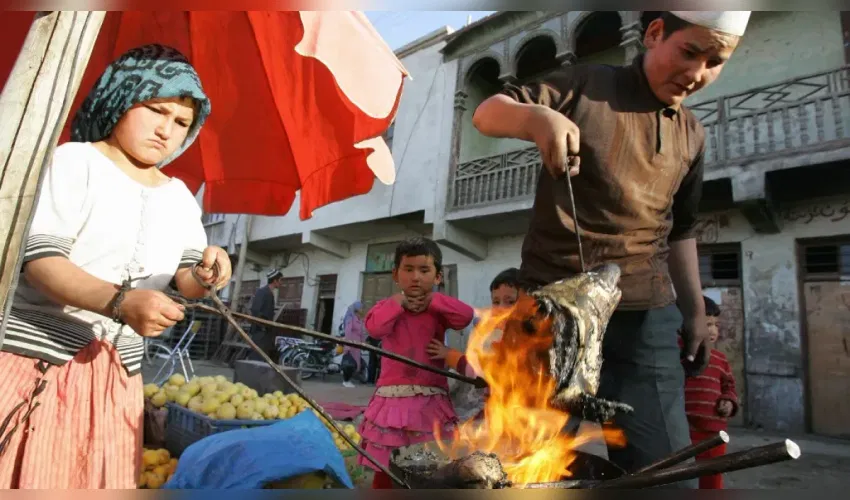

A government does not need to burn every book to erase a people; sometimes it only has to rename their villages, remove their language from classrooms, turn their prayers into “extremism,” separate children from families, and call the entire process stability. That is the tragedy of Xinjiang today: not one isolated abuse, but a system. China’s repression of Uyghurs and other Turkic Muslim minorities is part of a wider pattern in which minority nationalities are tolerated only when their identity is decorative, harmless, and politically obedient. The moment culture becomes memory, religion becomes community, language becomes resistance, or family becomes a carrier of history, the state moves in.
In 2019, The Diplomat captured the global politics around Xinjiang with unusual clarity. Twenty-two countries signed a letter criticizing China’s mass detention program, while thirty-seven countries defended Beijing’s policies. The critical letter raised concern over arbitrary detention, widespread surveillance, and restrictions targeting Uyghurs and other minorities. The pro-China letter repeated Beijing’s line that the camps were “vocational education and training centers.” Strikingly, no Muslim-majority state signed the critical letter, while several Muslim-majority governments, including Pakistan and Saudi Arabia, defended China.
That 2019 divide remains relevant today because it showed that Xinjiang was never only a human-rights issue. It was also a test of international courage. Many states saw the evidence but calculated the cost of speaking. Others treated China’s narrative as a shield for their own authoritarian practices. The result was a diplomatic silence that helped Beijing normalize a terrifying principle: that a state can redefine an entire minority community as a security problem and then demand applause for “solving” it.
The United Nations Office of the High Commissioner for Human Rights later confirmed the seriousness of what victims, researchers, journalists, and families had been saying for years. Its 2022 assessment found that serious human-rights violations had been committed in Xinjiang under China’s counterterrorism and counter-extremism policies, with discriminatory effects on Uyghurs and other predominantly Muslim communities. The report concluded that the scale of arbitrary and discriminatory detention may constitute international crimes, particularly crimes against humanity.
The pattern begins with language. China’s constitution and ethnic policy framework speak of “regional ethnic autonomy,” but in practice autonomy has narrowed wherever minority identity conflicts with Communist Party control. In Xinjiang, Tibet, Inner Mongolia, and other minority regions, the state’s preferred formula is not genuine pluralism but managed identity: dance, costume, tourism, cuisine, and slogans of “ethnic unity,” while religious institutions, native languages, local education, and independent civil society are placed under political supervision.
In Xinjiang, this took its harshest modern form after 2017. The Chinese government framed its campaign as a response to terrorism and extremism, but the measures extended far beyond any legitimate security response. The 2017 Xinjiang “de-extremification” regulation treated many ordinary religious or cultural expressions as suspect, including certain forms of dress, religious marriage practices, “abnormal” beards, religious materials, and resistance to state schooling. It also required society to participate in resisting and reporting “extremification.”
This is the first recurring pattern: securitization. The state does not merely police violence; it expands the meaning of danger until identity itself becomes evidence. A beard can become a signal. A prayer can become a file. A phone message can become a risk marker. A family abroad can become a reason for interrogation. Once identity is placed inside the security system, law no longer protects the minority citizen; law becomes the instrument through which the state disciplines the minority citizen.
The second pattern is mass surveillance. The UN assessment described evidence of widespread surveillance in Xinjiang, including police files and systems such as the Integrated Joint Operations Platform, which flagged individuals for potential detention. Surveillance in Xinjiang has never been only about cameras. It is about creating a political map of daily life: who visits whom, who worships, who travels, who contacts relatives abroad, who reads what, who refuses what, who seems insufficiently loyal.
This level of control destroys the ordinary trust that allows a community to breathe. A person begins to censor not only speech but grief. Families stop asking questions about missing relatives. Neighbors fear each other. Children learn that silence is safer than memory. A society under surveillance does not need a policeman in every room; it learns to carry the policeman inside its own mind. The third pattern is detention and “transformation.” Beijing called the facilities vocational training centers. Survivors and investigators described political indoctrination, coercive confinement, abuse, and family separation.
The UN found credible patterns of torture or cruel, inhuman, or degrading treatment in these facilities, and noted allegations of sexual and gender-based violence that appeared credible. Human Rights Watch’s 2025 world report stated that hundreds of thousands of Uyghurs remain imprisoned as part of the government’s crimes against humanity in the region. The tragedy is not only that people were detained. It is that detention was paired with ideological remaking. The goal was not simply to punish individuals; it was to redesign a people’s relationship to faith, history, language, and authority.
This is why the language of “training” was so dangerous. It transformed coercion into benevolence. It made imprisonment sound like education. It made forced loyalty sound like opportunity. The fourth pattern is the attack on children. When a state targets children’s language and family environment, it is not fighting terrorism; it is shaping the next generation away from its own inheritance. UN experts expressed alarm in 2023 that around one million Tibetan children were affected by state residential school policies aimed at assimilating Tibetans culturally, religiously, and linguistically into the dominant Han Chinese culture.
UN experts also raised concern over reports of expanded state boarding schools in Xinjiang, where Uyghur and other minority Muslim children were separated from families and not educated in their mother tongue, creating a risk of forced assimilation. This shows Xinjiang is not an exception. Tibet has faced an education system that weakens Tibetan language and Buddhist cultural transmission. Inner Mongolia saw policies replacing Mongolian with Mandarin as the language of instruction in key school subjects, followed by harassment of peaceful protesters defending mother-tongue education.
The method changes by region, but the logic is familiar: take the child, change the language, weaken the family’s role, and call the outcome national unity. The fifth pattern is cultural erasure through naming. In 2024, Associated Press reported on findings by Human Rights Watch and Uyghur Help that around 630 Xinjiang villages had names changed to remove references to Islam, Uyghur history, or Uyghur culture. Terms linked to shrines, Sufi figures, traditional instruments, and cultural memory were replaced with generic Communist Party-style words such as “happiness,” “unity,” and “harmony.”
Renaming is not cosmetic. Names are archives. A village name can carry a saint, a craft, a landscape, a memory of ancestors. When such names are removed, the state is not merely updating maps; it is editing the past. It is teaching future generations that the old words never mattered, that the place belonged first to the state and only later to the people who lived there. The sixth pattern is labor control. For years, rights groups and governments have raised concerns that poverty alleviation and labor-transfer programs in Xinjiang contain coercive elements.
In January 2026, UN experts expressed concern over a persistent pattern of alleged forced labor affecting Uyghur, Kazakh, Kyrgyz, Tibetan, and other minority groups, warning that in some cases coercive elements may amount to forcible transfer or enslavement as crimes against humanity. China rejected the allegations.
Here again, the language is revealing. “Poverty alleviation” can be real in principle, but when it operates in a securitized region where refusal is risky, families are monitored, and minorities are treated as politically suspect, employment policy can become social engineering. Work becomes not only economic activity but a mechanism to disperse communities, discipline bodies, and break inherited ways of life. The seventh pattern is secrecy. In 2026, Xinjiang’s regional regulation on guarding state secrets took effect.
The official text states that it was adopted in November 2025 and implemented from March 1, 2026. It emphasizes Party leadership, the “overall national security concept,” social stability, grassroots secrecy work, public assistance in preventing leaks, and the use of technologies including big data and artificial intelligence in secrecy protection.
For ordinary societies, secrecy laws may protect military or diplomatic information. In Xinjiang, where families are already afraid to speak and witnesses face pressure, expanded secrecy becomes a human-rights issue. It can make evidence harder to gather, reporting riskier, and accountability more distant. Global Voices described the 2026 regulation as embedding information control into Xinjiang’s existing security-governance system, especially through grassroots mobilization, work-secret lists, artificial intelligence, big data, and coordination with the Xinjiang Production and Construction Corps and military structures.
This matters because repression survives by controlling evidence. A missing person becomes a “secret.” A detention record becomes inaccessible. A local official fears leaking information. A relative abroad is threatened. A journalist cannot enter freely. A scholar cannot verify. The state then tells the world: “You have no proof.” But the absence of proof is often manufactured by the same machinery accused of abuse.
The eighth pattern is international obstruction and diplomatic pressure. After the UN report warned of possible crimes against humanity, the Human Rights Council did not even agree to hold a debate on Xinjiang. In October 2022, a draft decision to debate the situation was rejected by 19 votes against, 17 in favor, and 11 abstentions. This was not an acquittal; it was a failure of political will. The victims did not lose because their suffering was disproven. They lost because the international system bent under pressure, alliances, economic fear, and authoritarian solidarity.
That returns us to The Diplomat’s 2019 article. The 22-versus-37 split was never just a list of countries. It was a mirror held up to the world. It showed how human rights can be divided by trade, debt, ideology, and fear. It showed that Muslim identity, Western liberal rhetoric, and global institutions can all fail when principle becomes inconvenient. It showed that China’s power is not only inside Xinjiang’s checkpoints; it also operates in foreign ministries, UN voting halls, and the silence of governments that know better.
China’s suppression of minority nationalities follows a clear sequence. First, the state declares a minority region unstable or backward. Second, it expands security law until culture and religion fall under suspicion. Third, it uses surveillance to identify “risk.” Fourth, it detains, indoctrinates, transfers, or pressures people in the name of education, employment, or stability. Fifth, it targets language and children so that the next generation becomes easier to govern. Sixth, it renames places, controls archives, and criminalizes leaks. Finally, it presents the result as harmony.
This is not harmony. Harmony requires consent. What China has built in Xinjiang is obedience under pressure. The world must be honest: the question is no longer whether enough credible information exists. The UN has spoken. Human Rights Watch, Amnesty International, journalists, researchers, survivors, and diaspora families have documented the pattern. The question is whether states are willing to act when the perpetrator is powerful.
For human-rights defenders, Xinjiang is not only about Uyghurs, though Uyghur suffering must remain at the center. It is about the future of minority existence under authoritarian nationalism. If a state can decide that a people’s language is a threat, their religion is extremism, their children are state material, their villages need ideological renaming, and their pain is a secret, then the word “minority” becomes a warning rather than a protection.
The answer must begin with memory. Say the names. Preserve the language. Record the testimonies. Protect refugees from forced return. Demand access for independent investigators. Strengthen forced-labor laws. Press governments that defended or shielded Beijing to explain themselves. Treat cultural rights as human rights, not as decoration. And above all, reject the lie that repression becomes acceptable when it is organized efficiently.
Xinjiang teaches us that erasure in the modern world does not always arrive with ruins. Sometimes it arrives with policy documents, school timetables, surveillance platforms, labor contracts, village-name databases, and diplomatic letters. The machinery looks administrative. The wound is human.
Disclaimer : This image is taken from Al Jazeera.



