



Asia In News
Taslima Nasreen Condemns Lynching of Hindu Man in Bangladesh as a "Jihadist Festival"
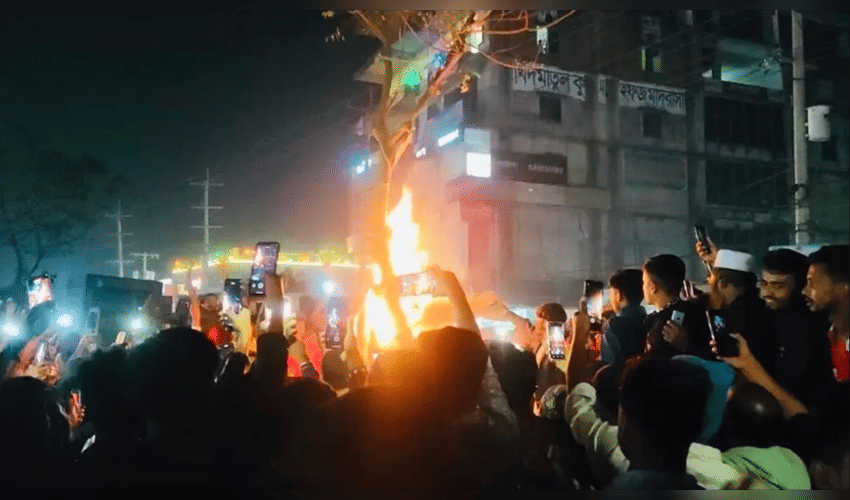

A deeply disturbing episode unfolded in the Mymensingh district of Bangladesh when Dipu Chandra Das, a young Hindu garment factory worker, was killed by a mob following unverified allegations of blasphemy. Dipu was only thirty years old and came from Bhaluka, where he worked to support his family as their primary source of income. What began as a workplace disagreement with a coworker quickly escalated into a deadly accusation that would cost him his life and expose the fragile reality faced by religious minorities in the country.
According to reports, a Muslim coworker accused Dipu of insulting the Prophet during an argument at the factory. Dipu firmly denied the claim and reportedly told others that the accusation was fabricated to settle a personal dispute. As tensions rose, local police intervened and took Dipu into custody, not as a criminal measure but as a means of protecting him from a growing crowd. Despite this, the situation rapidly spiraled out of control. A mob gathered, overwhelmed the police presence, and brutally attacked Dipu in full public view. He was beaten to death, his body was hung from a tree, and it was later set on fire, turning the killing into a horrifying spectacle that shocked observers inside and outside the country.
This violent act took place during a period of heightened unrest, with protests and anger spreading after the death of student leader Sharif Osman Hadi. Anti India sentiment and broader political instability had already inflamed emotions, creating an environment where rumors and accusations could quickly turn lethal. In such a charged atmosphere, Dipu became an easy target, his minority identity leaving him especially vulnerable to mob violence.
Exiled Bangladeshi author Taslima Nasreen responded strongly to the incident, using social media to condemn what she described as a celebration of brutality driven by religious extremism. She criticized the failure of authorities to protect Dipu despite his being in police custody and questioned whether indifference or ideological sympathy allowed the violence to unfold. Nasreen also highlighted Dipu poverty and innocence, stressing that he was an ordinary worker with no power or protection. With his death, his family was left devastated, stripped not only of a loved one but also of their only means of survival.
The interim government led by Muhammad Yunus publicly denounced the lynching and promised that those responsible would be brought to justice. Officials stated that such acts of violence had no place in the vision of a new and inclusive Bangladesh. However, the killing of Dipu Chandra Das has intensified concerns among minority communities, particularly Hindus, who have reported attacks on homes, businesses, and temples during times of political transition and unrest. Many fear that accusations of blasphemy are increasingly being used as tools to incite mob justice rather than seek lawful resolution.
Human rights advocates argue that Dipu death is not an isolated incident but part of a troubling pattern where false religious allegations trigger collective violence. They emphasize the urgent need for stronger legal safeguards, swift investigations, and truly impartial law enforcement to prevent such tragedies. Without accountability, they warn, fear and mistrust will continue to grow among vulnerable communities. As Bangladesh navigates a sensitive political phase, the killing of Dipu Chandra Das stands as a grim test of its commitment to secular values and human rights. International observers and civil society voices alike are calling for transparency, justice, and reform. The tragedy serves as a painful reminder that real progress can only be measured by the safety and dignity afforded to every citizen, regardless of faith or background.