



Asia In News
Sudhan Gurung has returned as Home Minister and announced a fresh probe into the Nepal Royal Massacre case.
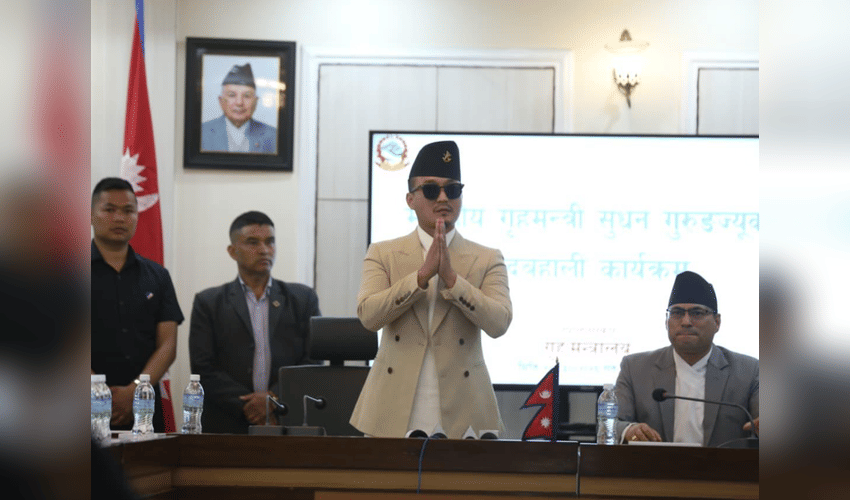

Sudhan Gurung has returned to office as Nepal's Home Minister just 48 days after stepping down from the role. On his first day back, he announced that the government would reopen and further examine the 2001 Royal Palace Massacre case by reviewing earlier investigation reports. Gurung, who resigned in April amid controversy linked to his association with a businessman, resumed his position on Tuesday. His renewed focus on high-profile unresolved cases forms part of a broader set of policy priorities aimed at strengthening national security and reviewing major criminal investigations across the country. He stated that “all criminal cases in Nepal will now be revisited.”
Referring specifically to the Narayanhiti Royal Palace incident of 19 Jestha 2058 BS (June 1, 2001), he said a fresh review process would be carried out based on previous inquiry findings. His return was formalized after President Ramchandra Paudel administered the oath of office to him, along with independent lawmaker Mahabir Pun, who has been appointed Minister for Science, Technology and Innovation.
Gurung's reinstatement came after a government committee reported no irregularities in his land ownership. However, the panel has not yet concluded its assessment of his financial transactions and shareholdings. According to the findings, he owns land in Dhankuta, while additional properties are registered under his father’s name in Chitwan and Gorkha.
A cabinet meeting earlier on Tuesday accepted the committee’s findings and approved his reappointment. The full report has not yet been released publicly. Gurung had resigned on April 22, describing the decision as a step toward ensuring transparency and allowing an impartial investigation into allegations against him.
He had emerged as a prominent political figure following Nepal's Gen Z protests and later became one of the key faces in Prime Minister Balendra Shah’s administration. During his earlier tenure, he promoted an “action-oriented” governance approach and supported moves to act on recommendations from a commission investigating the September Gen Z protests.
His tenure also drew attention due to discussions around potential legal action against senior political leaders, though officials advised that proper legal procedures would be required before any arrests. Controversy around Gurung intensified after questions were raised about his investments in micro-insurance companies and discrepancies between his declared assets and reported financial interests. These issues eventually contributed to pressure for his resignation, which he now returns from as he resumes office.



