



Politics
Sonam Wangchuk's Hunger Strike Enters Day 18; CJP Accuses Centre of Avoiding Dialogue
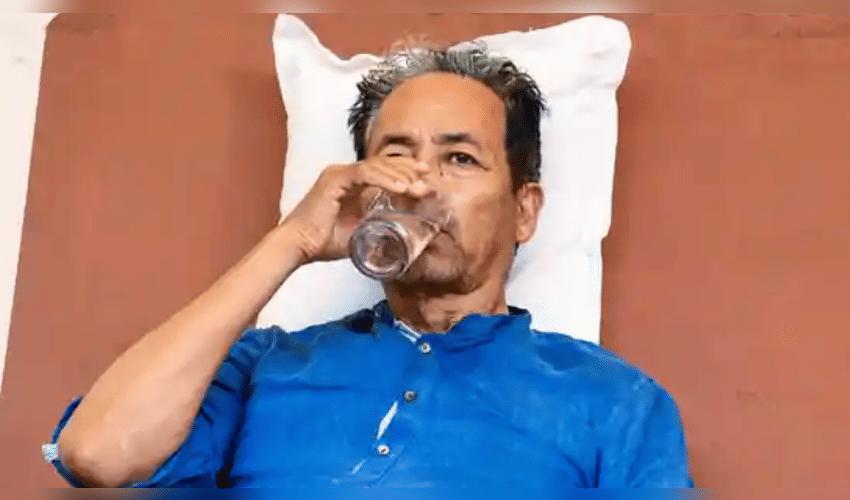

Social activist and education reform advocate Sonam Wangchuk's indefinite hunger strike entered its 18th day on Wednesday, with supporters expressing growing concern over his health and renewing calls for the Central government to initiate talks over the demands raised by the protest movement. Wangchuk has been observing the fast at Delhi's Jantar Mantar in support of the Cockroach Janata Party (CJP), which has been protesting for nearly four weeks over alleged irregularities in the NEET-UG 2026 examination and other competitive exams. The group is demanding greater accountability in the examination system and has also sought the resignation of Union Education Minister Dharmendra Pradhan.
On the 18th day of the fast, CJP founder Abhijeet Dipke criticized the Centre, claiming that repeated appeals for discussions had gone unanswered. In a statement shared on social media, Dipke alleged that the government had "received nothing but silence" despite the prolonged protest, urging Prime Minister Narendra Modi to engage in dialogue with Wangchuk and the protesting students.
Addressing requests from supporters to end his fast, Wangchuk reportedly said the focus should instead be on asking the government why it had not initiated talks. He maintained that meaningful dialogue remains the only way to resolve the ongoing impasse. Concerns over Wangchuk's health continue to intensify. According to updates from those associated with the protest, the activist has suffered significant weight loss and muscle deterioration during the prolonged hunger strike. Despite his condition, he has chosen to continue the fast, insisting that the movement is aimed at protecting the interests of millions of students affected by examination controversies.
The protest has also received support from several political leaders, public figures and members of civil society, many of whom have appealed to Wangchuk to prioritize his health while simultaneously urging the government to hold discussions with the protesters. Opposition leaders have argued that a peaceful dialogue would be the most effective way to address the concerns raised by the movement.
Apart from Wangchuk, several student activists have also been participating in parallel hunger strikes at the protest site, underscoring the broader dissatisfaction among students over the handling of examination-related issues. The demonstrations have increasingly evolved into a wider campaign demanding transparency, accountability and reforms in India's competitive examination system.
With no official breakthrough reported so far, all eyes remain on whether the Centre will open communication with Wangchuk and the CJP leadership. As the hunger strike enters its third week, the coming days are expected to be crucial both for the activist's health and for the future course of the protest.