



World
Scientists Target 1.5-Million-Year-Old Antarctic Ice to Unlock Earth's Climate History
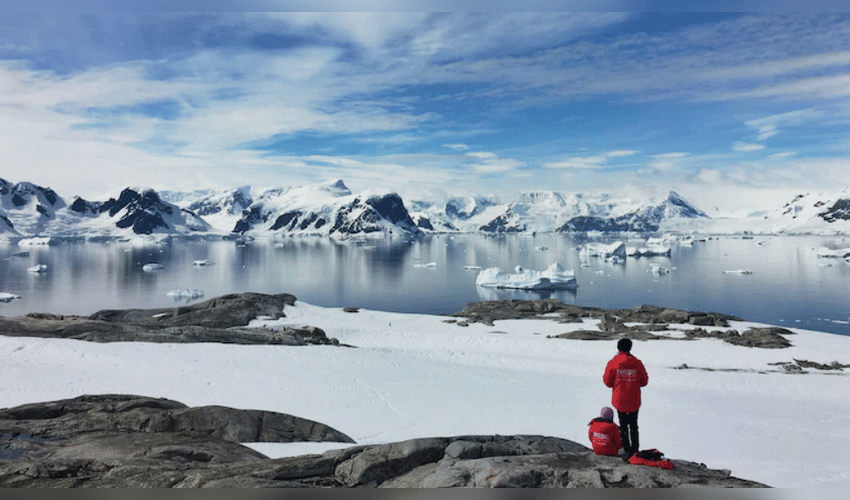

Scientists are preparing to investigate ancient ice deposits in Antarctica that could date back approximately 1.5 million years, potentially uncovering crucial evidence about Earth's climate evolution, greenhouse gas levels and the history of ice ages. The research initiative, involving Russia's Arctic and Antarctic Research Institute (AARI), aims to extend the existing climate record further into the distant past. Scientists believe that studying such ancient ice could help answer important questions about how Earth's climate system changed over millions of years.
According to information released by Russia's Ministry of Natural Resources and Environment, researchers are planning further investigations to identify and study extremely old ice formations beneath Antarctica's vast ice sheet. Antarctic ice is considered one of the most valuable sources of information about the planet's climate history. Over thousands of years, layers of snowfall have accumulated and gradually transformed into ice, trapping tiny air bubbles containing samples of the atmosphere from the time they were formed.
By analysing these trapped gases, researchers can reconstruct historical concentrations of carbon dioxide and methane, two major greenhouse gases that influence global temperatures. Ice samples also preserve chemical substances and dust particles that provide clues about past temperatures, volcanic activity and atmospheric conditions.
The proposed research is particularly significant because it could help scientists investigate a major change in Earth's ice age patterns known as the Mid-Pleistocene Transition. During earlier periods, major glacial cycles generally occurred approximately every 41,000 years. However, around one million years ago, the pattern gradually shifted towards longer cycles of roughly 100,000 years. Scientists are still investigating the reasons behind this transformation, with changes in greenhouse gas concentrations, ocean circulation and ice-sheet dynamics among the possible explanations.
Researchers hope that older Antarctic ice records could provide additional evidence to understand what triggered this shift and how different components of the climate system interacted. Russia has previously reported collecting and analysing Antarctic ice samples estimated to be around 1.2 million years old. The latest research objective is to push the scientific investigation further towards the 1.5-million-year mark.
The initiative follows significant progress by international researchers working under the Beyond EPICA – Oldest Ice project. In October 2025, the British Antarctic Survey announced that scientists had recovered and confirmed a continuous Antarctic ice-core record extending at least 1.2 million years into the past. The ice core was extracted from the Little Dome C region in East Antarctica at a depth of approximately 2,800 metres.
The discovery represented a major advancement in climate research, extending the previous continuous ice-core record of approximately 800,000 years. Scientists say extending these records could improve understanding of the relationship between atmospheric greenhouse gases and long-term temperature fluctuations. Such information is also important for testing climate models and assessing how Earth's environmental systems may respond to rising global temperatures.
Locating ice that is 1.5 million years old presents significant scientific and technical challenges. Researchers must identify areas where ancient ice has remained sufficiently undisturbed by natural movements, melting and changes within the Antarctic ice sheet. While the proposed investigation is focused on understanding Earth's distant climate history, its findings could also have implications for present-day climate research. By studying how the planet responded to natural changes in the past, scientists can gain a better understanding of long-term climate processes and improve assessments of future environmental risks. The search for 1.5-million-year-old Antarctic ice therefore represents another important effort to uncover the planet's climate history and understand the forces that have shaped Earth's environment over millions of years.
Disclaimer: This image is taken from