



Politics
SAVE Act Explained: What Trump's US Voter ID Bill Means and How It Would Work
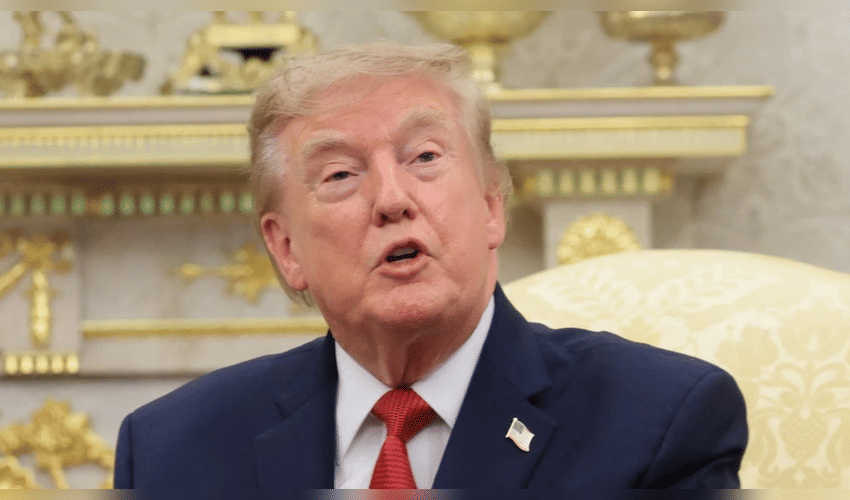

US President Donald Trump has renewed his push for the SAVE Act, a Republican-backed voting bill that would introduce stricter requirements for proving US citizenship and establishing voter identity in federal elections. The legislation, formally known as the Safeguard American Voter Eligibility Act, has become a major part of Trump's broader campaign to tighten election rules in the United States. Trump has argued that American elections should have stronger safeguards to ensure that only eligible citizens are allowed to register and vote.
The bill would require people registering to vote in federal elections to provide documentary proof of US citizenship. It would also establish identification requirements for voters and seek changes to rules governing mail-in voting. Trump has recently cited India's election system while making the case for stronger voter identification requirements in the United States. He pointed to India's widespread use of voter identification and contrasted it with the US system, where voting rules vary considerably between states.
The White House has described the proposed legislation as an effort to strengthen election integrity and prevent noncitizens from participating in federal elections. Supporters argue that requiring documentary proof of citizenship would give election officials a stronger mechanism for verifying voter eligibility. The proposal, however, has faced strong opposition from Democrats and voting-rights organisations. Critics argue that the requirements could make registration more difficult for eligible Americans who do not have easy access to citizenship documents.
The disagreement is particularly focused on what voters would have to produce to establish their citizenship. While documents such as a US passport or birth certificate could provide proof, some voters may face difficulties if their identification documents contain different names or if they do not have the required paperwork readily available. Opponents of the bill also maintain that noncitizens are already prohibited from voting in federal elections under US law. They argue that introducing additional documentation requirements could create barriers for eligible voters without addressing a widespread problem.
Republicans, meanwhile, say the legislation is necessary to strengthen confidence in the electoral system. Trump has repeatedly urged Republican lawmakers to move the bill through Congress, particularly with the 2026 midterm elections approaching. The legislation has passed the House of Representatives but remains stalled in the Senate. Republicans hold a majority in the Senate, but the bill faces a significant procedural hurdle because most major legislation requires 60 votes to overcome a filibuster.
The timing of the debate has added further urgency. If Congress were to approve major changes to federal voting rules close to the midterm elections, election officials would need to make substantial preparations, including updating registration procedures, voter guidance and administrative systems. The SAVE Act has not become federal law, meaning there is no new nationwide federal requirement currently forcing voters to provide additional citizenship documents or comply with the proposed national voting rules.
The legislation nevertheless remains a significant political issue, with Trump and Republicans presenting it as an election-security measure while Democrats and voting-rights groups warn that it could make voting more difficult for some eligible Americans. With the midterm elections approaching, the future of the SAVE Act is likely to remain closely tied to the wider US political battle over voter identification, election administration and access to the ballot.



