



News
President's Office Turns Down TMC Outreach, Citing 'Paucity of Time' in Bengal Protocol Row
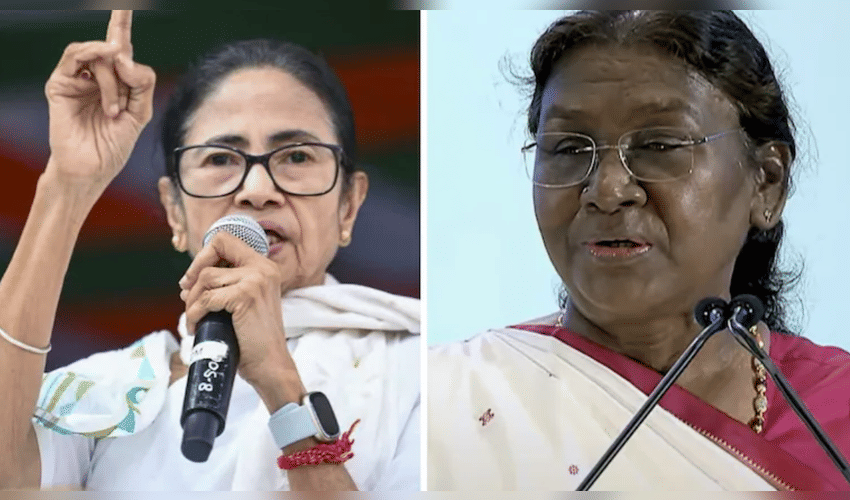

President Droupadi Murmu’s office has declined a fresh overture from the Trinamool Congress, saying the President does not have time to meet a party delegation despite the TMC’s request for a high‑level briefing. The move has deepened the political drama around a simmering protocol row tied to the President’s recent visit to West Bengal, just weeks ahead of the state Assembly elections.
The Trinamool Congress had formally approached Rashtrapati Bhavan seeking an appointment for a delegation to apprise the President about the state government’s welfare schemes for tribal communities. The party had framed the meeting as a chance to highlight Bengal’s development work among marginalised groups, especially in the context of the upcoming polls.
The President’s Secretariat replied that the head of state’s schedule was too constrained to accommodate the proposed meeting. The terse response, citing what it described as a “paucity of time,” has been interpreted by the TMC and its allies as a political snub rather than a routine calendrical constraint. The party has now used the rejection to reinforce its claim that the Centre is deliberately sidelining the Bengal government in the build‑up to the Assembly elections.
The current friction stems from the President’s recent trip to Siliguri for an international tribal conference, where questions were raised over the arrangements at the venue and the absence of certain state representatives. The Centre and the BJP have portrayed the episode as a breach of protocol and an affront to the dignity of the highest constitutional office, with Prime Minister Narendra Modi calling the developments “shameful and unprecedented.”
The Bengal government, led by Chief Minister Mamata Banerjee, has pushed back, arguing that the Civil Aviation department and private organisers were responsible for the on‑ground logistics and that the district administration did not violate any formal protocol requirements. The Trinamool has also accused the BJP of weaponising the President’s office to project the state government as disrespectful towards national institutions.
The timing of the protocol dispute and the subsequent refusal of the TMC’s meeting request has given the row a clear electoral edge. With the West Bengal Assembly elections scheduled for April–May 2026, the Trinamool has been running a 60‑day outreach campaign across dozens of Scheduled Caste and Scheduled Tribe‑dominated constituencies. The party had hoped a direct briefing with the President would lend symbolic weight to its narrative of pro‑tribal governance.
Instead, the “no time” reply has allowed the BJP to amplify its storyline that the Rashtrapati Bhavan is being dragged into partisan politics, while the TMC can counter‑narrate that the Centre is turning constitutional propriety into a partisan cudgel. In a state where image wars often shape voter behaviour as much as policy announcements, the battle over a missed meeting may well become a talking point in campaign rallies and media debates over the coming weeks.



