



News
PM Modi lauds Armed Forces' bravery on Op Sindoor anniversary, calling it a strong message against terrorism.
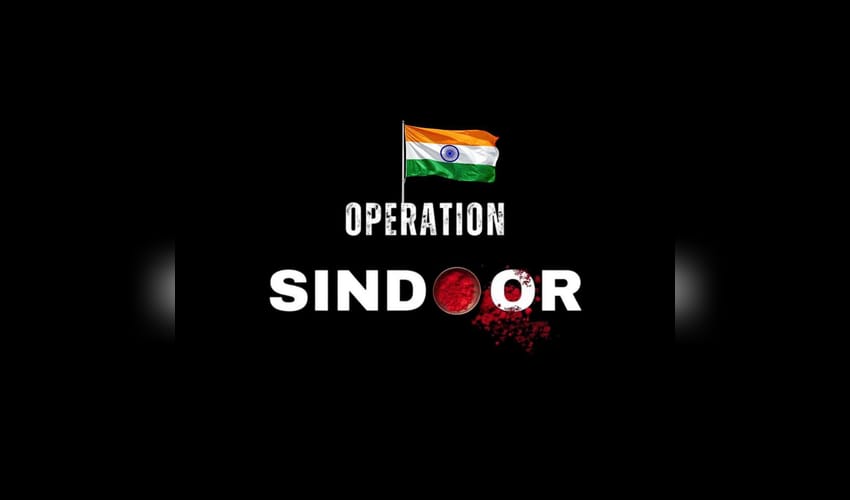

Prime Minister Narendra Modi on Thursday stated that Operation Sindoor symbolised India’s strong stance against terrorism and reaffirmed the nation’s dedication to safeguarding national security. Commemorating the first anniversary of the operation, PM Modi praised the bravery, accuracy, and professionalism displayed by the Indian Armed Forces in response to the Pahalgam terror attack.
In a post on X, the Prime Minister said that a year ago, India’s armed forces demonstrated exceptional courage and determination during Operation Sindoor, delivering a decisive response to those responsible for attacking innocent civilians in Pahalgam. He added that the entire country salutes the armed forces for their valour and noted that the operation showcased India’s uncompromising approach towards terrorism and its unwavering commitment to national security.
PM Modi further highlighted that the mission reflected the preparedness, coordination, and professionalism of the armed forces. He also emphasised the increasing synergy among India’s military branches and the strength gained through the country’s push for self-reliance in defence manufacturing. Reaffirming India’s resolve, he stated that the nation remains committed to eliminating terrorism and dismantling the networks that support it.
As a tribute to the armed forces on the anniversary of the mission, the Prime Minister also changed his display picture on X to one dedicated to Operation Sindoor. Launched on May 7, 2025, after the deadly Pahalgam terror attack that killed 26 civilians, Operation Sindoor was designed as a focused and strategic mission aimed at destroying terror infrastructure across the Line of Control and deeper inside Pakistan. The operation relied on intelligence inputs from multiple agencies, which identified nine key terror camps targeted during the strikes.
India’s response involved extensive planning and intelligence-based execution to minimise collateral damage while maintaining operational ethics and avoiding civilian casualties. Following the operation, Pakistan attempted retaliatory drone and UCAV attacks on Indian airbases and logistical facilities. However, India’s layered air defence systems effectively intercepted and neutralised these threats. The Integrated Command and Control Strategy played a major role by enabling real-time coordination, assessment, and interception of hostile targets.
Operation Sindoor demonstrated seamless cooperation between the Indian Army, Air Force, and Navy, backed by various government agencies and departments. The Indian Air Force carried out precision strikes on strategic targets, including the Nur Khan and Rahimyar Khan air bases, while successfully defending Indian airspace from retaliatory attacks using systems such as Akash missiles, Pechora, and OSA-AK platforms.
The Indian Army also played a significant role in offensive and defensive operations, deploying multiple air defence systems to counter drones and loitering munitions launched from across the border. Despite repeated attacks, Indian forces effectively protected both military and civilian assets. The Indian Navy ensured maritime dominance by deploying its Carrier Battle Group equipped with MiG-29K fighter jets and surveillance helicopters. The Navy maintained continuous monitoring over the maritime region and prevented hostile movements from Pakistan’s western coastline, reinforcing India’s strategic control at sea.
The Border Security Force also contributed significantly by foiling a major infiltration attempt in Jammu and Kashmir’s Samba district. BSF personnel detected suspicious activity and engaged infiltrators in a heavy exchange of fire, successfully neutralising at least two intruders and recovering weapons and ammunition. Operation Sindoor emerged not only as a tactical military achievement but also as a strong strategic message reflecting India’s defence capabilities and determination against terrorism.
Disclaimer: This image is taken from ANI.