



News
Pakistan's Kashmir Crackdown Deepens as Economic Grievances Fuel Protests
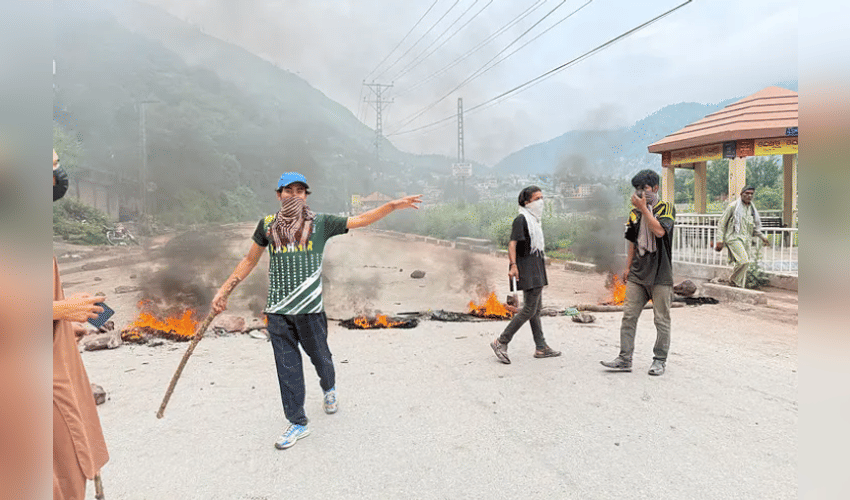

Pakistan-administered Kashmir has witnessed growing unrest as long-standing economic and political grievances have developed into a broader challenge to Islamabad’s authority. According to a recent TIME report, more than 80 people have been killed by security forces since protests began in June, although the exact civilian death toll remains disputed.
The protests are being driven largely by everyday concerns, including high electricity bills, rising food prices, unemployment and demands for greater political representation. Residents argue that the region’s economic difficulties have been compounded by policies imposed from Islamabad, leaving them with little influence over decisions affecting their daily lives.
At the centre of the movement is the Joint Awami Action Committee (JAAC), a nonpartisan coalition that emerged from citizens’ committees representing traders, lawyers, students and community leaders. Formed in 2023, the group initially focused on reducing electricity and wheat prices, ending official privileges and strengthening elected local government.
The movement expanded rapidly after authorities responded with arrests and restrictions. Strikes, shutdowns and demonstrations spread across towns and villages, demonstrating the JAAC’s ability to mobilise supporters beyond traditional political party structures. A major confrontation occurred in May 2024, when a large protest march headed towards Muzaffarabad. Clashes resulted in the deaths of at least four people, including three protesters and a police officer. Islamabad eventually announced a relief package worth roughly 23 billion Pakistani rupees, including subsidised electricity and lower wheat prices.
However, the economic concessions failed to resolve deeper questions over political authority. Although Pakistan-Occupied Kashmir has its own president, government, legislature and courts, Islamabad retains considerable influence over administration, security and other key areas. Senior officials, including the chief secretary and inspector general of police, are appointed by the federal government.
The role of Pakistan’s military has further intensified concerns about political autonomy. The report argues that the military maintains significant influence over national security and political affairs, while the Army’s 12th Infantry Division has operational responsibility in the region. Human rights groups and activists have also raised concerns about restrictions on political activity and freedom of expression.
Tensions escalated further in June when Pakistani authorities banned the JAAC under anti-terrorism laws and launched a broader crackdown ahead of regional elections. Protest leaders reported scores of deaths in late July, while Islamabad defended the actions of its security forces and officials accused protesters of being militants. The number of civilian casualties remains contested.
The unrest also affected the regional elections. The JAAC called for a boycott, making the removal of the 12 refugee seats one of its key demands. Turnout in the first two phases was lower than in previous elections, while voting in the third phase was postponed because of continued unrest. The continuing protests suggest that the crisis is no longer simply about electricity prices or the cost of basic goods. They increasingly reflect demands for political accountability, stronger local representation and greater control over decisions affecting the region.
The developments also expose a contradiction in Islamabad’s longstanding Kashmir narrative. Pakistan has repeatedly criticised India over alleged human rights violations in Kashmir and emphasised the principle of Kashmiri self-determination. Yet the response to dissent in Pakistan-administered Kashmir has raised questions about whether Islamabad applies those principles consistently within the territory it controls.
For Pakistan, suppressing the unrest through force may offer only a temporary solution. The growing movement indicates that residents are seeking more than cheaper electricity and food. They are demanding political representation, accountability and a greater say in their own governance.
Disclaimer: This image is taken from TIME.



