



Asia In News
Pakistan's Fazlur Rehman Rejects Call to Form Militias, Challenges Army Leadership to Contest Elections
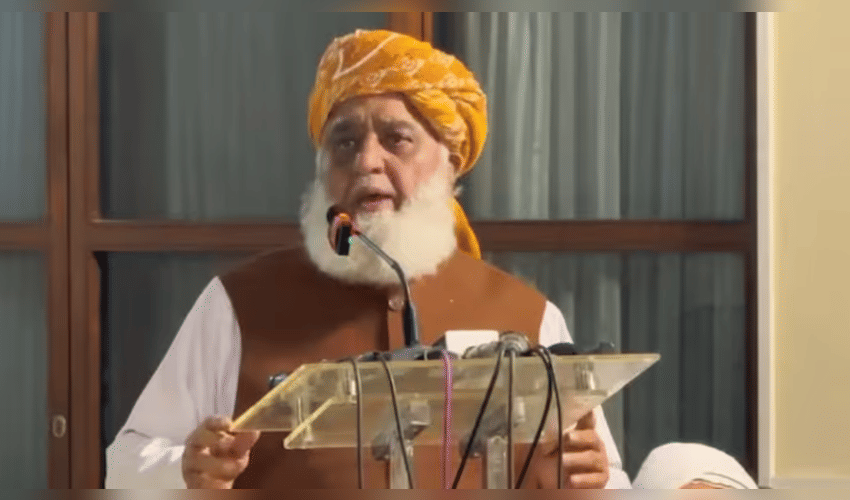

Pakistani religious and political leader Maulana Fazlur Rehman has strongly opposed calls for civilians to organize armed militias to combat terrorism, saying security is the responsibility of the state and not ordinary citizens. Addressing a public gathering, the chief of Jamiat Ulema-e-Islam (F) (JUI-F) said he would not support or form any "Lashkar" (militia), arguing that creating civilian armed groups would only fuel violence and deepen instability.
"The government and the military are responsible for protecting the country. They receive public funds for this purpose. It is not the job of citizens to raise militias," Rehman said during his speech. His remarks came amid discussions on public participation in Pakistan's fight against militant groups. While acknowledging the importance of public support in tackling terrorism, Rehman maintained that citizens should not be expected to take up arms or replace professional security forces.
Warning against the long-term consequences of such an approach, he said civilian militias could trigger personal vendettas and prolonged cycles of violence, making the country's security challenges even more difficult to resolve. In one of his sharpest criticisms of Pakistan's military establishment in recent times, Rehman also questioned the armed forces' influence in the country's political affairs. He said that if military leaders wished to play a political role, they should resign from service and seek a public mandate through democratic elections.
The comments are being viewed as a rare public challenge to Pakistan's powerful military leadership, which has historically played a significant role in the country's political and security landscape. Pakistan has long experienced a complex relationship between elected governments and the military, with the armed forces often accused by political parties and analysts of exerting considerable influence over governance. Rehman's latest statement is expected to intensify the ongoing debate over the balance of power between civilian institutions and the military.
The speech comes at a time when Pakistan continues to face security threats from militant organizations, particularly in Khyber Pakhtunkhwa and Balochistan, where attacks on security personnel have increased in recent months. Authorities have repeatedly emphasized the need for coordinated efforts to counter terrorism. There has been no immediate response from Pakistan's military to Rehman's remarks. Political observers believe the statement could further shape the national conversation on civil-military relations and democratic accountability as the country navigates both security and political challenges.



