



News
Pakistan's Credibility Challenge on Display in Latest Iran Controversy
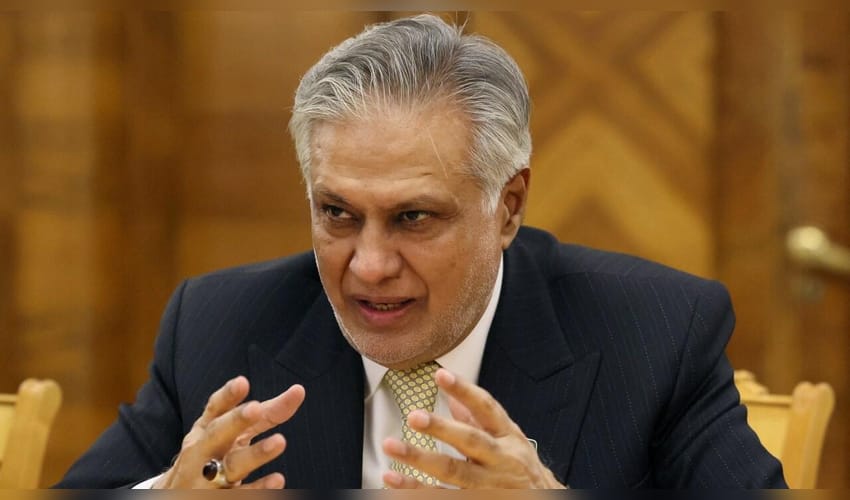

Pakistan has found itself confronting yet another diplomatic controversy after reports surfaced alleging that Deputy Prime Minister and Foreign Minister Ishaq Dar discussed sensitive aspects of Iran's nuclear programme during a meeting with US Secretary of State Marco Rubio in Washington.
Islamabad has categorically rejected the claims. Foreign Office spokesperson Tahir Andrabi stated that no information regarding Iran's nuclear programme was shared during the meeting and dismissed reports suggesting otherwise. Nevertheless, the episode has once again highlighted a recurring challenge facing Pakistan: a growing credibility gap that allows unverified claims to rapidly gain international attention.
The controversy originated from remarks attributed to former CIA analyst Larry Johnson, who cited an unnamed source and claimed that discussions between Dar and Rubio revealed information about Iran's intentions regarding its strategic independence. According to the allegation, the conversation reportedly alarmed American officials. No public evidence has been produced to support the claim, and Pakistan has strongly denied it.
Yet the larger issue extends beyond the specific allegation. Pakistan's foreign policy has often been characterized by attempts to maintain relationships with competing powers, including the United States, China, Gulf states, and neighboring Iran. While such balancing can offer strategic advantages, it can also generate suspicion when questions arise regarding confidential diplomatic exchanges.
For Islamabad, the controversy arrives at a particularly sensitive time. Pakistan seeks stable relations with Tehran while simultaneously engaging Washington on regional security, economic cooperation, and geopolitical issues. Any perception that Pakistan may be acting as an intermediary, messenger, or source of sensitive information risks creating mistrust among partners.
Critics argue that repeated controversies whether substantiated or not reflect a broader problem. Pakistan frequently finds itself responding to allegations, rumors, and diplomatic disputes rather than setting the narrative. This reactive posture can weaken its ability to project itself as a predictable and reliable international actor.
The government's swift denial may help contain immediate speculation, but the episode serves as a reminder that credibility is a strategic asset. In an era of rapid information flows and geopolitical competition, countries are increasingly judged not only by their actions but also by perceptions of their reliability.
Ultimately, the Iran-related claims may prove unfounded. However, the speed with which such allegations gained traction underscores the diplomatic burden Pakistan faces. Restoring confidence among international partners requires not only denying questionable reports but also building a reputation that makes such claims less believable in the first place. Until then, Islamabad is likely to remain vulnerable to periodic controversies that place its foreign policy under uncomfortable scrutiny.
Disclaimer : This image is taken from Money Control.



