



World
Pakistan's Counterterrorism Failure: : A State That Cannot Break Its Militant Networks
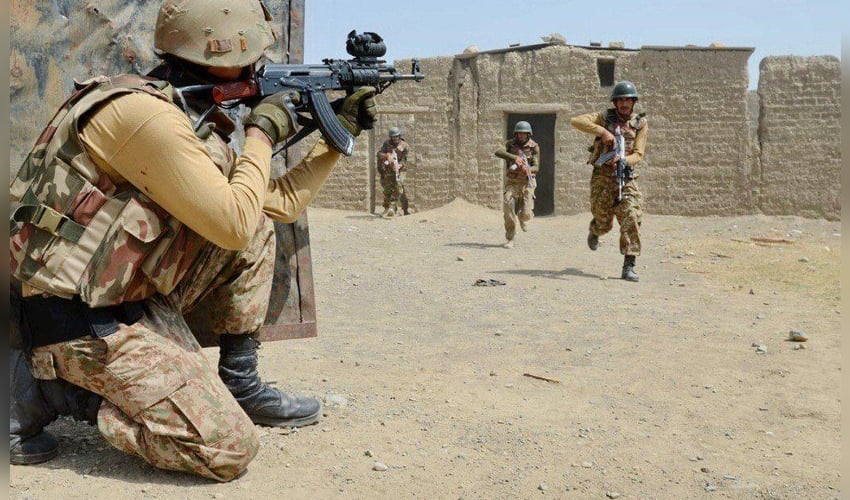

Pakistan’s repeated declarations of commitment to fighting terrorism are increasingly difficult to reconcile with the scale of militant activity continuing within its borders. Despite years of military operations, counterterrorism campaigns and international pledges, armed organisations remain active across the country, exposing serious weaknesses in the state’s security strategy and raising uncomfortable questions about its political will.
The latest assessment by the US Congressional Research Service (CRS), updated in March 2026, identifies 15 significant militant organisations operating in or launching attacks from Pakistan. Twelve are designated Foreign Terrorist Organisations under US law. The report describes groups with different objectives, including international terrorism, operations targeting Afghanistan, militancy directed towards India and sectarian violence. It also highlights the failure of repeated military offensives and hundreds of thousands of intelligence-based operations to eliminate numerous US- and UN-designated organisations operating on Pakistani soil.
This is not simply a security problem that can be explained away by instability in neighbouring countries. It is also a question of state effectiveness and accountability. Pakistan has maintained extensive security institutions and repeatedly announced counterterrorism plans, yet its inability to dismantle entrenched militant networks suggests that military action alone has not produced a lasting solution. The continued presence of these organisations raises concerns about enforcement, intelligence failures and the consistency with which the authorities pursue different militant groups.
The scale of the crisis is reflected in the 2026 Global Terrorism Index, published by the Institute for Economics and Peace. Pakistan ranked first among the countries most affected by terrorism in 2025, recording 1,139 deaths, 1,595 injuries and 1,045 incidents. It was the sixth consecutive year in which terrorism-related deaths increased. The Tehrik-e-Taliban Pakistan (TTP) alone was attributed 637 deaths from 595 attacks, accounting for 56 per cent of the country's terrorism-related fatalities.
These figures expose the enormous gap between official counterterrorism claims and conditions on the ground. Pakistan's security establishment has repeatedly relied on military operations to demonstrate its determination, but the continuing resurgence of armed groups points to a deeper failure. A strategy that produces repeated offensives without permanently dismantling militant infrastructure cannot credibly be presented as a comprehensive victory against terrorism.
Another major concern is the distinction between formally banning an organisation and actually dismantling its operational networks.
Pakistan cannot continue to treat terrorism as a problem created entirely by external circumstances while avoiding scrutiny of its own institutions and policies. Cross-border militant activity and regional instability are genuine security challenges, but they do not explain away the persistence of multiple organisations, the failure of enforcement or the inability to prevent repeated attacks.
The country's credibility will ultimately depend on measurable action rather than diplomatic assurances. That means dismantling entire militant networks, pursuing those who finance and facilitate them, preventing recruitment, ending any selective distinction between organisations based on their political or strategic utility, and ensuring transparent accountability for failures.
For years, Pakistan has presented itself as a frontline partner in the international fight against terrorism. Yet its current position at the top of the Global Terrorism Index and the continued presence of internationally designated militant groups reveal a deeply troubling contradiction. Until the state demonstrates that every terrorist organisation is treated as a threat rather than selectively targeted according to its interests, its counterterrorism promises will remain under serious international scrutiny.
Disclaimer: This image is taken from South Asian Voices.