



News
Pakistan's Army's Expanding Grip: Asim Munir Now Takes Charge of Population Policy Amid Civilian Governance Crisis
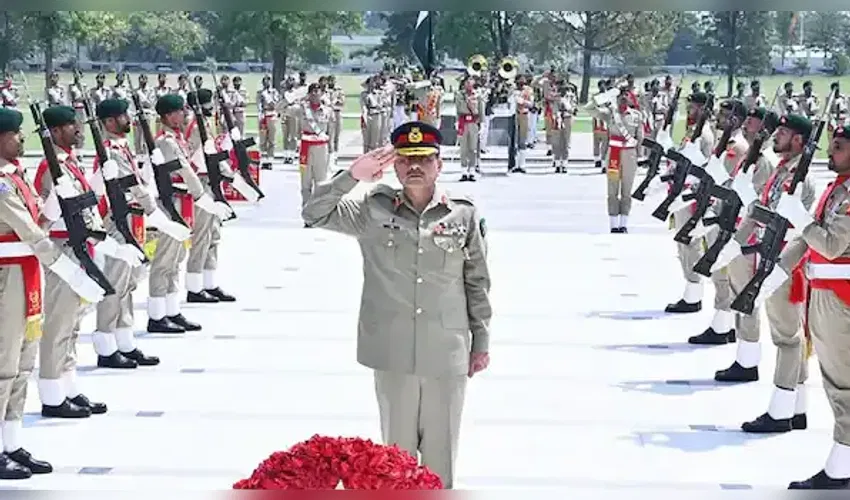

Pakistan’s military establishment appears to be extending its influence far beyond national security, with Army Chief Field Marshal Asim Munir now reportedly taking a role in shaping the country’s population policy. The latest development has reignited concerns over the growing dominance of the military in Pakistan’s civilian affairs, where elected institutions increasingly appear to be taking a back seat.
According to Pakistani Health Minister Syed Mustafa Kamal, Munir has joined a high-level committee tasked with proposing policy reforms to address Pakistan’s rapidly growing population. The announcement, made on Thursday, was presented as a demonstration of the government's commitment to tackling demographic challenges. However, it also underscored a familiar trend in Pakistan: the military's expanding involvement in areas traditionally managed by civilian ministries.
The inclusion of the army chief in discussions on population control has surprised many observers. Population management has long been considered a public health and socio-economic issue requiring expertise in healthcare, education, women's empowerment, and family planning. Instead, the government has chosen to involve the country’s most powerful military figure, further blurring the line between civilian governance and military authority.
Pakistan has witnessed years of economic instability, rising inflation, mounting public debt, and declining investment. Critics argue that instead of strengthening democratic institutions and empowering civilian experts, successive governments have increasingly relied on military leadership to steer policy on issues ranging from economic management to foreign relations and now social development.
Observers note that the military has gradually expanded its influence into virtually every major sector of governance. Beyond defense and national security, the armed forces have played visible roles in economic planning, infrastructure development, disaster management, diplomacy, and internal administration. The latest assignment on population policy adds another civilian domain to the military's growing portfolio.
The government has not disclosed what specific reforms are under consideration or what role Munir is expected to play within the committee. Health Minister Kamal merely stated that Prime Minister Shehbaz Sharif's collaboration with the army chief demonstrates the seriousness of the government's intent to curb population growth.
Pakistan's population has crossed 250 million, making it one of the world's fastest-growing countries. Rapid population growth has placed increasing pressure on healthcare, education, employment, housing, food security, and public infrastructure. Experts have long advocated for investments in education, maternal healthcare, women's empowerment, and voluntary family planning programs as sustainable solutions.
However, critics argue that the government's latest move reflects a deeper institutional imbalance rather than a comprehensive policy response. They contend that involving the military in civilian policymaking risks weakening democratic accountability and sidelines the professionals and public institutions better equipped to address complex social challenges.
Political analysts say the episode illustrates how Pakistan's military continues to occupy a central role in governance, often extending well beyond constitutional responsibilities. As civilian institutions struggle with economic crises, political instability, and governance challenges, the army's influence appears to be expanding into virtually every sphere of public administration.
For many observers, the creation of a population policy committee featuring the army chief symbolizes a broader reality in Pakistan where the military increasingly shapes decisions that would traditionally fall under elected governments and civilian experts. Whether this approach produces meaningful reforms remains uncertain, but it has once again raised questions about the balance of power between Pakistan's civilian leadership and its powerful military establishment.
Disclaimer : This image is taken from Firstpost.



