



Politics
Pakistan Hits Back at Jaishankar, But Reality Points to Its Own Security Establishment
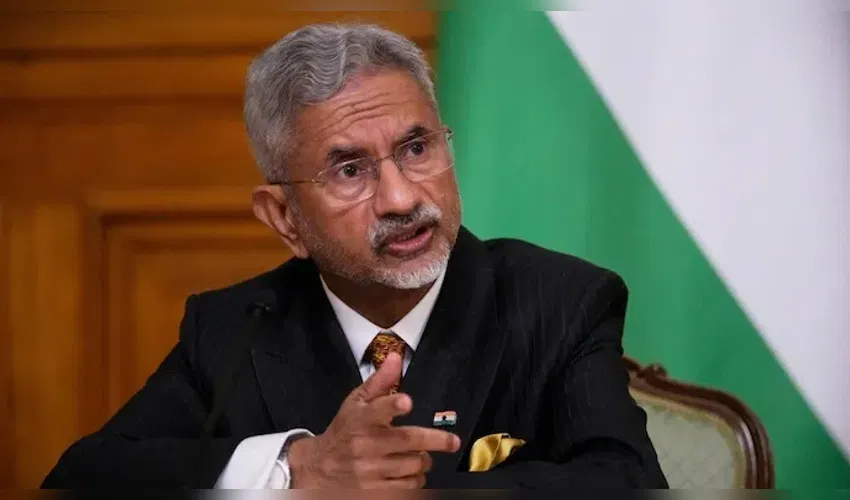

Pakistan has sharply reacted to Indian External Affairs Minister S. Jaishankar’s recent statement that India’s long-standing security problems stem largely from Pakistan’s military establishment. Islamabad condemned the remarks as “baseless” and “provocative,” yet the response has once again exposed the deep insecurities that surround Pakistan’s civil–military dynamics.
A Predictable Reaction From Islamabad
Pakistan’s foreign office issued a familiar rebuttal, accusing India of “misleading narratives.” But the rebuttal avoided addressing the core issue raised by Jaishankar: the dominant role of Pakistan’s military in shaping regional instability.
For decades, Pakistan’s security apparatus has openly and covertly supported non-state actors as instruments of foreign policy. These networks, cultivated and protected by segments of the military and intelligence establishment, have repeatedly targeted India, Afghanistan, Iran, and even Western interests.
Civil–Military Imbalance Remains Pakistan’s Central Problem
Political analysts have long noted that Pakistan’s elected civilian governments function under the shadow of Rawalpindi. When confronted with criticism related to cross-border terrorism, Pakistan’s civilian ministries routinely deflect responsibility because they lack the power to change policy even if they wanted to.
Jaishankar’s remarks essentially highlight what the world has observed for years: Pakistan’s military continues to operate as the state’s most powerful institution, often prioritizing strategic obsessions over regional peace.
Global Mood Has Shifted
Pakistan’s attempt to counter India’s criticism is also undermined by changing global attitudes. Countries that once maintained strategic ambiguity now openly express concern about Pakistan’s role in destabilizing South Asia. Repeated crackdowns on extremist groups have been symbolic rather than structural, aimed at avoiding international sanctions rather than genuinely reforming the security ecosystem.
India’s Stand Finds Wider Support
India’s argument that dialogue and peace cannot progress while Pakistan’s military nurtures anti-India militant outfits has increasingly gained international acceptance. The global community today views cross-border terrorism as Pakistan’s internal failure spilling into the region, not a bilateral dispute.
A Moment for Introspection, Not Outrage
Instead of attacking Jaishankar, Pakistan could use this moment for introspection. Addressing its chronic civil–military imbalance, dismantling terror networks, and prioritizing economic recovery over geopolitical rivalry would serve Pakistan far better than offering defensive rhetoric.
But if history is any guide, Pakistan is likely to continue denying what is evident to the world: many of its security challenges and the region’s originate from within its own military establishment.
This image is taken from India Today.



