



News
Pakistan Faces Abraham Accords Dilemma As Shehbaz Sharif And Asim Munir Rush To Saudi Arabia
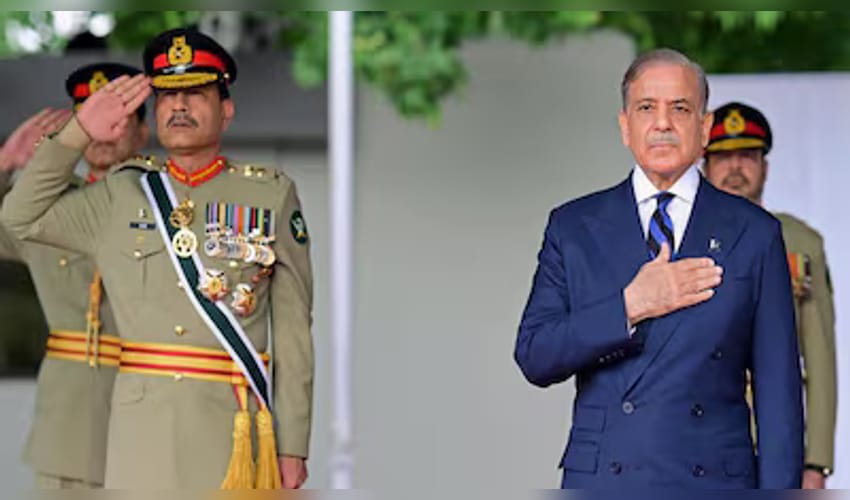

Pakistan Prime Minister Shehbaz Sharif and Army chief Field Marshal Asim Munir are headed to Saudi Arabia amid mounting international pressure on Islamabad over the Abraham Accords and its increasingly fragile role in the ongoing US-Iran peace process.
The high-level visit comes at a sensitive moment for Pakistan, which is struggling to balance competing relationships with Saudi Arabia, Iran, China and the United States while facing growing scrutiny over its diplomatic credibility and strategic direction.
According to reports, the Saudi visit is expected to focus heavily on regional security, the Iran conflict, oil cooperation and Washington’s broader push to expand the Abraham Accords framework in the Muslim world. Analysts believe Riyadh could play a key role in shaping Pakistan’s next diplomatic moves.
The trip has intensified attention on Pakistan’s growing foreign policy contradictions. Islamabad has attempted to portray itself as a mediator between the United States and Iran while simultaneously rejecting any suggestion of recognising Israel under the Abraham Accords.
Pakistan Defence Minister Khawaja Asif recently declared that joining the Abraham Accords was “not acceptable” for Pakistan, insisting that the country’s official position on Israel would remain tied to the creation of an independent Palestinian state.
However, observers say Pakistan’s leadership now finds itself trapped between domestic political realities and external diplomatic pressure. Any shift toward recognising Israel could trigger massive backlash from religious groups, opposition parties and hardline organisations inside Pakistan.
At the same time, refusing to engage with the Abraham Accords framework risks weakening Islamabad’s standing with Washington and Gulf allies at a time when Pakistan remains heavily dependent on foreign financial and diplomatic support.
The Saudi visit also once again underlines the dominant role of Pakistan’s military establishment in shaping foreign policy. Analysts note that Asim Munir has increasingly become the face of Pakistan’s international diplomacy, overshadowing civilian institutions in negotiations involving Iran, China, Gulf states and the United States.
Critics argue the military-driven nature of Pakistan’s diplomacy reflects deeper governance problems within the country, where elected leaders often appear secondary to the army leadership in major strategic decisions.
Pakistan’s diplomatic balancing act has become even more complicated following reports that Iranian military aircraft may have used Pakistani airbases during recent tensions with the United States. American lawmakers, including Senator Lindsey Graham, have openly questioned Islamabad’s neutrality and reliability as a mediator.
Meanwhile, Saudi Arabia remains one of Pakistan’s most important economic lifelines. Islamabad continues to rely heavily on Saudi financial assistance, oil support and labour remittances as Pakistan struggles with inflation, debt pressure and economic instability.
Regional experts warn that Pakistan now faces a difficult geopolitical dilemma. Aligning too closely with Saudi Arabia and the United States could damage ties with Iran, while maintaining neutrality risks alienating Gulf partners and Washington.
Observers say the Sharif-Munir visit to Riyadh reflects Pakistan’s urgent attempt to reassure key allies and avoid diplomatic isolation as regional tensions continue to reshape power dynamics across West Asia.
Disclaimer : This image is taken from News18.



