



Politics
P Chidambaram avoids responding to question on Trump and Rahul Gandhi's "dead economy" comment
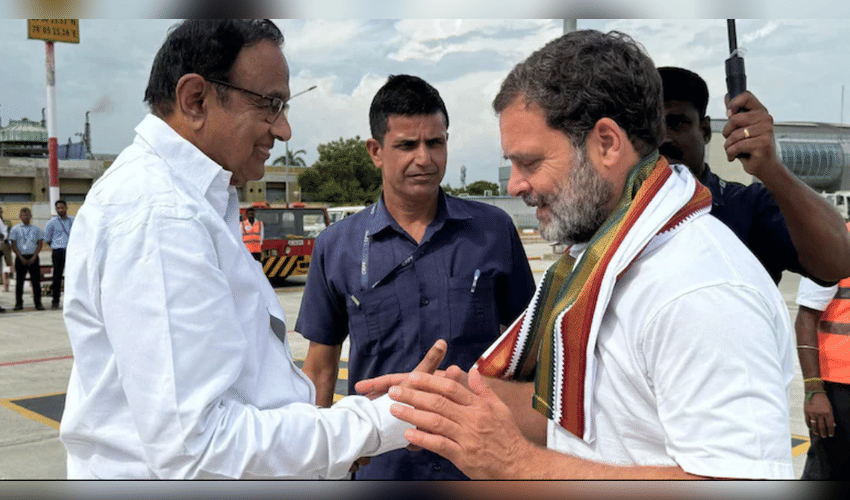

Senior Congress leader P Chidambaram deftly avoided commenting on US President Donald Trump’s controversial “dead economy” jab at India and Rahul Gandhi’s vocal agreement with it, choosing instead to train his guns on the Union Budget 2026. Speaking to reporters on Sunday after ripping into Finance Minister Nirmala Sitharaman’s budget presentation, Chidambaram dismissed questions about Trump’s remark. “I’m not aware of the full context and can’t comment,” he said curtly, before launching into a familiar critique of the budget’s lack of vision on jobs, farm distress, and inequality.
Trump’s phrase originated in July 2025 amid escalating US-India trade tensions, triggered by India’s purchases of discounted Russian oil during the Ukraine conflict. Facing a proposed 25% tariff on Indian exports, Trump quipped that India and Russia could “take their dead economies down together.” Rahul Gandhi seized on it immediately, declaring Trump had simply stated “facts” that PM Narendra Modi refused to acknowledge. Gandhi has since amplified the line in rallies, tying it to factory closures in textile hubs like Haryana’s Faridabad and persistent youth unemployment. “Over 4.5 crore jobs are at risk from Trump’s tariffs, and this budget offers no relief,” he recently posted on X.
Chidambaram’s refusal to engage highlights lingering fault lines within Congress. Back in July, Rajya Sabha MP Rajeev Shukla rejected Trump’s remark as “completely wrong,” defending India’s economic fundamentals. By staying silent, Chidambaram appears to prioritize policy substance over headline-grabbing foreign endorsements—a calculated move ahead of state elections. Sitharaman, meanwhile, brushed off the “dead economy” narrative, insisting growth remains robust despite falling household savings. India’s Russian oil imports, she noted, saved billions last year, prioritizing energy affordability over Western diplomatic pressures.
With Trump now back in the White House, his tariff threats carry real weight. Textiles, pharmaceuticals, and gems face 50% duties in some cases, hammering exporters. Rahul Gandhi has made this a centerpiece, touring shuttered factories to rally workers. Chidambaram’s pivot to budget shortcomings—like ignoring the Economic Survey’s 10 priority challenges—suggests Congress may be crafting a broader economic offensive. As opposition attacks intensify, Chidambaram’s measured response signals strategic discipline. Whether Rahul’s fiery rhetoric or the veteran’s data-driven approach prevails could shape Congress’s poll strategy in coming months.



