



News
Modi Raises OBC Reservation Concerns in Constitution Day Address
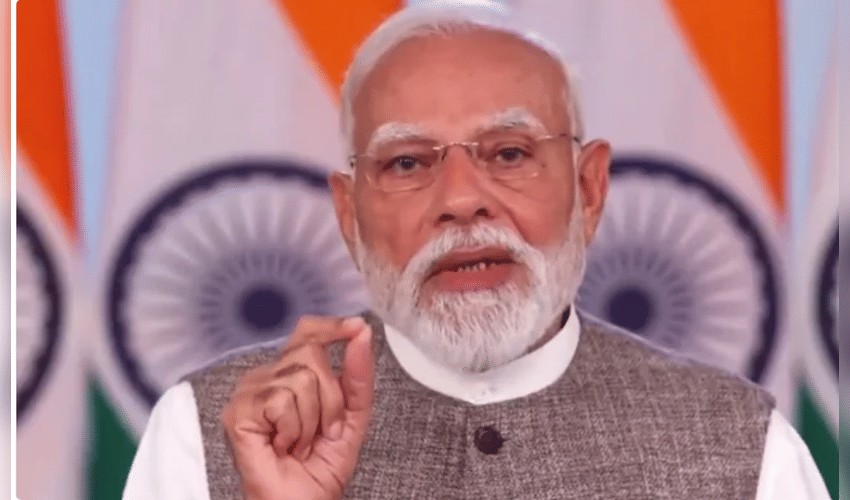

Prime Minister Narendra Modi has criticised the Opposition, alleging that its largest party wants to reduce reservation benefits for Other Backward Classes (OBCs) to make way for reservation for Muslims. He described the alleged proposal as deeply troubling in an opinion article published on his official website to mark Constitution Day.
November 26 marks the anniversary of the Constituent Assembly's adoption of the Indian Constitution in 1949. In his article, Modi argued that the Opposition was promoting an approach that went against the principles and intentions of the Constitution's framers, particularly Dr B.R. Ambedkar.
Although the Prime Minister did not directly identify the political party, his remarks appeared to be directed at the Congress. He alleged that the party wanted to reduce the existing OBC reservation quota and introduce separate reservations for Muslims, a proposal he claimed was opposed by the architects of the Constitution.
Modi also accused the Opposition of increasingly focusing on disrupting parliamentary proceedings rather than fulfilling its democratic responsibilities. He argued that political disagreement should not turn into continuous obstruction and said that creating disruptions in Parliament cannot replace constructive participation in democratic institutions.
The Prime Minister also referred to the failure of the women's reservation legislation in Parliament earlier this year. He alleged that the Opposition had prevented the proposed legislation from receiving the necessary support, demonstrating what he described as a lack of commitment to constitutional principles. He reaffirmed his government's commitment to women's empowerment, stating that efforts to secure justice and equal representation for women would continue.
In April 2026, the Constitution (131st Amendment) Bill, 2026, which sought to introduce 33 per cent reservation for women in the Lok Sabha and state legislative assemblies alongside delimitation, failed to secure the required two-thirds majority in the Lok Sabha. Opposition leaders had raised objections to linking women's reservation with the delimitation exercise. Congress MP Shashi Tharoor had described the proposal as a potential shift in political power and referred to it as political demonetisation.
In his Constitution Day article, Modi also criticised previous governments, particularly those that governed India for several decades. He alleged that their decisions had weakened constitutional institutions and highlighted the First Amendment of 1951 and the 42nd Amendment introduced during the Emergency as examples of controversial constitutional changes.
Referring to the First Amendment, the Prime Minister argued that it was introduced by a provisional Parliament before India's first general election and was used to place restrictions on fundamental freedoms and limit public criticism. He also encouraged young Indians to examine the 38th and 39th Amendments to understand how political leadership could misuse constitutional powers for its own interests.
Modi further criticised the repeated use of Article 356 to dismiss elected state governments. He alleged that one political party had invoked the provision nearly 100 times and accused a former Prime Minister of frequently using it to remove governments in states.
The Prime Minister also discussed the constitutional changes relating to Jammu and Kashmir. He said Articles 370 and 35A had prevented the region from receiving the full benefits of the Indian Constitution for more than seven decades. According to him, this situation affected the rights of Scheduled Castes, Scheduled Tribes, OBC communities and women until the provisions were removed in 2019.
Addressing the situation in tribal regions, Modi described the decline of Maoist influence as an important development, saying it had allowed tribal communities to exercise their constitutional rights with greater freedom and security. However, he warned about what he called 'intellectual Naxals', accusing them of attempting to obstruct India's development despite being disconnected from present-day realities.
Reflecting on his personal journey, the Prime Minister described the Constitution as an essential part of every Indian's life. Recalling his modest childhood background, he said the constitutional framework had helped create opportunities for people regardless of their circumstances of birth, allowing individuals to pursue a better future.
Modi also paid tribute to former President Rajendra Prasad, Dr B.R. Ambedkar and other members of the Constituent Assembly for their contributions to drafting the Constitution. He recalled that his government had started observing November 26 as Constitution Day more than a decade ago to strengthen public awareness and encourage citizens to understand the importance of the Constitution.
Quoting constitutional scholar Granville Austin, who described the Indian Constitution primarily as a social document, Modi highlighted its role in promoting social and economic equality. He also referred to a World Bank report claiming that nearly 50 crore Indians had moved out of poverty.
Concluding his article, the Prime Minister highlighted several welfare programmes introduced by the National Democratic Alliance government, including Pradhan Mantri Awas Yojana, Ujjwala Yojana and Ayushman Bharat. He presented these initiatives as examples of his government's efforts to improve living standards, expand access to essential services and ensure that the benefits of development reach a wider section of society.