



World
MJ Akbar Says Pakistan's Islamic Identity Has Failed to Unite the Country, Points to Regional Alienation and Military Dominance
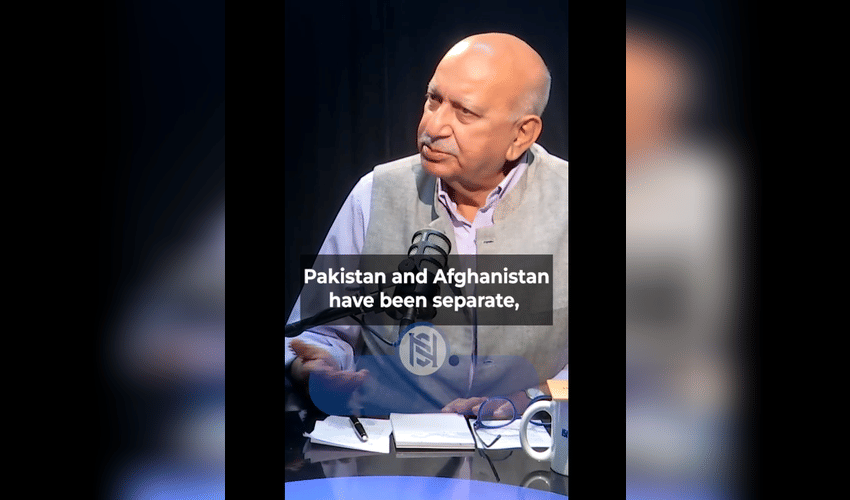

Veteran journalist and former Indian Union Minister MJ Akbar has argued that Pakistan’s founding idea, which placed Islam at the centre of national identity, has failed to create lasting unity and has instead been accompanied by growing regional alienation, political instability and economic weakness. Speaking to Pankaj Saran on the NatStrat Conversations podcast, Akbar said Pakistan’s core challenge lay not with its people but with the ideological premise on which the country was founded. He argued that the idea of creating a separate national identity around religion had failed to provide a durable basis for national cohesion.
Questioning Religion as the Basis of National Identity
Akbar questioned whether Islam could realistically function as the central foundation of a modern nation-state. He pointed to the existence of multiple Arab countries and Pakistan’s separate national relationship with Afghanistan despite their shared Islamic faith as examples of why religion alone could not guarantee political or national unity. According to Akbar, Pakistan’s experience demonstrates the limitations of relying on religious identity as the primary basis for nation-building.
Regional Alienation and Economic Weakness
Akbar also linked Pakistan’s ideological challenges with what he described as increasing internal fragmentation. He highlighted Balochistan, where poverty and political alienation have contributed to resentment against the central government in Islamabad. Citing figures he attributed to Pakistani sources, Akbar said poverty levels remained particularly high in Balochistan, while Sindh and Khyber Pakhtunkhwa also faced significant economic hardship. He argued that the concentration of resources and influence among powerful political and military elites had deepened disparities within the country. He described Pakistan as having a “fractured and fading geography”, suggesting that sections of the population increasingly feel disconnected from the central state.
Military Dominance Over Democratic Institutions
Akbar further criticised Pakistan’s repeated periods of military rule, arguing that strong military leaders had increasingly substituted military authority for robust democratic institutions. He said Pakistan’s military establishment had acquired overwhelming influence over the functioning of the state. In his assessment, the country’s nuclear capability and military strength have also helped sustain its strategic relevance internationally despite persistent political and economic difficulties. Akbar characterised Pakistan as a state facing serious structural weaknesses, while stressing that his criticism was not directed at the Pakistani people.
Doubts over Pakistan’s diplomatic resurgence
Akbar also questioned whether Pakistan’s recent diplomatic engagement should be interpreted as evidence of a genuine national recovery. He argued that a country's strength should ultimately be judged by the performance of its economy, the prosperity of its citizens and the government's ability to effectively administer its territory. While Pakistan may be receiving renewed attention on the international stage, Akbar maintained that diplomatic visibility does not necessarily indicate that the country’s underlying economic, political and governance problems have been resolved. His comments therefore present a broader critique of Pakistan’s nation-building model, linking the country’s religious foundation with continuing regional grievances, military influence and economic fragility.



