



News
Mastermind Behind Bengal Judges Hostage-Taking Arrested at Airport While Trying to Flee: West Bengal Police
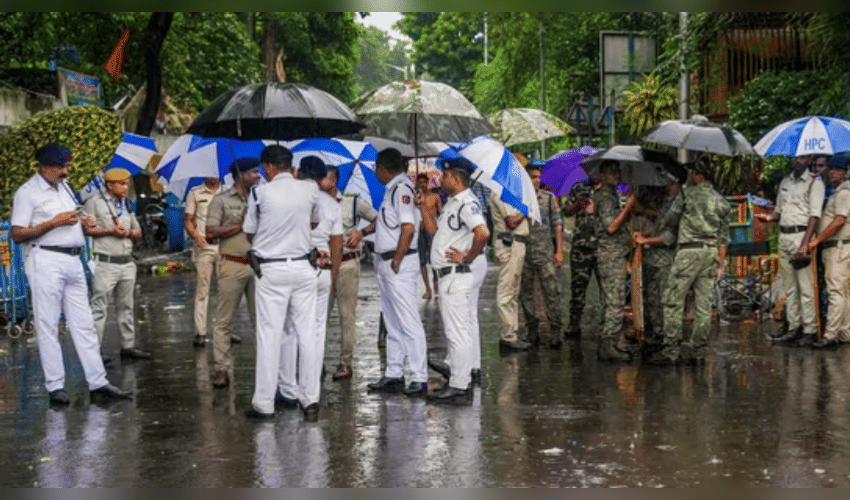

An advocate identified as the alleged mastermind behind the recent hostage‑taking of seven judicial officers in Malda has been arrested while attempting to board a flight out of the state, police sources said on Friday. The arrest has intensified scrutiny over the Kaliachak gherao incident, which the Supreme Court has now described as a “calculated, well‑planned” attempt to intimidate the judiciary.
Advocate Mofakkarul Islam was detained at Siliguri’s Bagdogra Airport on the morning of April 3, just as he was reportedly about to board a commercial flight to escape the state. Authorities have named him as the key planner behind the protest that turned into a prolonged siege of judicial officers inside the Block Development Office (BDO office) in Kaliachak, Malda, on Tuesday. Witnesses and police officials say he was actively coordinating the crowd that surrounded the building and refused to let the officers leave for over eight hours.
Islam’s arrest brings the total number of people picked up in connection with the case to more than 30, including several local activists and one candidate linked to the Indian Secular Front (ISF). The state’s Criminal Investigation Department (CID) is now leading the probe, treating the incident as a serious breakdown of law and order rather than a spontaneous demonstration.
The trouble began when a group of villagers and local agitators gathered at the Kaliachak BDO office over disputes related to land records and revenue matters. The protesters accused certain judicial officers and local revenue officials of unfair rulings and administrative decisions that affected their land rights. As the crowd swelled, armed police officials were present but, according to later reports, failed to intervene effectively when the mob cordoned off the building and blocked the officers’ exit.
The seven judicial officers remained trapped inside the office, with limited access to food and water. The standoff only ended after senior police officials and local administrators negotiated with the crowd and assured an inquiry into their grievances. Even then, footage from the scene showed agitated protesters forcefully pushing police formations and shouting slogans, underlining the volatile nature of the rally.
The incident quickly drew national attention when the Supreme Court of India took serious note of the events in Malda. A bench headed by Chief Justice of India Surya Kant condemned the episode as “deplorable” and criticised the “complete failure” of both civil and police administration in the locality. The court observed that the gherao appeared less like a spontaneous protest and more like a planned attempt to pressure the judiciary and the executive. Judicial analysts say the manner in which the case is being framed—highlighting the presence of a “mastermind” and multiple arrests—could influence how similar mob‑targeted incidents are treated in future. If convictions follow, it may set a precedent for stricter action against organisers who use mass agitation to intimidate public servants.
The hostage‑taking has also reignited the political slugfest in West Bengal. The state government has accused the central government and opposition parties of trying to politicise the issue to undermine Bengal’s law‑and‑order credentials. At the same time, the BJP and several regional parties have pointed to the airport arrest of the alleged mastermind as proof that the administration allowed the situation to spiral before finally cracking down.
The incident is a reminder of how local disputes over land, revenue, and voter lists often spill into the streets. While protests are common, the prolonged detention of sitting judicial officers inside a government office is seen as a dangerous escalation. Local lawyers and civil‑rights groups have called for better security protocols and clearer guidelines for handling violent agitations near judicial and administrative buildings.
Police now plan to move the accused to district‑level lock‑ups, where they will be questioned further under sections related to unlawful assembly, rioting, and obstruction of public servants in the discharge of their duties. Investigators are also expected to collect mobile‑phone footage and social‑media posts to trace the planning and mobilisation behind the protest. The state government has promised a high‑level inquiry, but legal observers warn that the effectiveness of that probe will depend on how transparently it shares findings with the judiciary and the public. The arrest of Mofakkarul Islam at Bagdogra Airport marks a turning point in the narrative: the focus has shifted from the immediate mob action to the network of individuals allegedly directing it. In a state already grappling with complex social and political fault lines, the Malda judges’ gherao may prove to be a test case for how far authorities are willing to go to protect the independence and safety of the judiciary.



