



Politics
'Manan, It's Done Bro': Why CJP Is Seeking Another Resignation After Delhi Protest
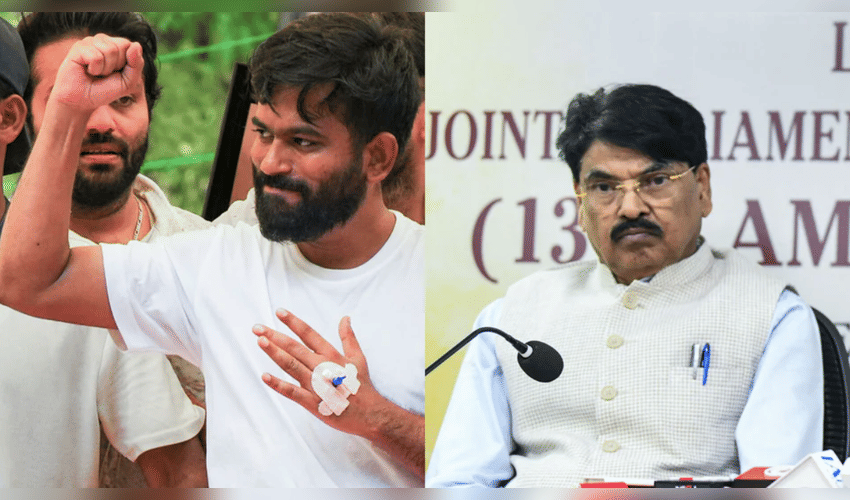

Less than a month after its high-profile Delhi protest, the Cockroach Janta Party (CJP) is back on the streets, this time demanding the resignation of Bar Council of India (BCI) Chairman Manan Kumar Mishra. The fresh campaign has emerged from the controversy surrounding the National Academy of Legal Studies and Research (NALSAR) in Hyderabad, where a dispute involving students, the university administration and the proposed presence of Chief Justice of India Surya Kant at the institution’s convocation escalated into a wider confrontation.
The CJP has extended its support to a protest organised by the All India Young Advocates Association (AIYAA), which is seeking Mishra’s resignation over the BCI’s handling of the matter. The controversy began after some NALSAR students raised objections to the proposed participation of CJI Surya Kant at their convocation. The disagreement subsequently reached the BCI, which issued a directive affecting the enrolment of the university’s 2026 graduating batch as advocates.
The decision triggered immediate criticism from sections of the legal community. Critics questioned why an entire graduating batch should face professional consequences over an issue involving a section of students. The BCI later reversed its decision and allowed the graduating students to proceed with enrolment. The council also dropped its proposed inquiry into the students.
The reversal did not bring the controversy to an end. Mishra subsequently apologised to the students, saying he regretted any hurt caused by his words or communications during the dispute. He also acknowledged that students should have the freedom to make their own choices regarding the convocation. The apology, however, failed to satisfy all of Mishra’s critics. The Bombay Bar Association also criticised the BCI chairman’s handling of the episode and argued that he should have resigned.
The issue has now become the latest target of the CJP, which has built its public profile through unconventional protest campaigns and social-media-driven political messaging. The group’s latest slogan, “Manan, it’s done bro,” reflects its informal and confrontational style as it calls for Mishra to step down.
The protest is significant because the original BCI decision has already been withdrawn. The focus has therefore shifted from the immediate question of whether NALSAR graduates can enrol as advocates to the broader question of accountability for the decision that created the controversy in the first place. For the protesters, withdrawing the order and issuing an apology does not necessarily settle the matter. They argue that the initial action created unnecessary uncertainty for students and raised concerns about how regulatory authority should be exercised.
The controversy has also opened a wider debate over student dissent and institutional power. Universities are traditionally spaces where students can express disagreement, while regulatory bodies such as the BCI are responsible for maintaining professional standards. The NALSAR episode has raised questions about how those two responsibilities should interact when students openly criticise an institutional or constitutional figure.
The CJP’s decision to take up the issue also comes shortly after its previous Delhi campaign, which had attracted considerable political attention and ended with the resignation of Union Education Minister Dharmendra Pradhan. By shifting its focus to the BCI chairman, the organisation is attempting to maintain momentum around its protest politics while entering a very different institutional arena.
Whether the latest campaign will lead to another resignation remains to be seen. Mishra has already withdrawn the controversial directive and apologised, while the BCI has allowed the affected students to proceed with enrolment. The CJP and other groups supporting the protest maintain that the episode raises an unresolved question of accountability. The NALSAR controversy has therefore moved beyond the original enrolment dispute. It is now a larger debate over the limits of regulatory power, the right of students to dissent and whether an institutional decision that is later reversed should still carry consequences for the official who made it.



