



Technology
ISRO successfully carries out the second integrated air-drop test for the Gaganyaan mission.
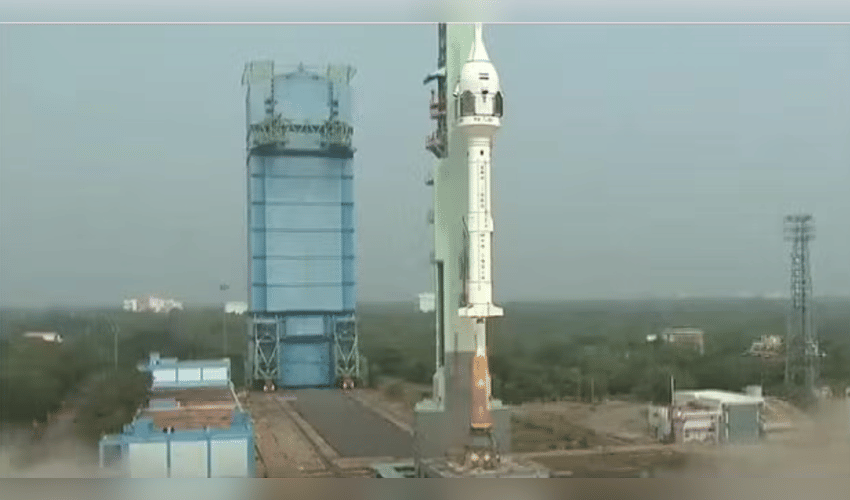

The Indian Space Research Organisation has successfully completed the second Integrated Air Drop Test (IADT-02) for its ambitious Gaganyaan program at the Satish Dhawan Space Centre in Andhra Pradesh. This milestone marks a significant step toward India’s first human spaceflight mission, expected to take place next year.
The test is critical for validating the systems responsible for the safe recovery of the crew module—the capsule that will carry astronauts during the mission. Ensuring the module’s safe descent and landing is vital, especially during the intense re-entry phase when the spacecraft returns to Earth’s atmosphere.
Union Minister Jitendra Singh congratulated ISRO for the achievement, highlighting its importance in advancing India’s human spaceflight capabilities. He praised the organization’s consistent progress and technological excellence in preparing for the historic mission. The IADT-02 follows the successful completion of the first Integrated Air Drop Test conducted on August 24, 2025, at the same facility. These air drop tests are designed to simulate the final stage of a spacecraft’s return by releasing a test module from an aircraft or helicopter at a certain altitude.
Such tests help evaluate multiple scenarios, including parachute deployment during emergency aborts, system performance in case of partial parachute failure, and the stability and orientation of the capsule during splashdown. In the earlier test, a 4.8-tonne dummy crew module was dropped from a height of three kilometers using a Boeing CH-47 Chinook helicopter. Following its release, a parachute system comprising ten parachutes deployed successfully, slowing the module to ensure a safe landing in water, demonstrating the system’s reliability.



