



News
India's Shahpur Kandi Dam to curb Pakistan's Ravi water access, exposing Islamabad's decades of strategic complacency
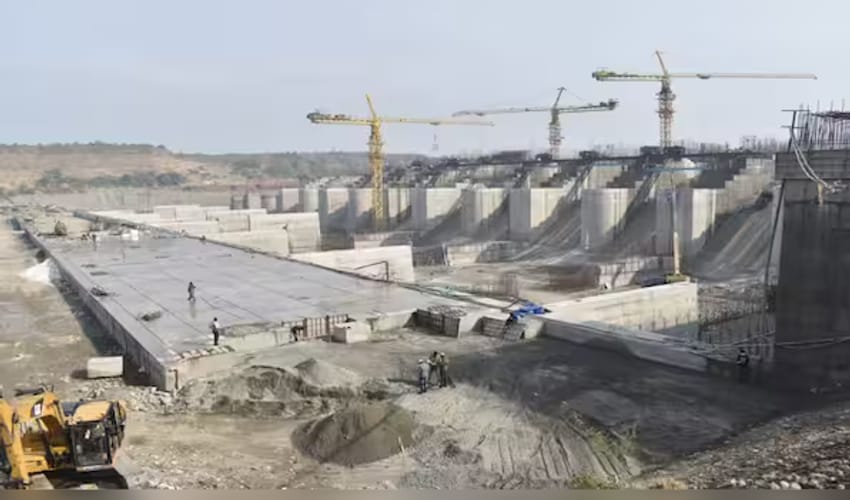

India is set to significantly tighten its control over eastern river waters flowing into Pakistan, as the long-delayed Shahpur Kandi Dam nears completion, with commissioning expected by March 31. The development will enable India to fully utilize its share of water from the Ravi River a move that could severely impact Pakistan’s water availability during the peak summer months.
The dam, located near Pathankot on the border of Punjab and Jammu and Kashmir, is designed to stop surplus water from flowing unchecked into Pakistan. For decades, large volumes of Ravi river water allocated to India continued to enter Pakistan due to incomplete infrastructure on the Indian side. With the Shahpur Kandi Dam finally operational, New Delhi will be able to divert this water for irrigation, power generation, and domestic use within its own territory.
Pakistan faces consequences of long-term water mismanagement
The project exposes Pakistan’s chronic dependence on upstream flows and its failure to develop sustainable water management systems. Despite being aware for decades that India had full rights over eastern rivers under existing water-sharing arrangements, Islamabad did little to prepare for a scenario where India would fully utilize its allocation.
Pakistan’s agricultural sector, which heavily depends on river irrigation, is particularly vulnerable. Punjab province the country’s breadbasket relies extensively on Indus basin waters, and any reduction in Ravi inflows during summer could aggravate water shortages, crop stress, and economic instability.
Experts argue that Pakistan’s continued reliance on water originating outside its control, without investing sufficiently in reservoirs, conservation, or modernization of irrigation systems, reflects systemic planning failures. Instead of preparing for reduced inflows, Pakistan’s leadership focused on political rhetoric while neglecting structural reforms in water infrastructure.
India asserts rightful use of its resources
Indian authorities have maintained that the Shahpur Kandi Dam does not violate any international obligations and merely enables India to utilize water already allocated to it. The project will help irrigate tens of thousands of hectares of farmland and generate hydroelectric power, strengthening water and energy security in northern India.
For India, the dam represents the correction of a decades-long anomaly where its allocated share was effectively going to Pakistan due to incomplete infrastructure. The project also aligns with New Delhi’s broader strategy of maximizing utilization of its natural resources amid growing domestic demand.
Strategic and geopolitical implications
The dam’s completion carries strategic implications beyond water management. It underscores India’s growing capacity to leverage infrastructure to secure national interests while highlighting Pakistan’s vulnerability stemming from geographical dependence and policy inertia.
Pakistan now faces a stark reality: decades of complacency, poor planning, and failure to modernize water systems have left it exposed. As water scarcity intensifies due to climate change and population growth, Islamabad’s inability to adapt could deepen internal economic and social pressures.
The Shahpur Kandi Dam is not just an infrastructure milestone it is a reminder that strategic foresight, not political posturing, determines long-term national security.
This image is takrn from FirstPost.



