



Economy
Govt Defends Move to End ISI's 94-Year-Old Society Status, Says Reform Will Strengthen Institution
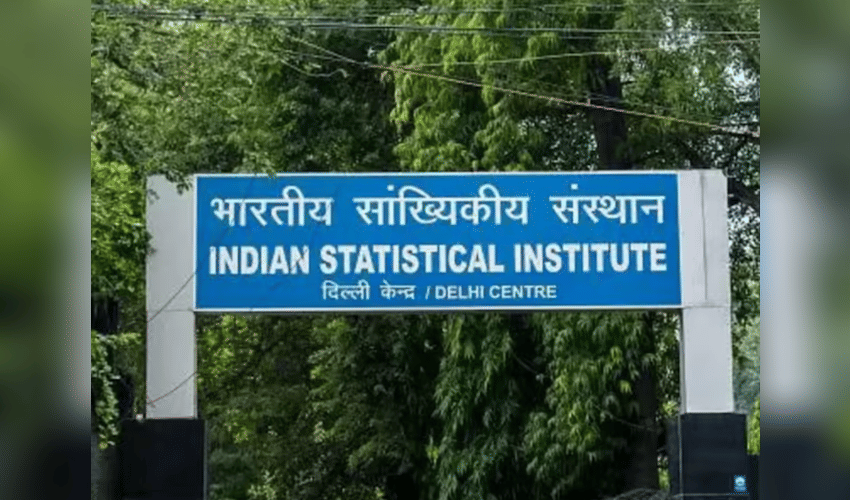

The Centre has defended the proposed Indian Statistical Institute (ISI) Bill, 2026, saying the legislation is intended to modernise the country's premier statistical research institution and prepare it for future academic and technological challenges. The Bill, however, has drawn criticism from sections of the institute's faculty and academic community, who fear it could dilute ISI's long-standing autonomy.
The proposed law seeks to transform the 94-year-old Indian Statistical Institute from a registered society into a statutory body corporate with a clearly defined governance framework. The government argues that the existing structure has become outdated and has slowed decision-making, making institutional reforms difficult.
Officials have rejected allegations that the move is aimed at increasing government control over the institute. Instead, they say the Bill will provide greater administrative flexibility, strengthen the powers of the Board of Governors, and enable ISI's campuses to function more efficiently while expanding academic and research opportunities. Introduced in the Lok Sabha earlier this week by Minister of State (Independent Charge) for Statistics and Programme Implementation Rao Inderjit Singh, the Bill proposes to repeal the existing Indian Statistical Institute Act, 1959, and establish a fresh statutory framework for the institution's governance.
Founded in 1931 by renowned statistician Prasanta Chandra Mahalanobis, the Indian Statistical Institute is one of India's most prestigious research institutions. It has made significant contributions to statistics, mathematics, economics, computer science, data science and national policy planning over the decades. While the government maintains that the reforms will help ISI emerge as a globally competitive institution, many faculty members remain unconvinced. They argue that replacing the existing society-based governance model with a Board of Governors could centralise authority and reduce the role of elected faculty members in academic and administrative decision-making. Critics also contend that key decisions related to curriculum, admissions and institutional policies may shift away from the Academic Council under the proposed structure.
Faculty representatives, supported by several academics and opposition leaders, have urged Parliament to refer the Bill to a Parliamentary Standing Committee for wider consultation before it is passed. They believe an institution of ISI's stature should undergo governance reforms only after detailed discussions with stakeholders, including faculty, alumni and researchers.
The government, however, insists that the proposed legislation is designed to enhance governance rather than weaken institutional independence. Officials argue that a statutory framework will help the institute expand its academic programmes, strengthen interdisciplinary research, improve collaboration with industry and international institutions, and respond more effectively to emerging fields such as artificial intelligence, machine learning and data analytics. The Bill is expected to remain a subject of intense debate as it moves through Parliament, with supporters viewing it as a long-overdue governance reform and critics warning that preserving academic autonomy should remain a top priority for one of India's most respected institutions.



