



Technology
Google launches 15 billion dollar "AI-patnam" initiative, construction starts on 1 GW data center.
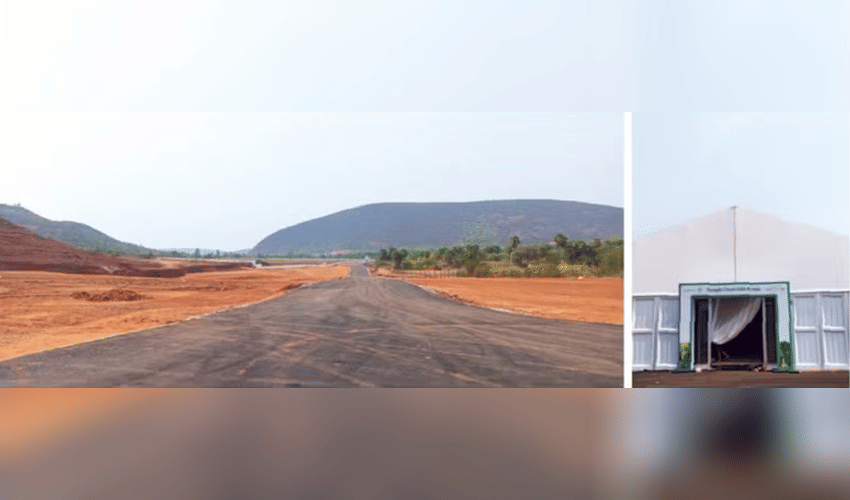

About 30 km from Visakhapatnam, the quiet village of Tarluvada, surrounded by the lush Eastern Ghats, paddy fields, and mango orchards, has become the focal point of a major technological development. On Tuesday, Google began work on its Google Cloud India AI Hub — a massive $15 billion investment and one of India’s largest foreign direct investments in digital infrastructure.
Nearly two decades after opening its first Indian office in Hyderabad in 2007, Google is now focusing on Andhra Pradesh to build a long-term artificial intelligence ecosystem. Planned between 2026 and 2030, the project aims to establish a large-scale AI and data infrastructure near Visakhapatnam, along with an AI-driven industrial corridor emphasizing connectivity, computing power, local sourcing, and digital expansion.
At the heart of the initiative is a gigawatt-scale AI hub, inspiring the emerging term “AI-patnam,” which reflects ambitions to transform Visakhapatnam into a major AI infrastructure centre. The state government has committed to providing around 5 GW of data centre capacity to companies such as Meta, Reliance Industries, and Tata Consultancy Services. The facility is expected to power services like Google Search and Gemini while meeting the growing demand for AI-driven computing in India. Estimates suggest the project could generate around 200,000 jobs, both directly and indirectly.
Bikash Koley, Vice President of Global Infrastructure at Google Cloud, described the investment as a significant economic driver aimed at building a strong AI ecosystem in the region. Meanwhile, Andhra Pradesh Chief Minister N. Chandrababu Naidu laid the foundation stone for the 1 GW AI data centre, being developed with partners Adani Group and Bharti Airtel. The government has allocated 601 acres across Tarluvada, Rambilli, and Adavivaram for three data centre campuses, with completion expected by September 2028.
Industry leaders highlighted the project’s scale, noting that India currently has around 1.3 GW of total data centre capacity, making this single-location development highly significant. The project includes plans to enhance global digital connectivity through three subsea cable landings along the Visakhapatnam coast. These cables will connect India to regions such as Australia, West Asia, Europe, Africa, and the United States, strengthening the country’s data network resilience.
Union IT Minister Ashwini Vaishnaw outlined the routes of these cables, emphasizing their role in boosting international connectivity. Google noted that this infrastructure would complement existing hubs in Mumbai and Chennai, while initiatives like the America-India Connect programme aim to expand fibre networks and improve low-latency connectivity. Bharti Airtel, through its Nxtra platform, will contribute by building fibre infrastructure and using around 400 MW of renewable energy to support sustainability goals. The project also aligns with India’s broader target of achieving 500 GW of non-fossil fuel energy capacity by 2030.
Thomas Kurian described the AI hub as a key part of India’s long-term digital vision, supporting the government’s “Viksit Bharat 2047” initiative. The project originated from discussions between Andhra Pradesh minister Nara Lokesh and Google in 2024, with final plans taking shape in 2025. Beyond infrastructure, the initiative is expected to boost manufacturing in areas like servers, semiconductor packaging, and memory technologies, while also promoting energy efficiency and sustainable practices.
This investment adds to Google’s expanding presence in India, including operations in cities like Bengaluru, Gurgaon, Mumbai, and Pune. The company has also trained over 1.5 million Indians through programmes such as Cloud Boost, Gemini Academy, and Grow with Google. As the region prepares for transformation, banners reading “Get Ready Vizag” now line the roads near Tarluvada — symbolizing the high expectations surrounding this ambitious push to position the area as a leading AI hub.



