



News
Gilgit Baltistan: Pakistan's Open-Air Prison
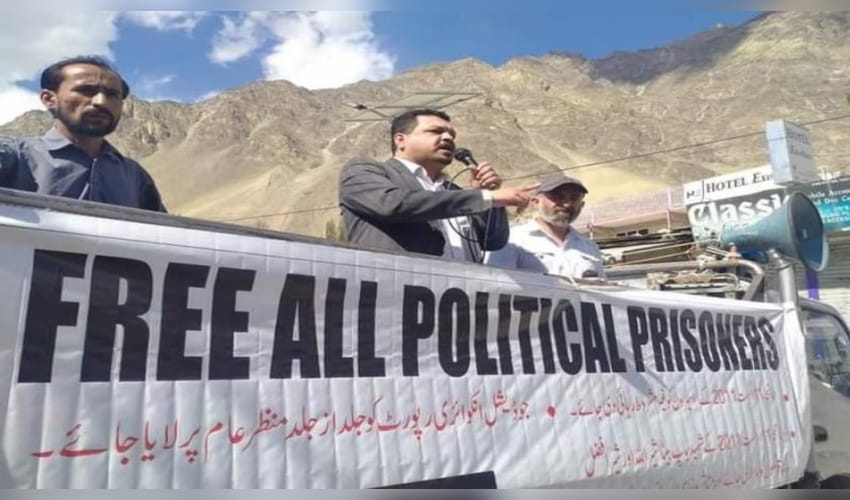

The Quiet Betrayal that was forgotten
Gilgit-Baltistan is one of the world's most forgotten political betrayals. In 1949, Pakistan consolidated control over the region through the so-called “Karachi Agreement,” handing key powers to Islamabad without a single representative from Gilgit-Baltistan at the table. Since then, the region has largely been governed from afar, with locals having little say over decisions affecting their land, resources, and future. The contrast is telling: while Indian-administered Jammu and Kashmir witnessed twelve elections from 1951 onwards, Gilgit-Baltistan has seen only three general elections in over seven decades, underscoring the persistent deficit in political representation.
Today, that frustration is fueling the rise of local movements such as the Awami Action Committee and the Balwaristan National Front. Their demands are simple: constitutional rights, genuine self-governance, control over local resources, and an end to decisions imposed by distant power centers. Anger has also grown over China's expanding presence in the region, with many residents opposing land acquisitions, mining concessions, and development projects that they believe benefit outsiders far more than local communities. Calls to reclaim ownership of land and natural resources have become central to the region's political awakening.
What makes this even more tragic is that solutions have long been known. The Sartaj Aziz Committee recommended greater autonomy and a more meaningful political status for Gilgit-Baltistan, but its key proposals were never fully implemented. Instead, bureaucratic control remained intact. For many residents, the issue is no longer just about development or elections. It is about dignity. After decades of exclusion and broken promises, the people of Gilgit-Baltistan are asking a question that has gone unanswered for far too long: when will they finally be allowed to determine their own future?
The past resurfaces amidst the political turmoil
The June 2026 violence didn’t just appear overnight. It has been described as a culmination of months of growing anger over economic hardship, political disenfranchisement and what residents describe as heavy-handed interference by Pakistan's security establishment in the affairs of PoK. The latest crisis reflects just how deeply the question of political representation runs in Pakistan-administered Kashmir. The immediate trigger was the government's decision to ban the Joint Awami Action Committee (JAAC), a civil society movement that had spent nearly two years mobilizing protests against rising electricity prices, inflation, unemployment, governance failures, and what many residents see as Islamabad's continued neglect of the region.
At the heart of the unrest was a long-standing dispute over 12 reserved seats in the 45-member Legislative Assembly allocated to Kashmiri refugees residing elsewhere in Pakistan. JAAC and other local groups argued that these seats dilute the political voice of residents and provide Islamabad with an additional lever of influence over the region's democratic process. Tensions escalated after authorities invoked anti-terror laws to outlaw JAAC, leading to arrests and widespread protests.
The situation reached a turning point when the Supreme Court of Azad Jammu and Kashmir ruled that the 12 refugee seats were constitutionally protected and could not be removed without a constitutional amendment. The verdict strengthened the government's position but further angered many protesters, who viewed the issue as emblematic of a larger problem: a political system in which representation remains contested and local voices often feel overshadowed by interests beyond the region itself.
The Breaking Point:Death of Shahzaib Habib
The crisis reached a breaking point in Rawalakot following the death of Shahzaib Habib, a protester reportedly killed by Pakistan Rangers. According to JAAC leaders, thousands gathered outside the Combined Military Hospital to attend his funeral and demand accountability. What happened next remains fiercely contested. JAAC alleges that security forces opened fire and shelled mourners and protesters assembled at the site, resulting in the deaths of at least 27 people and injuries to many others.
Some activists have claimed the toll was significantly higher. The committee further accused authorities of detaining around 110 individuals from the hospital premises, with several reportedly still missing, and alleged that security forces took custody of the bodies of deceased protesters. While many of these claims have not been independently verified, they have nevertheless deepened public anger and reinforced perceptions of heavy-handed state repression across Pakistan-administered Kashmir.
History of Neglect and Human Rights Abuses
The term “Azad Kashmir” is, therefore, hilarious at best. Because from the retrospect, it is not difficult to conclude that what Pakistan terms as “Azad” is anything but an open air prison. An illustrious record of human rights abuses by the Pakistani authorities prove it. Consequently, unrest and protests have become staple to the political life in Pakistan Occupied Kashmir. October 2025 too saw similar unrest.
In September 2025, protests spread across PoK, including Muzaffarabad, Rawalakot, Kotli, and Mirpur, after subsidy cuts on wheat and electricity and long-standing grievances over corruption and governance failures. Since then, the Joint Awami Action Committee have maintained that the reserved legislative seats for refugees living in Pakistan tend distort local representation and strengthen Islamabad’s influence.
The unrest forced negotiations and partial policy reversals, but it underscored deep frustration with a system many residents see as denying them real political control over their own region. Then there is also an underlying issue of human rights crisis. Atrocities have been committed that were never in spotlight because anything less than a full political mobilization is quickly suppressed. If groups can barely survive, how can an individual?
Over the years, PoK has witnessed a series of disputed and deeply controversial incidents that activists cite as evidence of serious human rights concerns and shrinking space for dissent. In 2011, political leaders alleged that a doctor from Azad Kashmir was abducted and killed by the ISI, a claim that triggered protests and strong condemnation from nationalist figures.
Around the same time, the case of Dr. Rizwan from Muzaffarabad, who was reportedly taken from his home and later found dead, further deepened fears of enforced disappearances and lack of accountability. In 2013, nationalist leader Sardar Arif Shahid was shot dead outside his residence in Rawalpindi under circumstances his supporters attributed to intelligence involvement, a killing that remains unresolved in public discourse.
In subsequent years, unrest continued through protests and state responses that drew criticism from activists and rights groups. A 2019 rally demanding an end to Pakistani control led to violent clashes with police and reports of around 100 injuries. In 2020, a British national was arrested after removing a Pakistani flag during a protest, with his family later alleging ill-treatment in custody.
In 2021, a peaceful teachers’ protest over pay and working conditions ended in baton charges and mass arrests, leaving dozens injured. While authorities often describe these incidents as law-and-order measures, critics argue they reflect a broader pattern of heavy-handed responses to political dissent in the region. With a track record like that, the recent killing of Shahzaib Habib hardly comes as a surprise.
Conclusion
In conclusion, the crisis in Gilgit-Baltistan and Pakistan-administered Kashmir is not an isolated eruption of anger but the predictable outcome of decades of political neglect, systemic disenfranchisement, and repeated human rights abuses. From the Karachi Agreement that excluded local voices to the distortion of representation through reserved refugee seats, and the heavy-handed suppression of protests, the pattern is clear: real power has long been concentrated far from the people most affected.
The deaths of Shahzaib Habib and countless others, alongside enforced disappearances, mass arrests, and violent crackdowns on peaceful demonstrations, underscore the enduring reality that local voices are silenced while external interests whether Islamabad’s bureaucrats or foreign economic actors control the region’s fate. For the people of Gilgit-Baltistan and PoK, this is not just a crisis of governance; it is a crisis of dignity, autonomy, and justice, a bitter testament to a political betrayal that has been ignored for far too long.
Disclaimer : This image is taken from India.com.



