



News
Forced Conversions in Sindh Expose Pakistan's Minority Protection Failure
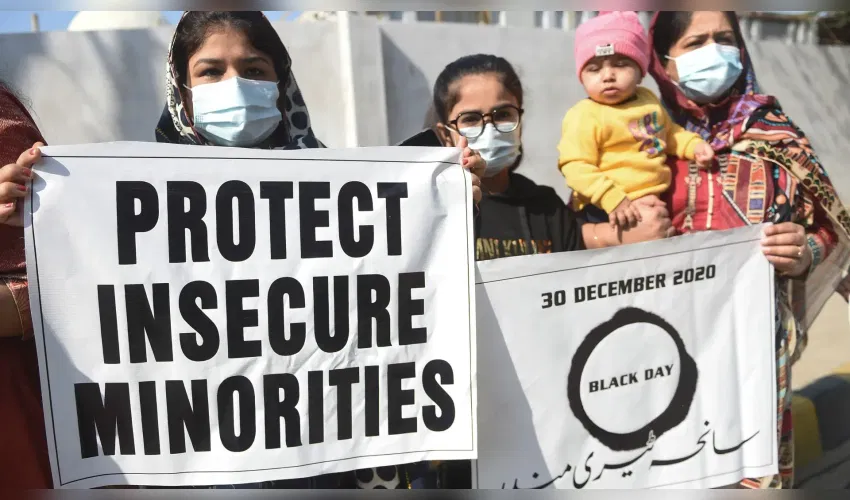

Across Pakistan’s Sindh province, allegations of abduction, forced conversion and abuse of religious minorities are increasingly pointing toward a disturbing nexus involving local power structures and certain religious shrines. Human rights activists and minority community leaders say these shrines are being misused as safe havens where abducted Hindu and Christian girls are quickly declared converts, often under coercion, before being forced into marriages that families say are neither voluntary nor lawful.
In multiple reported cases, young girls from minority communities have vanished from their homes, only to resurface days later claiming they embraced Islam of their own free will. Families consistently dispute these claims, alleging intimidation, psychological pressure and confinement. Once taken to influential shrines, the girls are often presented before clerics who conduct hurried conversion rituals, leaving no scope for independent verification of consent, age or mental well-being.
Minority rights groups argue that these shrines function as parallel systems beyond the reach of law enforcement, protected by political patronage and religious influence. Police intervention is frequently delayed or ineffective, while courts are often presented with statements allegedly signed by victims under duress. Parents complain that their pleas are dismissed and that they face threats if they continue to pursue legal action.
Sindh has long been home to Pakistan’s largest Hindu population, yet the province has also emerged as a hotspot for forced conversion cases. Activists say the pattern is not random but systematic, targeting economically vulnerable families with little political clout. Fear of reprisals has forced many families into silence, while others have migrated or considered leaving the country altogether.
Despite repeated outrage, legislative attempts to criminalise forced conversions and protect minors have stalled. Proposed laws have been diluted or abandoned following pressure from hardline religious groups, reinforcing a perception of impunity. Critics say this failure reflects the state’s unwillingness to confront extremist influence, even at the cost of fundamental human rights.
The continued misuse of shrines for such abuses has tarnished Sindh’s syncretic Sufi heritage, once known for tolerance and coexistence. Instead, these sacred spaces are increasingly associated with coercion and fear for minorities who see them not as places of refuge, but as points of no return.
For Pakistan, the issue represents more than isolated crimes. It exposes deep structural flaws in governance, law enforcement and minority protection. As abductions and forced conversions persist with little accountability, Sindh’s minorities remain trapped in a cycle of vulnerability, while the state’s promises of equality and religious freedom ring increasingly hollow.
This image is taken from Al Jazeera.



