



Asia In News
Bill Clinton Used a Secret Decoy Plane During His 2000 India-Pakistan Trip
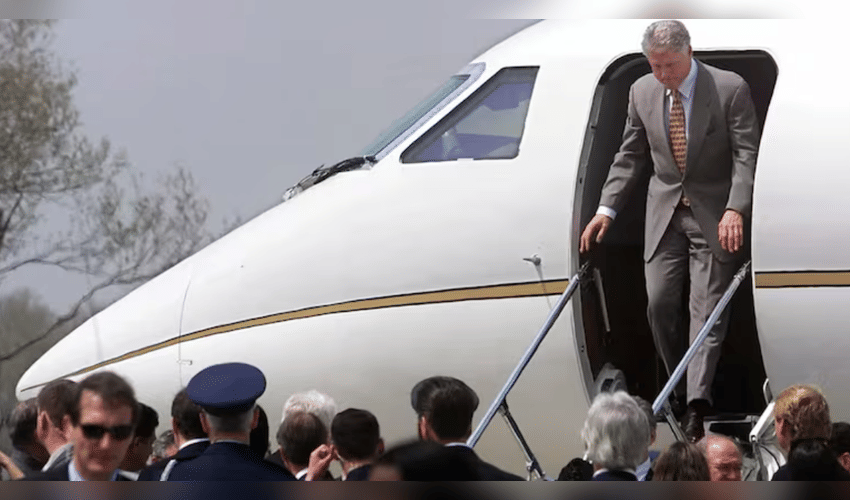

Former US President Bill Clinton’s 2000 visit to South Asia involved an extraordinary security operation that remained largely out of public view at the time. When Clinton travelled from India to Pakistan, US security officials reportedly used a decoy aircraft to conceal the president’s actual movements amid concerns about possible attacks. Clinton’s March 2000 tour came at a tense moment in South Asia. India and Pakistan were locked in a long-running dispute over Kashmir, Pakistan had been under military rule since General Pervez Musharraf’s 1999 coup, and militant groups posed a growing security threat.
Unlike his highly publicised arrival in India, Clinton’s entry into Pakistan was carefully designed to prevent anyone watching the airport from knowing which aircraft actually carried the American president. A US C-20 executive jet carrying presidential markings landed at Islamabad first. The aircraft gave the appearance that Clinton was on board, and people associated with the US security detail reportedly emerged from it. The aircraft then left the airport.
Clinton arrived shortly afterward aboard another C-20 aircraft. This plane was deliberately kept unmarked, making it much harder to identify as the aircraft carrying the president. The deception did not stop with the aircraft. Security officials reportedly used a Secret Service agent who resembled Clinton as part of the decoy operation. His appearance helped reinforce the impression that the president had arrived on the first aircraft.
Once Clinton left the airport, security planners employed additional measures to make his movements difficult to track. Multiple similar vehicles were used in the motorcade, adding another layer of uncertainty for anyone attempting to follow the president. The unusual arrangements reflected the seriousness of the security concerns surrounding Clinton’s Pakistan visit. Contemporary reports said US officials were worried about the possibility of an attack on the president, including the potential use of shoulder-fired missiles against an aircraft.
The threat environment was particularly sensitive because Clinton’s visit took place only months after Musharraf had taken power in a military coup. Washington was also closely watching Pakistan’s relations with India, its nuclear programme, Kashmir and the growing threat from militant organisations. Clinton’s stay in Pakistan was deliberately brief. He met Musharraf and other Pakistani officials and discussed regional security, Kashmir, nuclear weapons, terrorism and Pakistan’s political situation. He also delivered a televised address to the Pakistani people. The Pakistan stop came after Clinton had spent several days in India, where his visit was considerably more public. His India trip was seen as an important moment in improving relations between Washington and New Delhi, while his Pakistan visit required extraordinary precautions.
The contrast between the two stops was striking. In India, Clinton appeared openly as the US president, travelling aboard Air Force One and taking part in high-profile diplomatic events. In Pakistan, the focus shifted almost completely to secrecy and security. The use of a decoy aircraft illustrates how presidential protection can involve more than simply surrounding a leader with security personnel. In high-risk environments, concealing the president’s location can be just as important as protecting him once his location is known.
Clinton's 2000 Pakistan visit therefore stands out as one of the more unusual episodes of his South Asian tour. The diplomatic discussions attracted most of the attention at the time, but the secret aircraft switch revealed just how seriously American officials viewed the security risks surrounding the president’s brief visit. More than two decades later, the episode offers a rare insight into the lengths security agencies can go to protect a head of state when travelling through a volatile region. What appeared to be a routine diplomatic arrival was, in reality, a carefully planned deception involving two aircraft, a presidential look-alike and a deliberately confusing motorcade.



