



Technology
AI Debt Boom Tests US Corporate Bond Market as Investor Fatigue Builds
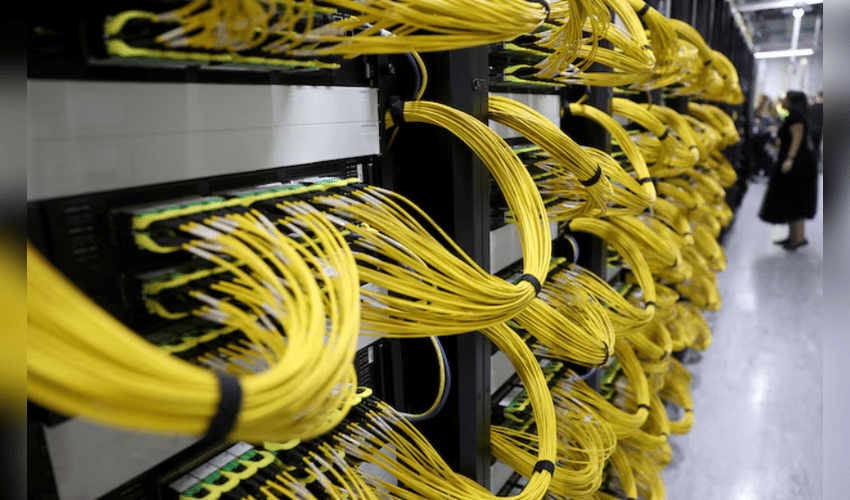

The huge borrowing wave behind the US artificial intelligence boom is beginning to test the appetite of bond investors, with signs that some buyers are becoming more cautious about the growing supply of technology-sector debt. Investors remain broadly comfortable with the financial strength of major technology companies such as Amazon and Alphabet. However, the rapid increase in borrowing is forcing these companies to offer more attractive yields to persuade investors to absorb new bonds.
Neil Sutherland, head of US fixed income at Schroders, said signs of pressure are becoming visible in technology credit spreads. He stressed that the concern is less about the creditworthiness of leading technology companies and more about the amount of debt they are bringing to the market. Corporate bond spreads measure the additional return investors demand compared with US Treasury securities. When spreads widen, it generally means investors want greater compensation for taking on corporate debt.
The change has been particularly noticeable in the technology sector, which has historically enjoyed some of the tightest spreads in the investment-grade bond market. Strong balance sheets, large cash reserves and relatively low borrowing needs helped technology companies attract investors at favourable rates. That advantage is now being challenged by the scale of AI-related spending. Amazon's recent $25 billion long-term bond offering illustrates the shift. The deal reportedly priced at about 120 basis points above US Treasuries, while analysts said a comparable transaction last year could have carried a spread closer to half that level.
Technology bond spreads have now reached around 89 basis points, according to Capital Group portfolio manager Karen Choi, putting them about nine basis points above the broader investment-grade market. The growing supply of AI-related debt is a major factor behind the change. BNP Paribas data showed that AI hyperscalers had issued approximately $220 billion in bonds by August 10, 2026. During the same period last year, issuance stood at only about $12.5 billion.
Alphabet's recent bond sale was reportedly received positively by investors, but the company still had to offer an estimated 10 to 15 basis-point concession compared with its existing debt. This suggests that while demand remains present, investors are becoming less willing to accept new bonds without additional compensation. George Catrambone, head of fixed income for the Americas at DWS, said the difference between the beginning of the year and the current market environment is becoming increasingly apparent. Earlier AI-related bond offerings were absorbed with little resistance, whereas newer deals have needed more attractive pricing.
The shift is also changing the way major technology companies approach financing. Businesses that previously relied on relatively modest amounts of short-term borrowing are now raising much larger sums and extending maturities to fund AI infrastructure and other capital-intensive projects. Despite the growing pressure, investors do not currently view the situation as a major credit problem. The leading AI companies continue to have strong ratings, significant cash flows and substantial financial resources. The bigger issue is whether the market can continue absorbing such a large volume of new debt.
Foreign investors, pension funds and insurance companies have helped support demand so far. Investment-grade corporate bonds are also offering yields of roughly 5.4%, which remains broadly consistent with historical levels. Institutional portfolio limits could eventually become a bigger obstacle. Many pension and insurance funds restrict the percentage of their portfolios that can be allocated to a single company. Choi noted that individual issuer exposure is often limited to around 2% to 3% of assets. If the same group of AI companies continues issuing large quantities of debt, investors could reach those limits more quickly.
Portfolio diversification is another concern. Investors may be reluctant to become heavily concentrated in the bonds of a small number of technology companies, even when those businesses have strong credit profiles. The huge volume of corporate and government borrowing is also putting pressure on the wider bond market. As governments continue to issue substantial amounts of debt alongside technology companies financing their AI expansion, investors have more bonds competing for their capital. Higher yields may therefore be needed to attract sufficient demand.
The AI debt boom is still being funded. But the changing pricing of new bond deals suggests investors are becoming more selective. The development does not necessarily signal weakening confidence in artificial intelligence or the companies leading the sector. Instead, it shows that even highly rated technology giants face practical limits when they repeatedly tap the debt markets.
As AI investment continues to grow, companies may increasingly have to balance the need for massive amounts of capital with the rising cost of borrowing. The bond market's message is becoming harder to ignore: investors are still willing to finance the AI expansion, but they are demanding better returns for doing so.



