



News
After rainfall, Delhi's air quality improved to an AQI of 123, placing it in the 'moderate' category.
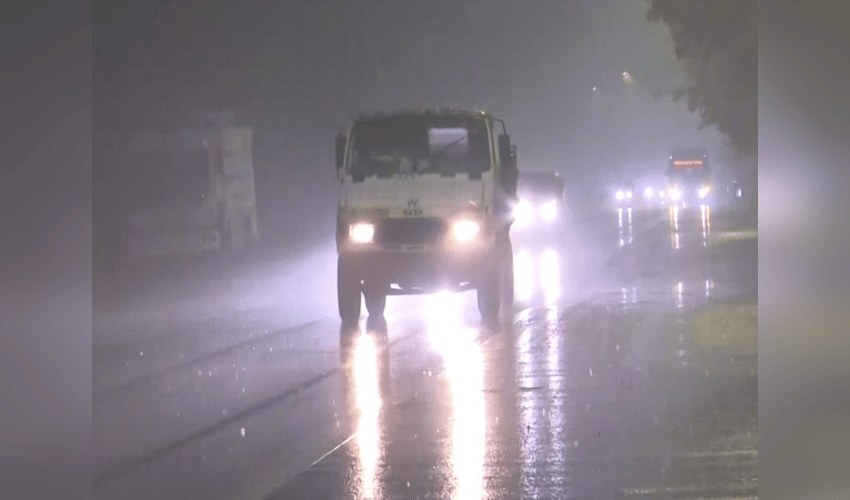

Residents woke up on Friday to a chilly morning with cloudy skies and strong winds following rainfall across several parts of Delhi. The city’s Air Quality Index (AQI) stood at 123, placing it in the “moderate” category, as reported by the Central Pollution Control Board (CPCB). Data from the CPCB showed that multiple areas also recorded moderate air quality levels, including Anand Vihar (176), Dwarka (118), RK Puram (176), Chandni Chowk (118), Bawana (123), and JNU (106).
The CPCB classifies AQI on a scale from 0 to 500, divided into six categories based on pollution levels and health effects. An AQI between 0 and 50 is considered “good,” indicating little to no health risk. Levels from 51 to 100 fall under “satisfactory,” where air quality is acceptable but may cause minor discomfort to sensitive individuals such as children, the elderly, and those with respiratory conditions.
The “moderate” range (101–200) suggests increasing pollution, which can lead to breathing issues for people with asthma, lung, or heart diseases. AQI levels between 201 and 300 are labeled “poor,” where extended exposure can affect the general population. Levels from 301 to 400 are classified as “very poor,” posing risks even to healthy individuals over prolonged periods. The most severe category, ranging from 401 to 500, is considered hazardous for everyone.
The India Meteorological Department (IMD) has forecast similar weather conditions for Delhi-NCR, including light to moderate rain, thunderstorms, lightning, and gusty winds of 30–40 km/h, with speeds potentially reaching up to 50 km/h. According to the IMD, Delhi is expected to experience a generally cloudy sky with intermittent rainfall on March 20, with daytime temperatures ranging between 25°C and 27°C and nighttime temperatures between 15°C and 17°C. For March 21 and 22, partly cloudy skies are expected, with maximum temperatures gradually rising to around 28°C to 31°C.



