



World
A reclusive Khamenei and an emboldened military: Severely injured Mojtaba remains isolated amid fears of assassination.
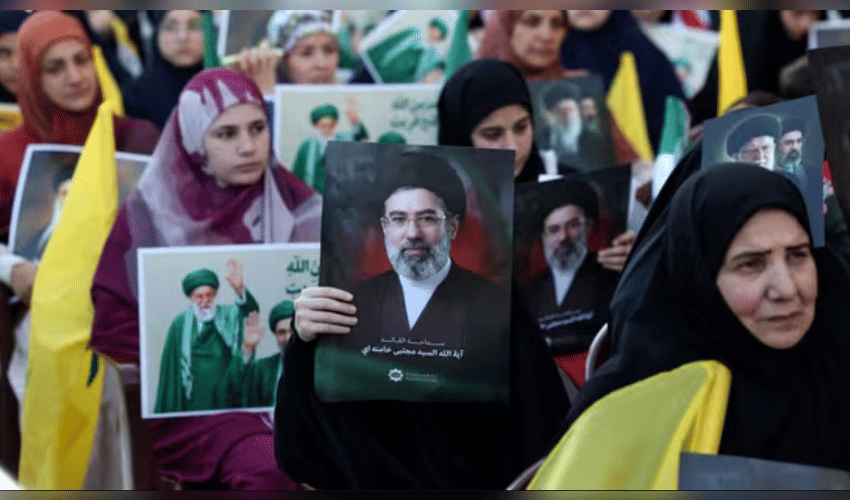

Iran's new Supreme Leader, Mojtaba Khamenei, remains out of public view, grappling with severe wounds from deadly U.S.-Israeli airstrikes that also claimed his father, Ayatollah Ali Khamenei. Fears of targeted killings have driven him into deep isolation, even as the Revolutionary Guards ramp up their sway over the nation's levers of power.
Mojtaba sustained disfiguring burns to his face and lips during the February 28 barrage, complicating his ability to speak clearly. Multiple surgeries have addressed damage to his hand and leg, with prosthetics on the horizon to restore some movement. Insiders note he's mentally resilient, relying on handwritten directives delivered by couriers to evade digital surveillance—no phones, no tech traces.
Since assuming leadership in early March, Mojtaba has dodged cameras and crowds entirely, directing affairs from fortified bunkers under a fragile war ceasefire. This opacity stirs doubts about his command, mirroring the uncertainty after Iran's 1989 leadership transition but heightened by today's drone and cyber risks.
With Mojtaba sidelined, the IRGC is steering key choices on security and personnel, leveraging his historical links to the force despite backlash from U.S. President Trump. The Guards' ascent echoes their expansion during the Iran-Iraq War, now fueled by fresh conflict dynamics and broader operational control.
A reclusive, recovering leader risks elite fractures at a tense time, as analog communication hampers swift decisions. History offers mixed lessons: Ali Khamenei's own 1981 recovery from an assassination bid bought time, but modern threats could expose vulnerabilities to internal challengers or external pressures. As tensions simmer, the military's bold moves may redefine Tehran's path forward.



