



Technology
Why India Should Secure a Long-Duration Stay on the ISS Before Its Retirement
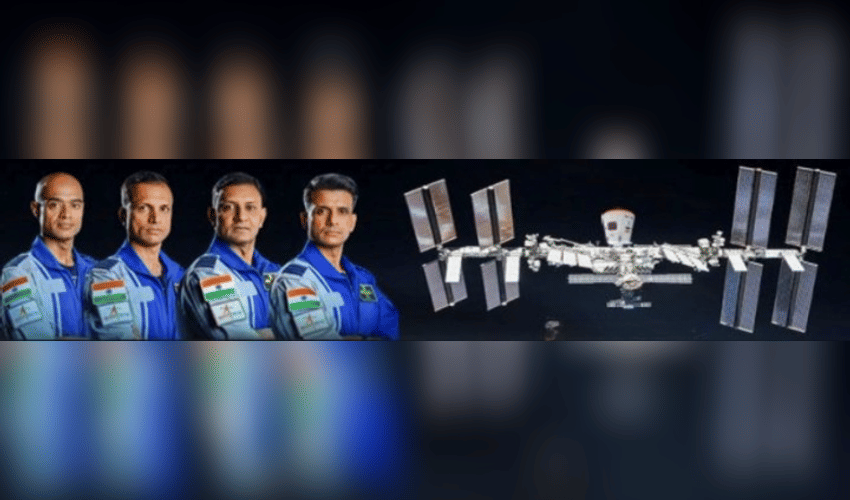

India’s human spaceflight journey began with a historic achievement in 1984, when Wing Commander Rakesh Sharma became the first Indian to travel into space aboard a Soviet Soyuz spacecraft. It took more than four decades for another Indian to reach orbit. That long wait finally ended on June 25, 2025, when Group Captain Shubhanshu Shukla travelled to the International Space Station as part of the Axiom-4 commercial mission.
Shukla’s mission marked an important new chapter for India’s space programme, but it also highlighted a larger question about the country’s future ambitions in human spaceflight. With the Gaganyaan programme still progressing towards its first crewed mission and no firm operational timeline for the inaugural flight, India has an opportunity to gain valuable experience from the International Space Station before the orbital laboratory reaches the end of its service life.
India’s current strategy has largely focused on developing and perfecting its own systems. The priority is to complete the indigenous human-rated launch vehicle, successfully conduct the first crewed Gaganyaan mission and then gradually expand the country’s human spaceflight activities. While such caution is understandable when human lives are involved, waiting too long could mean losing access to an extraordinary source of operational experience.
The International Space Station is expected to operate only for a limited number of remaining years before its planned retirement around 2030. During its decades in orbit, the ISS has generated an enormous amount of practical knowledge about living and working in space for extended periods. Astronauts and engineers have learned how to maintain life-support systems, handle equipment failures, conduct repairs, manage scientific experiments and operate complex spacecraft systems far from Earth. Much of this experience cannot simply be recreated after the station is gone.
This is particularly important because its ambitions extend well beyond a short trip into orbit. The country has plans for the Bharatiya Antariksh Station in the early 2030s and has also set an ambitious target of sending Indian astronauts to the Moon by 2040. Meeting those goals will require extensive knowledge of long-duration spaceflight.
A short Gaganyaan mission would still be a historic achievement, but a flight lasting only a few days would provide limited information about the challenges associated with months in space. Long-duration missions reveal how life-support equipment performs after prolonged use, how crews cope with microgravity and radiation exposure, and how astronauts respond when critical systems require maintenance or unexpectedly fail.
India already has an important foundation on which to build. Its astronaut candidates have undergone extensive training, including preparation at Russia’s Gagarin Cosmonaut Training Centre. Indian astronauts have received training in Soyuz operations, Russian-language communication and the procedures required for complex human space missions. This means the country possesses personnel who could potentially make use of a longer-duration opportunity rather than having to develop all of that expertise from the beginning.
A three- or four-month assignment aboard the ISS could therefore provide India with a level of practical experience that a short commercial mission cannot fully deliver. An astronaut participating as a flight engineer would have the opportunity to become involved in station maintenance, scientific operations, emergency procedures, docking activities and other aspects of long-term orbital life. Experience with manual docking and spacewalking procedures could also be particularly useful as India develops its own future space station.
The argument for such a mission does not contradict India’s objective of becoming self-reliant in space. International cooperation has long played a role in the development of major space programmes. Even countries with highly advanced independent capabilities have worked with other space powers when cooperation offered strategic or scientific advantages. India could similarly use international experience to strengthen its domestic capabilities rather than depend permanently on foreign systems.
The changing space environment also makes the issue more pressing. China has already established the Tiangong space station and is maintaining a regular human presence in orbit. Beijing is also expanding international participation in its space activities. As the ISS moves towards retirement, China’s orbital platform could become an increasingly important destination for countries seeking human spaceflight experience. India does not need to copy China’s approach, but it also cannot ignore the strategic value of experience in operating an orbital facility. If the ISS is retired before Indian astronauts gain substantial long-duration experience there, a unique opportunity for learning could disappear.
The knowledge gained from a long ISS expedition could directly support the development of the Bharatiya Antariksh Station. Experience with life-support systems, station maintenance, crew management, docking procedures and emergency operations could help Indian engineers design safer and more reliable systems for future missions. Working alongside astronauts and specialists from other space agencies would also expose Indian personnel to operational practices developed through decades of human spaceflight.
India’s space programme has rightly placed a strong emphasis on indigenous technology. Building its own crewed spacecraft and launch systems remains essential, and Gaganyaan will be a major milestone in that journey. But independence does not require India to reject opportunities to learn from existing international infrastructure. The ISS represents decades of accumulated human spaceflight experience, and its remaining operational life is limited. For India, securing a long-duration mission before the station is retired could offer an unusually efficient way to develop expertise that might otherwise take many years and multiple missions to acquire independently.
Human spaceflight is ultimately about more than rockets, spacecraft and launch systems. It also depends on experience, judgement and the ability to respond to problems that cannot always be predicted on Earth. If India wants its future orbital station and lunar missions to succeed, gaining that experience now could prove just as important as developing the hardware itself.
The opportunity created by the ISS will not remain open indefinitely. India’s challenge is to balance its pursuit of self-reliance with the practical benefits of international cooperation and ensure that valuable lessons from the current era of human spaceflight are not lost before the country is ready to build its own permanent presence in orbit.



