



Politics
Uttarakhand CM Dhami Launches STI Policy with Focus on Governance, Healthcare and Education
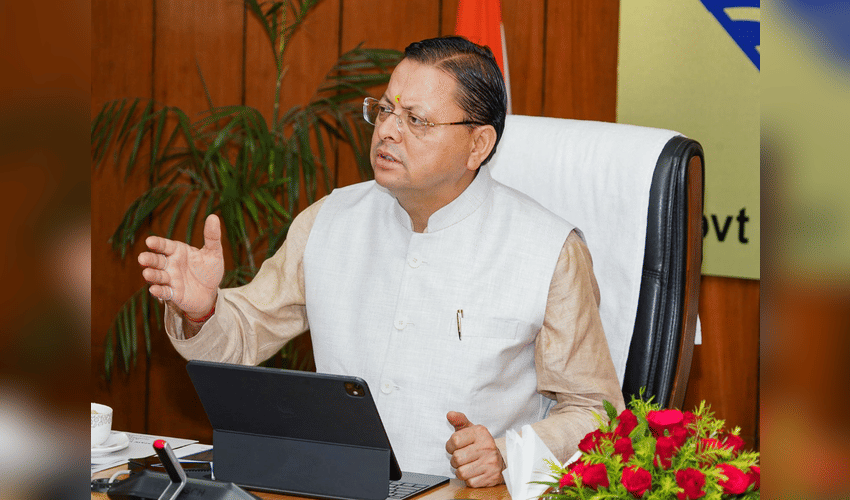

Dehradun: Uttarakhand Chief Minister Pushkar Singh Dhami on Wednesday described the newly launched Uttarakhand Science, Technology and Innovation Policy-2026 as a transformative roadmap aimed at building a knowledge-based, innovation-driven economy in the state. According to the Chief Minister, the policy is designed not only to promote scientific advancement but also to integrate technology into key sectors such as governance, disaster management, healthcare, agriculture, education and employment generation. He said the initiative would create a unified platform for young innovators, researchers, scientists, startups and grassroots innovators across Uttarakhand.
Dhami stated that the policy aligns with the state’s vision of becoming self-reliant by combining traditional knowledge systems with modern scientific and technological solutions. Following the Chief Minister’s announcement, the Department of Information Technology, Good Governance, and Science & Technology formally issued the Uttarakhand Science, Technology and Innovation Policy-2026. The policy seeks to position Uttarakhand as a leading centre for science, technology and information technology while promoting innovation-led development.
Officials said the policy focuses on strengthening scientific thinking, research and innovation ecosystems to address local challenges effectively. It also emphasises sustainable development by balancing economic progress, environmental protection and social inclusion. To ensure proper implementation, the state government plans to establish a high-level advisory body responsible for policy monitoring, evaluation and coordination. A decentralised institutional framework will also be created to encourage research and innovation activities across different regions of the state.
As part of the policy framework, the government intends to strengthen collaboration among departments, public sector organisations, private companies, startups and academic institutions. A State-Level Coordination Committee will be constituted to facilitate the establishment of Science, Technology and Innovation (STI) units across multiple sectors.
The policy further proposes wider access to scientific information and research resources. Data generated through publicly funded research projects will be digitally archived and made securely accessible to stakeholders. Researchers and institutions in Uttarakhand will also benefit from the Government of India’s “One Nation, One Subscription” initiative, which provides access to scientific journals and research archives.
Special emphasis has been placed on indigenous technology development and localisation to support the vision of “Atmanirbhar Uttarakhand.” The policy aims to encourage locally developed technological solutions suited to the state’s unique geographical and environmental conditions while promoting the integration of traditional knowledge with modern innovation.
The policy outlines plans to improve science and technology infrastructure in educational institutions and launch capacity-building programmes for students, teachers and researchers. Advanced Teaching-Learning Centres are also proposed in line with the National Education Policy to strengthen teaching capabilities. To increase public engagement in science, the government plans to establish Science Cities, Science Centres, Planetariums, Atal Tinkering Labs, Artificial Intelligence laboratories, astronomy observation centres and Centres of Excellence throughout the state.
The policy identifies emerging technologies such as Artificial Intelligence (AI), Blockchain, Robotics, Drones, Augmented Reality (AR), Virtual Reality (VR) and Mixed Reality (MR) as priority areas. Research and development will also be promoted in sectors including biotechnology, space technology, nanotechnology, digital technologies, food-water-energy security and disaster management.
Additionally, workshops, fellowships, scholarships and collaborative research programmes will be launched to strengthen cooperation between scientists, technical experts and grassroots innovators. The government also plans to create a dedicated digital engagement portal for Uttarakhand’s scientific community. A Science, Technology and Innovation Observatory will be established as a central digital repository containing information on schemes, grants, programmes and incentives related to science and innovation. Innovators will also receive assistance in areas such as patents, copyrights, intellectual property rights and legal support.
Officials believe the policy will act as a major catalyst for research-led development and technological self-reliance in Uttarakhand while accelerating the state’s progress toward becoming a developed and empowered region. The Uttarakhand State Council for Science and Technology (UCOST) will serve as the nodal agency for implementing and promoting scientific initiatives under the policy.
UCOST Director General Prof. Durgesh Pant said the state currently faces critical challenges including climate change, natural disasters and increasing pressure on the fragile Himalayan ecosystem. He noted that the new policy would improve coordination among scientific institutions, industries, academic bodies and innovators to address these concerns more effectively. Prof. Pant also highlighted that the policy aims to ensure inclusive participation in science and innovation by creating equal opportunities for women, rural communities, marginalised groups and persons with disabilities.
Disclaimer: This image is taken from ANI.



