



World
US-Iran ceasefire remains in place after clashes in the Strait of Hormuz and strikes on the UAE
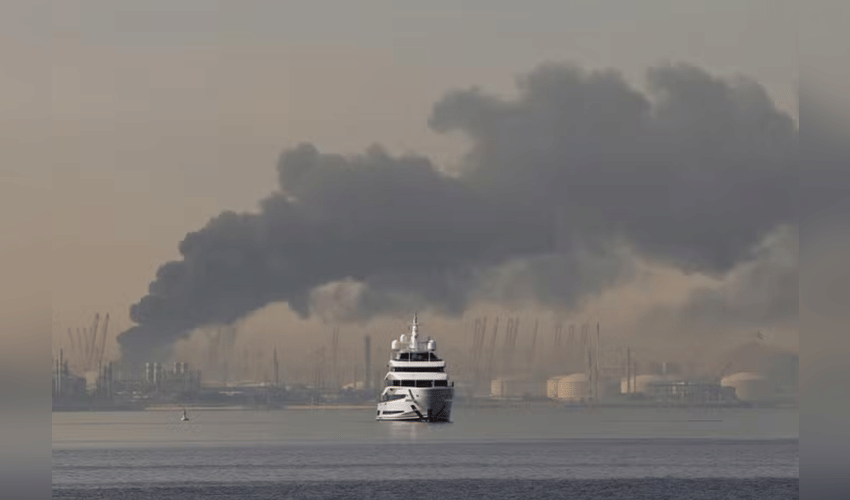

The fragile ceasefire between the US and Iran remained intact on Tuesday morning following a day of intense confrontations involving commercial shipping in the Strait of Hormuz and missile strikes targeting the United Arab Emirates. Calm gradually returned to the Persian Gulf after US and Iranian forces exchanged fire on Monday, while Tehran also launched missiles and drones toward the UAE in the most serious escalation since the ceasefire was agreed less than a month ago.
The unrest began after US President Donald Trump unveiled “Project Freedom,” described as a humanitarian mission to escort neutral vessels stranded in the Gulf through the Strait of Hormuz. Under this operation, at least two merchant ships crossed the waterway with US support while two American naval vessels entered the Gulf. Iran, however, warned all ships against passing through Hormuz without its approval.
During the tensions, Iran struck a South Korean bulk carrier and targeted an empty tanker owned by the UAE’s state oil company, ADNOC. No injuries were reported on either vessel. According to US Central Command chief Brad Cooper, American forces intercepted Iranian drones, missiles, and armed small boats while ensuring safe passage for the merchant ships. The escalation comes amid continued deadlock between Washington and Tehran, with no immediate prospects for new peace talks. Iran demands that the US lift what it calls a naval blockade of its ports, while Washington argues the restrictions are necessary to curb Iran’s oil exports and pressure its economy.
Analysts view “Project Freedom” as an attempt to ease tensions in the Strait of Hormuz, though they warn it also increases the risk of further escalation. Oil prices fell slightly on Tuesday after rising sharply the previous day, reflecting market uncertainty over the conflict. The UAE reported that it intercepted most of the missiles launched by Iran, marking the first attack on its territory since the ceasefire began. However, three Indian nationals were injured in a strike on an oil facility in Fujairah, and security alerts were issued across major cities including Dubai and Abu Dhabi, with schools shifting to remote learning.
Iran criticized the US initiative as “Project Deadlock,” calling it a violation of the ceasefire, while also stating that Pakistan-mediated diplomatic talks were showing progress. Iranian Foreign Minister Abbas Araghchi emphasized that the crisis cannot be solved militarily and urged all parties, including the US and UAE, to avoid further escalation and political miscalculation.



