



Asia In News
UNESCO has warned Pakistan after improper cement restoration work at the ancient site of Taxila raised heritage concerns.
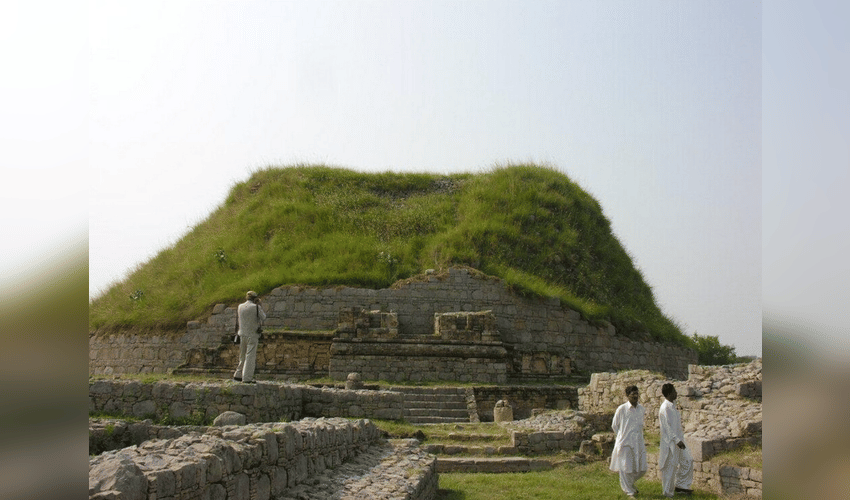

UNESCO has reportedly issued a strong warning to Pakistan over alleged poorly executed “restoration” work using cement at the ancient archaeological site of Taxila. According to reports cited by Dawn, concerns have been raised that recent conservation activities carried out by Pakistan’s Department of Archaeology and Museums (DOAM) involved modern construction materials, including cement and masonry, which may violate internationally accepted heritage preservation standards. UNESCO is said to have cautioned that such interventions could harm the site’s authenticity and historical value.
The controversy centers on work carried out at key sections of the Taxila complex, including Sirkap and Mohra Moradu, where modern repairs are alleged to have replaced or altered original ancient stone structures. Critics argue that the use of uniform, machine-cut materials contrasts sharply with the original irregular masonry, potentially affecting the site’s archaeological integrity.
Reports also suggest that UNESCO has warned Pakistan that continued non-compliance with conservation guidelines could result in the site being considered for inclusion on the List of World Heritage in Danger. A joint inspection involving UNESCO representatives and Pakistani officials was reportedly conducted in June to assess the condition of the site and review ongoing restoration practices.
Pakistani authorities, however, have rejected claims of damage, stating that the work is intended as stabilization and conservation rather than reconstruction. Officials maintain that the interventions are necessary to prevent further deterioration and are aligned with accepted preservation practices.
The issue has sparked wider debate over the management of Taxila, a UNESCO World Heritage Site inscribed in 1980 and historically associated with the Gandhara civilization. The ancient city, once a major center of learning in the region, is widely recognized for its archaeological and cultural significance spanning the Mauryan, Indo-Greek, and Kushan periods.



