



Politics
The Severed Limb That Helped Shape Bombay University's Forgotten Story
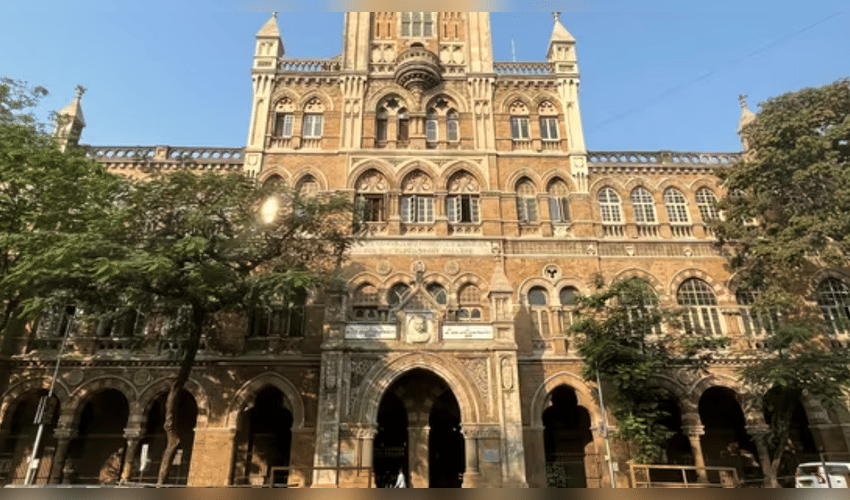

A bizarre and tragic incident from the days of the 1857 uprising has remained linked to the early history of higher education in Bombay. A violent execution witnessed by a young British educator not only became a haunting memory for him but also marked the beginning of a journey that would influence generations of Indian students and contribute to the intellectual environment around the University of Bombay. The incident took place on October 15, 1857, during the aftermath of the Indian Rebellion against British rule. Two Indian soldiers, a havildar and a sepoy, were publicly executed at Bombay’s Esplanade after being accused of taking part in a suspected mutiny. The British authorities used one of the most brutal forms of punishment of that era — tying prisoners to cannons before firing them.
Among those present at the execution was J.P. Hughlings, a young English professor at Elphinstone College. Historical accounts describe a shocking moment when, after the cannons were fired, a severed limb from one of the executed soldiers was thrown through the air and struck Hughlings. The horrifying scene left a deep impact on him and became one of the most unusual episodes associated with his life in colonial India.
Hughlings’ legacy was not defined by that traumatic event. Instead, he became remembered as a dedicated educator who played an important role in shaping Bombay’s academic culture during a crucial period in India’s educational history. Born in Britain in 1831, Hughlings came to India as part of the growing movement to expand Western-style education under colonial rule. He joined Elphinstone College, one of Bombay’s most important educational institutions, where he taught English and encouraged students to develop intellectual curiosity beyond textbooks and examinations.
At a time when education was largely limited to a small section of society, Hughlings promoted reading, discussion, and independent thinking among his students. He believed that colleges should not simply produce government employees but should create individuals capable of understanding society, politics, and public issues.
His influence reached far beyond the classroom. Several of his students later became major figures in India’s intellectual and public life, including scholar R.G. Bhandarkar, social reformer and judge M.G. Ranade, lawyer and politician K.T. Telang, and public figure D.E. Wacha. These personalities went on to contribute significantly to Indian scholarship, law, social reform, and political thought.
The period was also significant because the University of Bombay was established in 1857, along with the universities of Calcutta and Madras. The institution became a centre for higher education and eventually produced generations of leaders, writers, lawyers, and reformers who shaped modern India. Although Hughlings was not the founder of the University of Bombay, his work at Elphinstone College helped create the academic environment from which many early university students and intellectuals emerged. His teaching methods and commitment to education played a role in building Bombay’s reputation as a hub of learning.
The story also highlights the complicated legacy of colonial education in India. While the education system was introduced under British rule, the institutions it created later became places where Indians developed ideas of social reform, political awareness, and national identity. Hughlings died in 1870, but the impact of his teaching continued through the students he inspired. Today, the University of Mumbai stands as one of India’s oldest and most respected educational institutions, with a history shaped not only by administrators and founders but also by teachers whose influence transformed generations. The strange episode of a severed limb flying across an execution ground may appear like a forgotten footnote of history. Yet behind that disturbing moment lies a larger story about education, ideas, and how unexpected events can become connected to the making of important institutions.



