



News
The Kollam Vigilance Court in Kerala has approved bail for Thantri Kanthar Rajeevar in the Sabarimala gold theft case.
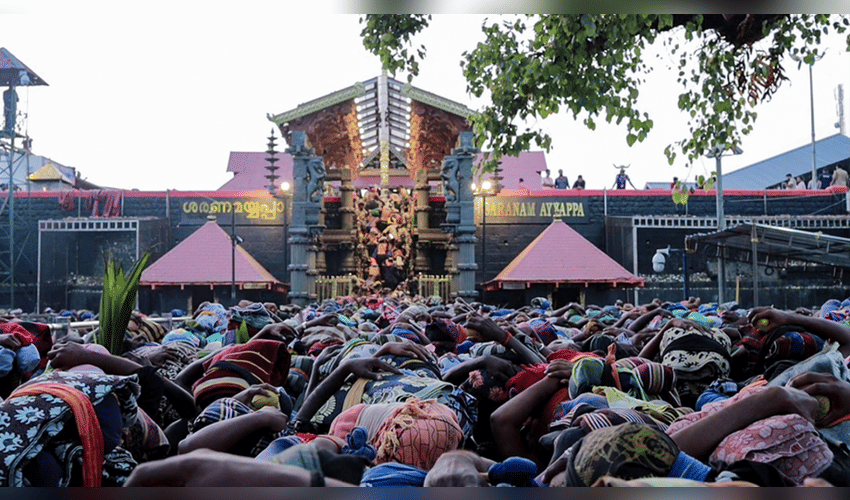

The Kollam Vigilance Court on Wednesday granted bail to Thantri Kanthar Rajeevar in connection with the Sabarimala gold theft case. The bail applies to matters linked to the Kattilappalli and Dwarapalaka idol cases. With this development, Rajeevar becomes the sixth accused to obtain bail, joining others including Unnikrishnan Potty, Vasu, and Murari Babu. He was taken into custody on January 9 and is the second accused to receive bail before the completion of the mandatory 90-day custody period. Earlier, former Administrative Officer S Sreekumar had also been granted bail. The detailed bail order is expected to be issued soon.
The Supreme Court of India is scheduled to begin hearings on April 7 regarding the long-standing Sabarimala temple entry issue and related petitions. The matter will be heard by a nine-judge Constitution Bench, which will examine important constitutional questions involving religious freedom, equality, and constitutional principles. Review petitioners and supporting parties will present arguments from April 7 to 9, followed by hearings of the original petitioners from April 14 to 16. Any rejoinders will be heard on April 22. The Court has directed that oral arguments from all sides be completed within the fixed schedule.
The Union Government has backed the review petitions challenging the 2018 verdict, while the original petitioners seek to uphold it. In 2018, a Constitution Bench permitted women of all age groups to enter the Sabarimala Sree Dharma Sastha Temple, overturning the traditional restriction on women between the ages of 10 and 50. In February 2020, a nine-judge Bench referred wider constitutional issues arising from the case for further examination.
The gold theft case involves allegations that around 4.54 kilograms of gold were misappropriated from sacred temple structures, including the sanctum sanctorum door frames and Dwarapalaka idols. The alleged theft is believed to have taken place in 2019 under the guise of restoration and gold replating work.
The controversy dates back to a 1998 donation by industrialist Vijay Mallya, who contributed 30.3 kilograms of gold and 1,900 kilograms of copper for gold plating at the temple. Later inspections and court-supervised investigations found inconsistencies between the quantity of gold donated and the amount reportedly used.



