



Military
The Indian Army seeks next-gen air defense guns to counter drones and missiles.
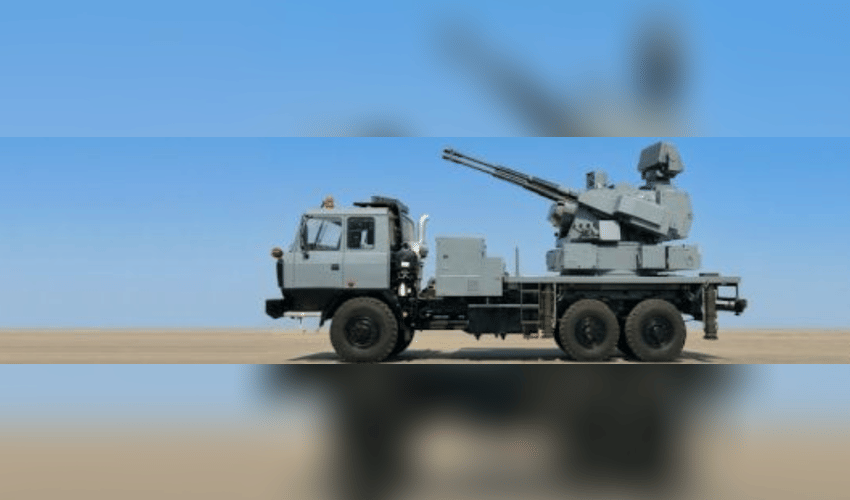

The Ministry of Defence has issued a Request for Information (RFI) to acquire a next-generation Air Defence Gun (ADG‑NG) system for the Indian Army, aimed at countering evolving aerial threats, including drones, swarm UAVs, rockets, artillery, and mortars. This move comes in the wake of lessons learned from Operation Sindoor, where adversaries on the western front used drones and swarm tactics for reconnaissance and attacks on civilian and military targets, highlighting the changing dynamics of aerial warfare.
Officials note that the system is intended to address critical short-range air defence gaps, enabling rapid detection, tracking, and neutralisation of low-signature targets, particularly electrically powered drones that evade conventional radar and infrared detection. The Army requires the system to include at least 50% indigenous content, emphasizing domestic manufacturing and technology transfer as part of the broader defence indigenisation initiative.
Designed as a mobile platform—either vehicle-mounted or towed—the ADG‑NG will feature an integrated Electro-Optical Fire Control System for autonomous target detection, tracking, and engagement under all weather and lighting conditions. The system is expected to provide terminal air defence for vulnerable zones and critical assets, capable of engaging a wide array of threats, including aircraft, helicopters, drones, cruise missiles, precision-guided munitions, and rocket, artillery, and mortar fire.
The gun must have a minimum firing range of 4 km, engage targets traveling up to 500 m/s, and achieve a firing rate of at least 300 rounds per minute, with a ceiling of 2.5 km or higher. It should also counter unconventional aerial objects like microlight aircraft, paragliders, and paramotors, reflecting the Army’s need to neutralize diverse low-cost threats. Ammunition requirements include programmable smart rounds with pre-fragmented or proximity-fused capabilities, conventional high-explosive rounds with tracers, and a self-destruct mechanism, with a minimum shelf life of 10 years.
The system should feature an autoloader operable by up to two personnel and flexible power options, including generators, batteries, and mains supply, with provisions for silent operation. Modularity and future upgrades are prioritized, with integration planned with existing radar and navigation systems.
Detection, recognition, and identification parameters cover a wide range of targets, from small commercial drones like the DJI Mavic Pro 3 to helicopters and frontline fighter jets such as the Chinese JF-17, illustrating the breadth of threats the ADG‑NG must handle. Vendors are required to submit technical specifications and product details by 11 June 2026, marking the first stage of a high-profile procurement program as the Army adapts to drone-heavy battlefields.



