



Military
The Indian Army plans to transform T-72 tanks into remotely operated combat platforms for dangerous and high-risk operations.
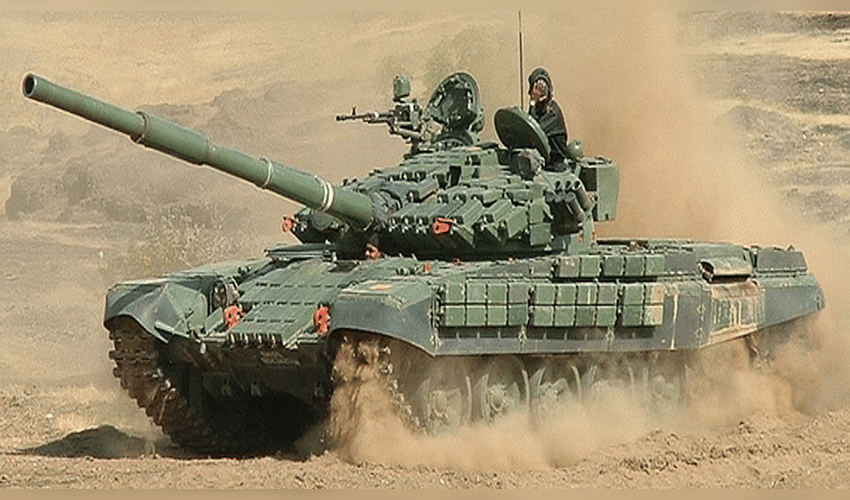

The Indian Army has launched an ambitious modernisation programme to convert a large portion of its ageing T-72 tank fleet into remotely operated combat systems capable of operating within manned-unmanned teaming (MUM-T) frameworks. Designed for dangerous frontline tasks such as minefield clearance, reconnaissance, and decoy missions, these upgraded platforms aim to reduce risks to soldiers while enhancing battlefield effectiveness. The initiative will cover nearly 2,400 tanks and is expected to extend the service life of the T-72 fleet by another 15 to 20 years, offering a far more economical solution than acquiring entirely new armoured vehicles.
Introduced into service in 1979, the T-72 has served as the backbone of India’s armoured forces across terrains ranging from Rajasthan’s deserts to Ladakh’s high-altitude regions, as well as in overseas deployments like Sri Lanka. Although the tanks have undergone multiple upgrades over the decades, emerging threats such as advanced anti-tank missiles, drones, and loitering munitions have increasingly challenged their survivability. Converting them into unmanned or optionally manned systems is therefore seen as a practical way to maintain combat capability until the Future Ready Combat Vehicle (FRCV) begins entering service after 2030.
The project is being developed under the Innovations for Defence Excellence (iDEX) initiative through the ADITI 4.0 challenge, which promotes indigenous defence innovation. The upgrade strategy focuses on integrating IP-based digital systems and autonomous control kits that can transform existing T-72 platforms into remotely operated combat vehicles without replacing their proven mechanical structure.
By combining reliable legacy armour with modern sensors, electronics, and communication networks, the Army plans to create vehicles capable of sharing real-time battlefield data with command systems while still allowing human operators to retain decision-making control. In combat, these unmanned tanks are expected to function as “loyal wingmen” alongside crewed platforms such as the T-90 and future FRCVs.
Their battlefield responsibilities could include leading assaults, breaching minefields, conducting reconnaissance operations, and attracting enemy fire away from manned units. Operating ahead of crewed formations, they would help identify hostile positions and absorb early attacks, allowing safer movement for conventional forces. The concept draws heavily from lessons observed in recent conflicts like Ukraine, where unsupported tanks have proven especially vulnerable.
India’s effort mirrors a broader global trend toward autonomous warfare systems. Countries such as China and Australia are also developing advanced MUM-T armoured platforms, though India’s approach differs by modernising existing tanks rather than investing solely in new designs. This strategy lowers costs while making better use of current military assets.
The programme is also expected to strengthen India’s domestic defence industry. Through iDEX participation, local companies and MSMEs will contribute technologies and components, boosting innovation, employment, and self-reliance in defence manufacturing. The T-72 conversion project signals a major doctrinal evolution for the Indian Army. Instead of retiring older platforms, the Army is adapting them for future warfare, ensuring sufficient combat strength during the transition to next-generation systems while improving troop safety and supporting the broader vision of Aatmanirbhar Bharat.
Disclaimer: This image is taken from Indian Defence News.



