



Military
TEJAS Fleet Temporarily Grounded for Software Upgrade Following System Glitch; Fleetwide Correction Mandated
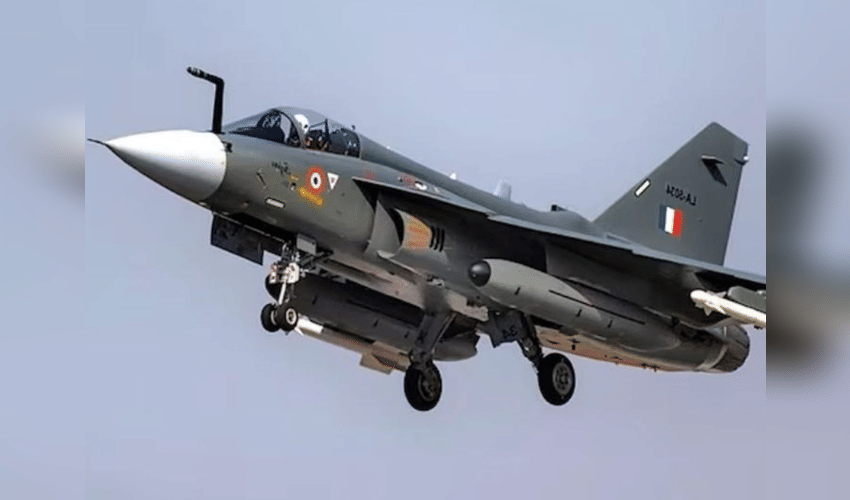

A software malfunction in the onboard computer has been identified as the cause of the TEJAS fighter jet incident on 7 February 2026, prompting a full software update across all 35 TEJAS aircraft currently in service with the Indian Air Force (IAF), according to The Tribune. During the incident at a forward base along India’s western frontier, the single-seater jet veered off the runway into a mud ditch during takeoff. The pilot survived but sustained injuries. Subsequent inspections confirmed that no mechanical or metallurgical issues contributed to the mishap, pinpointing the problem entirely to the aircraft’s software.
Sources indicate that the IAF, in collaboration with Hindustan Aeronautics Limited (HAL), has already addressed the glitch. A new software version is undergoing trials, with a fleetwide rollout planned to prevent recurrence. While such software issues are not uncommon in advanced avionics, they are typically resolved quickly through updates. Checks included undercarriage metallurgy, electromagnetic braking systems, and core software protocols to ensure no additional vulnerabilities existed.
HAL had initially referred to the February incident as a “minor technical event on the ground” rather than a crash, stressing its ongoing coordination with the IAF and highlighting the TEJAS’s strong safety record among comparable fighter jets worldwide. An ongoing IAF Court of Inquiry will examine the sequence of events in detail, likely guiding enhanced operational protocols for indigenous platforms like the Light Combat Aircraft (LCA).
The February mishap is the third TEJAS-related accident since the aircraft’s induction in 2016. The first occurred in March 2024 near Jaisalmer when a jet crashed after a firepower demonstration, with the pilot ejecting safely. The second, in November 2025 at the Dubai Air Show, resulted in the death of Wing Commander Namansh Syal during aerobatic maneuvers. These incidents underscore ongoing challenges despite the platform’s operational maturity.
Of the 40 TEJAS MK-1 jets ordered, HAL has yet to deliver two, leaving the IAF with 38 prior to recent setbacks. Two aircraft have been lost to crashes, and the February incident aircraft’s future—repair or write-off—is still under review. Delays also affect the TEJAS MK-1A variant, of which 180 units are ordered. Deliveries are running two years behind schedule. This upgraded variant is expected to feature improved engines, radars, and electronic warfare systems, essential for strengthening IAF squadrons amid aging legacy fleets.
The software fix comes at a critical time for India’s Atmanirbhar Bharat initiative, as TEJAS is a key indigenous aerospace asset. However, repeated incidents could undermine confidence in HAL’s delivery schedules. The IAF’s thorough post-incident procedures demonstrate robust fleet management, yet timely MK-1A inductions and stable software systems will be crucial to maintaining operational readiness along contested borders. Experts expect the inquiry’s findings to refine risk mitigation strategies and may lead to the integration of AI-based diagnostics for real-time detection of software anomalies in future updates.



