



Technology
Technology explained: How India's barrier-free toll collection system works
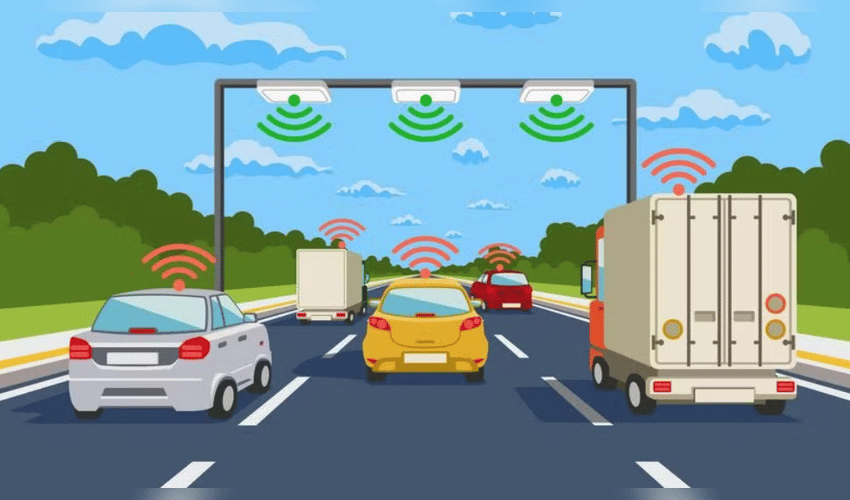

India has started testing a barrier-free toll collection system on its highways. A Multi-Lane Free Flow (MLFF) toll plaza has been launched on the Mundka–Bakkarwala stretch of Urban Extension Road-II (UER-II) in the National Capital Region as part of this initiative by the Ministry of Road Transport and Highways.
The system removes physical toll barriers and allows vehicles to pass through without stopping. It works using a combination of technologies including RFID (FASTag), Automated Number Plate Recognition (ANPR) cameras, and LiDAR sensors, which together identify, track, and classify vehicles in real time.
MLFF is an electronic tolling framework designed to enable seamless toll collection while vehicles continue moving at highway speeds. Instead of traditional toll booths, overhead gantries are installed with smart sensors and cameras that detect vehicles and process tolls automatically. RFID readers scan FASTag information, ANPR cameras capture number plates for verification, and LiDAR or radar systems determine the size and type of vehicle. All this information is processed instantly through backend computing systems to calculate and deduct toll charges.
In some future versions, this system may also integrate GNSS-based tolling, where vehicles are tracked using satellite signals and charged based on the actual distance travelled instead of fixed toll points. This would shift tolling from location-based charging to usage-based billing. On Indian highways, the MLFF system uses multiple layers of detection. RFID is the primary method for identifying vehicles at high speed without requiring them to slow down. ANPR serves as a backup system to ensure that vehicles without valid FASTags can still be identified and billed through their license plates. LiDAR technology helps classify vehicles by measuring their physical dimensions, which is important for applying correct toll rates. All data is processed in real time using edge computing systems, enabling instant transactions without stopping traffic. If a FASTag is invalid or has insufficient balance, the system generates an electronic notice and allows a limited time for payment before penalties are applied.
Compared to traditional toll systems, MLFF offers major improvements in efficiency. Even with FASTag, vehicles today often need to slow down or stop, causing congestion, fuel wastage, and delays. By eliminating barriers completely, MLFF ensures continuous traffic flow. Early estimates suggest that toll plazas using this system can handle more than double the traffic, with over 500 vehicles per hour compared to around 250 in conventional setups. The government also expects significant fuel savings and a reduction in carbon emissions, especially on busy corridors like those in Delhi-NCR.
Globally, similar barrier-free tolling systems are already in use. Countries in Europe use GNSS-based systems for commercial vehicles to calculate tolls based on distance travelled. The United States uses open-road tolling systems with RFID and camera-based gantries. Vietnam has also implemented RFID-based free-flow tolling similar to India’s approach. However, India is adopting a gradual hybrid model, moving step by step toward more advanced systems.
This technology also fits into India’s broader plan for Vehicle-to-Everything (V2X) communication. MLFF acts as an early form of Vehicle-to-Infrastructure (V2I) system where vehicles and road infrastructure exchange data in real time. It relies on continuous communication between roadside sensors, backend servers, and vehicle FASTag systems. In the future, with advancements like Cellular V2X and GNSS-based tracking, tolling systems could become even more automated and connected.
However, scaling this system across the country comes with challenges. These include handling vehicles with faulty or missing FASTags, avoiding incorrect identification, managing high-speed traffic discipline, and ensuring stable network connectivity for real-time processing. Strong enforcement mechanisms such as electronic notices and penalties will also be needed to prevent revenue loss and ensure smooth operation.
Disclaimer: This image is taken from Magnific.



