



World
Simultaneous Balancing and Engagement with China Reflects India's Pragmatic Foreign Policy
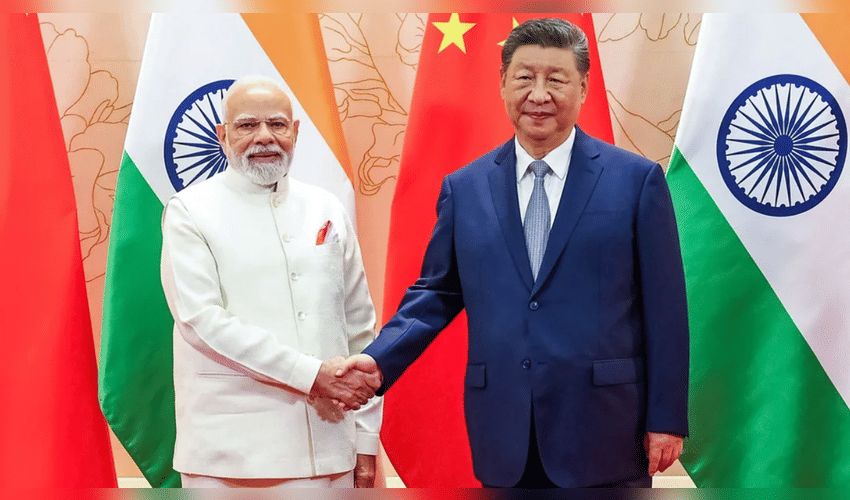

India is steadily adopting a balanced approach in managing its relationship with China, combining firm security measures with cautious diplomatic engagement as it seeks to protect national interests while maintaining regional stability. The evolving strategy underscores New Delhi's effort to navigate one of its most complex foreign policy challenges without allowing competition and cooperation to become mutually exclusive.
The relationship between India and China has remained under strain since the 2020 Galwan Valley clash, which marked the most serious military confrontation between the two countries in decades. The incident fundamentally reshaped India's perception of China, prompting tighter scrutiny of Chinese investments, restrictions on several Chinese mobile applications, and a renewed focus on strengthening border infrastructure and military preparedness.
Despite these developments, India has stopped short of pursuing complete disengagement. Instead, policymakers have increasingly signalled that while national security remains non-negotiable, dialogue and economic cooperation should continue wherever they serve India's interests. This approach has gained momentum through a series of diplomatic interactions between senior officials of both countries, aimed at restoring communication and preventing tensions along the Line of Actual Control (LAC) from escalating further.
Government officials have repeatedly maintained that peace and tranquillity along the border remain the foundation for normalising bilateral relations. At the same time, both sides have continued discussions through multilateral forums such as BRICS and the Shanghai Cooperation Organisation (SCO), demonstrating that even amid strategic rivalry, diplomatic engagement remains an important tool for managing differences.
India's approach also reflects the realities of economic interdependence. Although New Delhi has encouraged businesses to diversify supply chains and reduce dependence on Chinese imports, China continues to be a key supplier of electronics, industrial machinery, pharmaceutical ingredients, and manufacturing components essential for several Indian industries. Rather than opting for complete economic separation, India has focused on reducing vulnerabilities by promoting domestic manufacturing and expanding trade partnerships with other countries.
Strategic experts believe this policy represents a shift toward "de-risking" instead of "decoupling." The objective is to strengthen India's economic resilience while avoiding disruptions that could impact industrial growth and consumer markets. This measured approach allows India to safeguard critical sectors without isolating itself from one of the world's largest economies.
On the security front, New Delhi continues to invest heavily in defence modernisation and border infrastructure while strengthening strategic partnerships with countries including the United States, Japan, Australia, and several European nations. These partnerships are seen as part of India's broader effort to maintain stability in the Indo-Pacific and respond to evolving regional security challenges.
However, India's engagement with China does not indicate a softening of its position on unresolved disputes. The border issue remains a major source of friction, alongside concerns over China's close strategic ties with Pakistan, trade imbalances, and increasing competition for influence across South Asia and the Indian Ocean region. Analysts believe these structural challenges will continue to shape bilateral relations for the foreseeable future.
Foreign policy observers note that India's current strategy reflects its longstanding commitment to strategic autonomy. Rather than aligning itself exclusively with any major power bloc, New Delhi is pursuing an independent course that allows it to cooperate with China on issues of shared interest while remaining prepared to counter challenges that affect its sovereignty and national security. As geopolitical competition intensifies across Asia, India's calibrated approach suggests that balancing strategic caution with diplomatic engagement may become the defining feature of its China policy. While the road to fully normalised relations remains uncertain, New Delhi appears determined to manage differences through dialogue without compromising its security interests, signalling a foreign policy driven by pragmatism rather than confrontation.



