



Politics
Shashi Tharoor calls for a stronger India-Japan alliance to lead Asia's next chapter
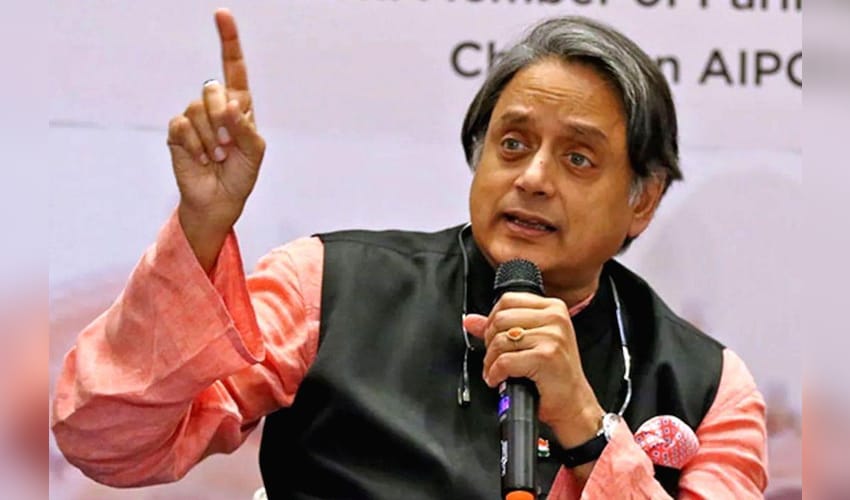

As geopolitical uncertainties continue to reshape Asia, senior Congress leader and former diplomat Shashi Tharoor has argued that India and Japan should work together to build one of the region's most influential strategic partnerships. In a recent opinion piece, Tharoor emphasized that the relationship between the two democracies should extend far beyond trade and diplomacy, evolving into a long-term partnership capable of contributing to regional stability, economic growth and technological innovation.
His remarks come at a time when India and Japan are already expanding cooperation across multiple sectors. During the recently concluded 16th India-Japan Annual Summit, the two countries signed a series of agreements covering artificial intelligence, defence cooperation, economic security, critical minerals, energy resilience and advanced technologies. The new initiatives reflect a shared commitment to strengthening strategic ties in response to changing global and regional dynamics.
According to Tharoor, the India-Japan relationship is unique because it is built not only on shared economic interests but also on common democratic values, respect for the rule of law and support for a free, open and rules-based Indo-Pacific. He believes these common principles provide a strong foundation for a partnership that can help address emerging challenges, including supply chain disruptions, technological competition and maritime security concerns.
One of the strongest pillars of bilateral cooperation is economic collaboration. Japan has remained among India's largest foreign investors for decades, supporting major infrastructure projects such as the Mumbai-Ahmedabad High-Speed Rail corridor, industrial corridors and metro rail systems in several Indian cities. Recent announcements have further strengthened this relationship, with fresh investments aimed at manufacturing, artificial intelligence, semiconductors and clean energy technologies.
Technology is expected to play an even bigger role in the future of the partnership. Both countries are increasingly collaborating on artificial intelligence, digital innovation, semiconductor manufacturing and critical technologies. India contributes a large pool of skilled technology professionals, while Japan offers expertise in advanced manufacturing, precision engineering and industrial automation. Many experts believe this combination could help both nations reduce dependence on vulnerable global supply chains while enhancing their competitiveness in emerging industries.
Defence cooperation has also entered a new phase. The latest summit produced landmark agreements on defence co-development, marking an important milestone in military collaboration between the two countries. Alongside regular naval exercises and maritime cooperation under the Quad framework, India and Japan are working more closely to strengthen security across the Indo-Pacific, where concerns over freedom of navigation and regional stability continue to grow.
Another area highlighted by analysts is the complementary nature of both economies. India has one of the world's youngest workforces and rapidly expanding consumer markets, while Japan possesses advanced technological capabilities and decades of industrial experience. Greater collaboration in manufacturing, healthcare, green energy, logistics and workforce development could generate long-term benefits for both countries while creating new opportunities for businesses and investors.
Beyond economics and defence, cultural and educational exchanges continue to deepen people-to-people connections. Student exchange programmes, tourism, language education and business partnerships have helped strengthen mutual understanding over the years. Experts argue that these softer aspects of diplomacy are equally important because lasting international partnerships are built not only through government agreements but also through stronger societal links.
The evolving partnership also carries wider regional significance. As two major democratic powers in Asia, India and Japan increasingly share a common vision of promoting sustainable development, secure trade routes and resilient supply chains. Their cooperation is viewed by many policymakers as an important factor in maintaining balance and stability across the Indo-Pacific without relying solely on traditional security arrangements.
Tharoor's observations ultimately underline a broader reality: India and Japan are entering a period where their relationship is expanding beyond conventional diplomacy into a comprehensive strategic partnership. With growing collaboration in technology, infrastructure, defence, innovation and economic security, both countries appear well positioned to shape the next phase of Asia's development. If current momentum continues, the India-Japan partnership could become one of the defining bilateral relationships influencing the region's economic and geopolitical future in the years ahead.
Disclaimer: This image is taken from Prokerala



