



World
President Lula said Brazil and Turkey helped broker a 2010 Iran nuclear deal involving a uranium transfer to Turkey.
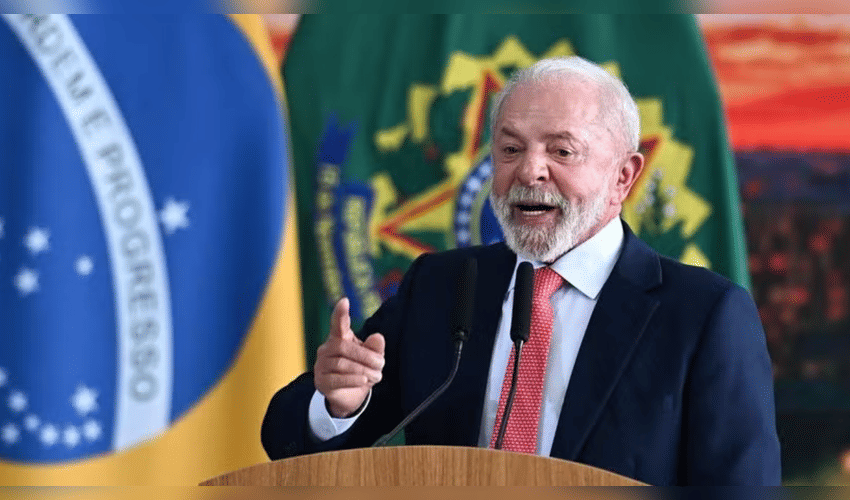

Brazilian President Luiz Inácio Lula da Silva said on Thursday (local time) that he had once again shown US President Donald Trump the 2010 Iran nuclear deal negotiated by Brazil and Turkey, arguing it proved that diplomacy could work in addressing concerns over Iran’s nuclear programme. Speaking at a press conference in Washington after meeting Trump, Lula said this was the second time he had personally shared the agreement, which was intended to resolve tensions over Iran’s nuclear activities.
He stated, “I handed it to Trump once again. For the second time, I presented him with the agreement that Brazil and Turkey brokered in 2010 regarding the Iranian nuclear issue.” Lula explained that Brazil and Turkey had persuaded Iran to agree to a revised arrangement aimed at preventing the development of nuclear weapons. He also expressed regret that, after the deal was reached, the international response shifted, with the Obama administration, the European Union, and other powers increasing pressure on Iran.
“We, Brazil and Turkey, managed to convince Iran to accept a revised agreement regarding the non-production of nuclear weapons. I handed President Trump the agreement we reached in 2010. Regrettably, when we finalised that agreement, I do not know why Obama and the European Union—and the rest of the world—decided to ramp up the pressure on Iran,” he said.
He added that the lack of recognition for the agreement may have been due to the fact that it was negotiated by developing countries rather than major global powers, saying, “Possibly because the parties who had brokered the deal were ‘Third World’ nations—countries that do not belong to the elite club of global powers.”
The remarks came after Lula’s meeting with Trump at the White House, where both leaders discussed bilateral issues such as trade and tariffs. Trump later said on Truth Social that the talks were positive and that further discussions between officials from both countries would take place in the coming months.
The 2010 joint declaration by Brazil, Turkey, and Iran aimed to reduce tensions over Iran’s nuclear programme while reaffirming Iran’s right to peaceful nuclear energy under the Non-Proliferation Treaty (NPT). It involved Iran agreeing to transfer 1,200 kilograms of low-enriched uranium to Turkey, with assurances that it would remain Iranian property under international monitoring.
In exchange, the Vienna Group—comprising the United States, Russia, France, and the IAEA—was expected to supply fuel for the Tehran Research Reactor within a year. The deal also included provisions for Turkey to return Iran’s uranium if conditions were not met. However, despite initial progress, the agreement did not gain lasting support from major Western powers, and sanctions on Iran continued afterward.



