



World
Pakistan Faces Global Backlash Over New Restrictions on Foreign Media Amid Rising PoJK Protest Coverage
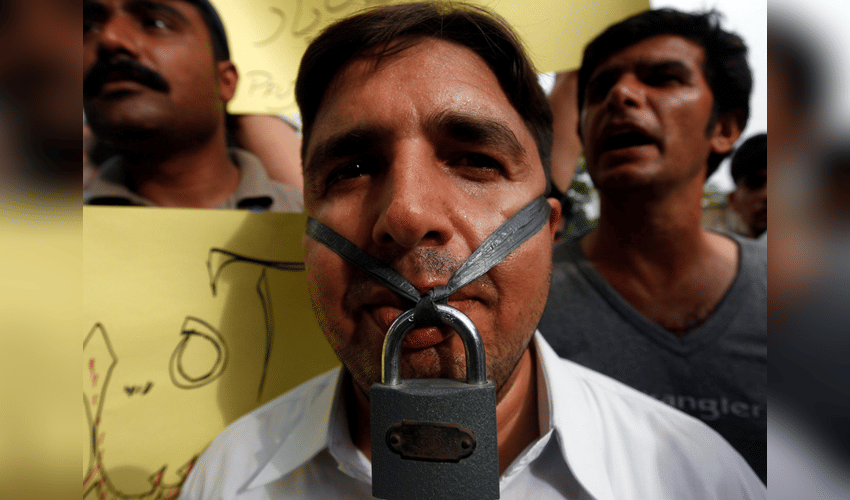

Pakistan's latest decision to tighten restrictions on foreign journalists has sparked widespread criticism from international media organisations and human rights groups, with many warning that the move could further weaken press freedom and obstruct independent reporting. The new measures come at a time when global attention remains focused on protests in Pakistan-occupied Jammu and Kashmir (PoJK), where demonstrations over governance and administrative issues have continued to gain momentum.
The controversy stems from the introduction of the Foreign Media Facilitation Guidelines 2026 by Pakistan's Ministry of Information and Broadcasting. Under the new rules, foreign correspondents and Pakistani journalists working for international media organisations must obtain prior approval before carrying out reporting assignments outside Islamabad, Lahore and Karachi. The guidelines also require journalists, foreign media outlets, local fixers and contributors to register with the ministry. Additionally, foreign reporters travelling to designated sensitive areas, including Abbottabad and Murree, must secure a No Objection Certificate (NOC), even for personal visits.
The regulations have drawn sharp reactions from press freedom advocates, who argue that they significantly expand government oversight of journalism and could discourage independent reporting on politically sensitive developments. Critics believe the new framework gives authorities greater control over where and how journalists can work, making it more difficult for foreign media to report freely from different parts of the country.
The Committee to Protect Journalists (CPJ) was among the first international organisations to condemn the move. In a statement issued on August 6, CPJ urged the Pakistani government to withdraw what it described as highly restrictive guidelines. Waliullah Rahmani, the organisation's representative for Afghanistan and Pakistan, said the policy could severely limit international media coverage outside Pakistan's three major cities and expose journalists to administrative action if they fail to comply with the new requirements. He described the regulations as another major setback for press freedom, noting that reporters covering unrest in Pakistan-administered Kashmir were already operating under increasing pressure.
According to CPJ, the guidelines were introduced shortly after Pakistani authorities criticised international coverage of the protests in PoJK and accused Al Jazeera of biased reporting. The media watchdog also noted that access to Al Jazeera's website has since been restricted within Pakistan. It warned that the new policy allows authorities to suspend or revoke media accreditation if reporting is considered contrary to Pakistan's ideology, sovereignty, national security or public order, raising fears that the broad provisions could be used to suppress critical journalism.
The organisation also highlighted concerns over the treatment of journalists covering the unrest. It referred to reports that journalist Syed Farhad Ali Shah had begun a hunger strike after allegedly being detained for more than a month without formal charges. Two other journalists, Razi Tahir and Muhammad Saif, were also reported missing after being taken into police custody in early August. CPJ further pointed to restrictions imposed on media coverage of demonstrations demanding administrative reforms in PoJK following international reports alleging excessive use of force by police during clashes with protesters. The watchdog also cited reports that mobile and internet services were suspended in parts of the region as tensions escalated.
International news agency Reuters also criticised the restrictions, stating that journalists should be able to report freely wherever news develops. The Human Rights Commission of Pakistan (HRCP) echoed similar concerns, arguing that the new guidelines institutionalise bureaucratic control over journalism rather than making reporting easier. In its statement, HRCP said the measures reflect a broader pattern of increasing censorship, legal obstacles and administrative restrictions on the media in Pakistan.
The rights body warned that requiring journalists to obtain official approval before reporting from large parts of the country sends a troubling message that independent reporting is increasingly unwelcome. It called on the Pakistani government to withdraw the guidelines and uphold its constitutional as well as international commitments to protect freedom of expression and ensure a free press.
The latest restrictions come as international scrutiny of developments in PoJK continues to grow. Protests over governance, administrative issues and electoral concerns have attracted significant attention from foreign media and rights organisations, particularly following allegations of police brutality and restrictions on civil liberties. Observers believe the new media regulations are likely to intensify concerns about press freedom in Pakistan and further fuel debate over the government's handling of both the protests and independent journalism.



