



Asia In News
Pakistan and Kazakhstan issue a joint statement referencing Kashmir and emphasizing its resolution in line with UNSC resolutions.
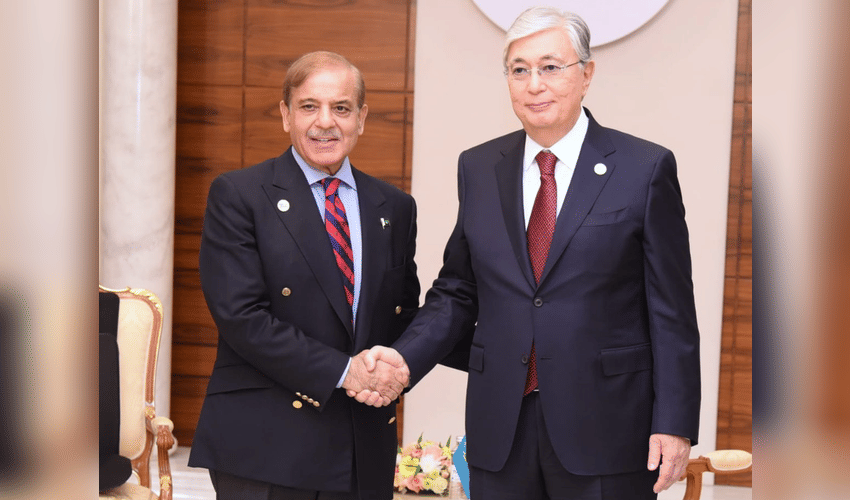

Kazakhstan’s President Kassym-Jomart Tokayev completed a two-day state visit to Pakistan on 4 February 2026, marking the first visit by a Kazakh leader in more than twenty years. The visit concluded with the signing of a Joint Declaration establishing a strategic partnership between Islamabad and Astana, alongside 37 Memorandums of Understanding (MoUs) covering areas such as trade, mining, agriculture, and transport. Significantly, the declaration referenced the Jammu and Kashmir issue, calling for its “peaceful resolution in accordance with relevant UN Security Council resolutions” as crucial for lasting peace in South Asia.
President Tokayev arrived in Islamabad on 3 February at the invitation of Prime Minister Shehbaz Sharif. He was welcomed with a ceremonial guard of honour and held discussions with both Sharif and President Asif Ali Zardari. Talks focused on strengthening bilateral relations, expanding trade, enhancing regional connectivity through initiatives like the Trans-Caspian Transport Corridor, and facilitating access to Pakistani ports, including Gwadar and Karachi.
The mention of Kashmir in paragraph 15 of the joint declaration has generated controversy. It states that “a peaceful settlement of the Jammu and Kashmir dispute in accordance with the relevant UNSC resolutions is indispensable for lasting peace and stability in South Asia.” Pakistan frequently cites the 1948–49 UNSC resolutions, which had called for a plebiscite, though these were effectively superseded by later agreements such as the 1972 Simla Agreement, which India maintains makes the issue a bilateral matter.
India has historically opposed third-party references to Kashmir, viewing them as interference in its internal affairs. Kazakhstan’s inclusion of the issue—despite its strong ties with India through trade, defence, and multilateral platforms like the SCO—has been seen by some as the result of Pakistani diplomatic maneuvering. While New Delhi has yet to issue an official statement, analysts expect a firm response emphasizing the bilateral nature of the dispute. This is not Pakistan’s first success in securing such language; similar references have appeared in previous joint statements with other countries.
Kazakhstan’s mention is notable given its traditionally neutral position in regional disputes and its growing economic interests in India, including energy and defence cooperation. The declaration underscores Pakistan’s efforts to diversify its international partnerships following economic challenges and FATF scrutiny, while Kazakhstan seeks to balance its relations with major powers such as China, Russia, and India, while increasing engagement in South Asia. Nevertheless, the Kashmir clause could strain Astana’s ties with New Delhi without delivering tangible benefits for Islamabad.



