



Technology
Over 200 Leaders Gather at U.S.-India Space Forum in Bengaluru to Boost Bilateral Cooperation
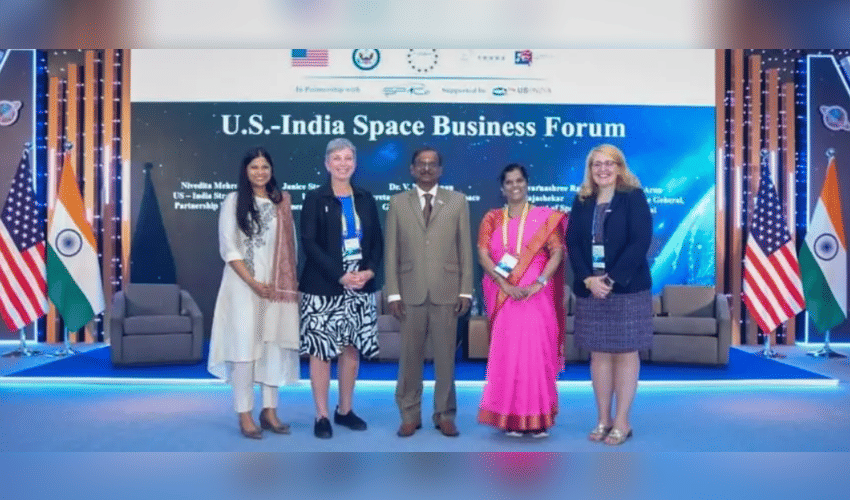

The two-day U.S.–India Space Business Forum concluded on 11 February in Bengaluru, marking a significant step forward in bilateral space collaboration. Organized by the U.S. Consulate General in Chennai with support from the U.S.–India Strategic Partnership Forum, the gathering brought together more than 200 representatives from government bodies and leading industry players. As the centrepiece of the first-ever U.S. Trade Mission to India focused solely on commercial space, the forum hosted 23 senior executives from 14 major American space firms. They engaged directly with Indian stakeholders to identify areas of mutual cooperation.
Bengaluru, widely recognised as India’s Silicon Valley and a key aerospace hub, provided a fitting venue. With institutions such as ISRO and emerging private players like Skyroot Aerospace and Agnikul Cosmos, the city set the stage for discussions on collaborative ventures. Deliberations covered satellite production, launch capabilities, space-based analytics, and Earth observation systems. Regulatory policies, investment avenues, and technology sharing were also examined, aligning with India’s self-reliance goals under initiatives such as Make in India.
U.S. participants highlighted advanced technologies from companies including SpaceX affiliates, Lockheed Martin, and Boeing, focusing on reusable launch systems and small satellite networks. Indian representatives showcased achievements like the PSLV program and the forthcoming Gaganyaan human spaceflight mission. Public-private partnerships were a central theme. Discussions explored U.S.–India collaboration on large-scale initiatives such as the Bharatiya Antriksha Station and commercial lunar exploration, with potential to generate substantial trade value.
The forum reflected deepening strategic convergence between the two nations. With India’s space economy expected to reach 44 billion dollars by 2033 and the U.S. seeking dependable global partners, commitments were discussed for joint development in propulsion technologies and space situational awareness. More than 150 bilateral meetings took place during networking sessions, leading to preliminary agreements. Conversations spanned advanced technologies including hypersonic re-entry systems and AI-enabled mission design, supporting broader defence-space integration.
Officials from NASA’s commercial division, ISRO, IN-SPACe, and the U.S. Commercial Service outlined efforts to simplify visa norms and streamline export regulations, building upon the 2023 bilateral agreement on space situational awareness. Sustainability featured prominently, with discussions on orbital debris management, environmentally friendly propulsion, and responsible use of low Earth orbit resources. Participants advocated creating a joint regulatory framework for commercial space operations.
Industry leaders commended the open dialogue. A U.S. executive observed that India’s agility complements American scale, while Indian voices stressed the importance of technology localisation to strengthen national security. Talent collaboration was another focus. Given Bengaluru’s strong engineering ecosystem, proposals included joint training programs and internships to address expertise gaps in orbital dynamics and quantum sensing technologies.
The forum also addressed obstacles such as spectrum allocation, insurance challenges for mega-constellations, and geopolitical uncertainties in the Indo-Pacific region, highlighting the need for resilient supply chains. As proceedings concluded, USISPF announced plans to establish a working group to monitor progress, potentially leading to a structured 2026 roadmap similar to cooperation models seen in defence sectors. The U.S.–India Space Business Forum has positioned itself as a catalyst for expanded cooperation, signalling a future in which commercial space strengthens both economic growth and strategic stability for the two democracies.



